Hydrometer Vs Refractometer For Homebrew: Which One Actually Tells You The Truth?
I keep both on my bench. I trust one of them more, and it's not the one with the digital screen.
The verdict: A calibrated hydrometer is the honest tool for homebrew, because gravity is measured as a fluid density and refractometers infer it through light refraction, which stops being accurate the moment fermentation starts. Refractometers win on speed and sample size. Most brewers should own both, but if I had to keep one, the hydrometer goes in the box first.
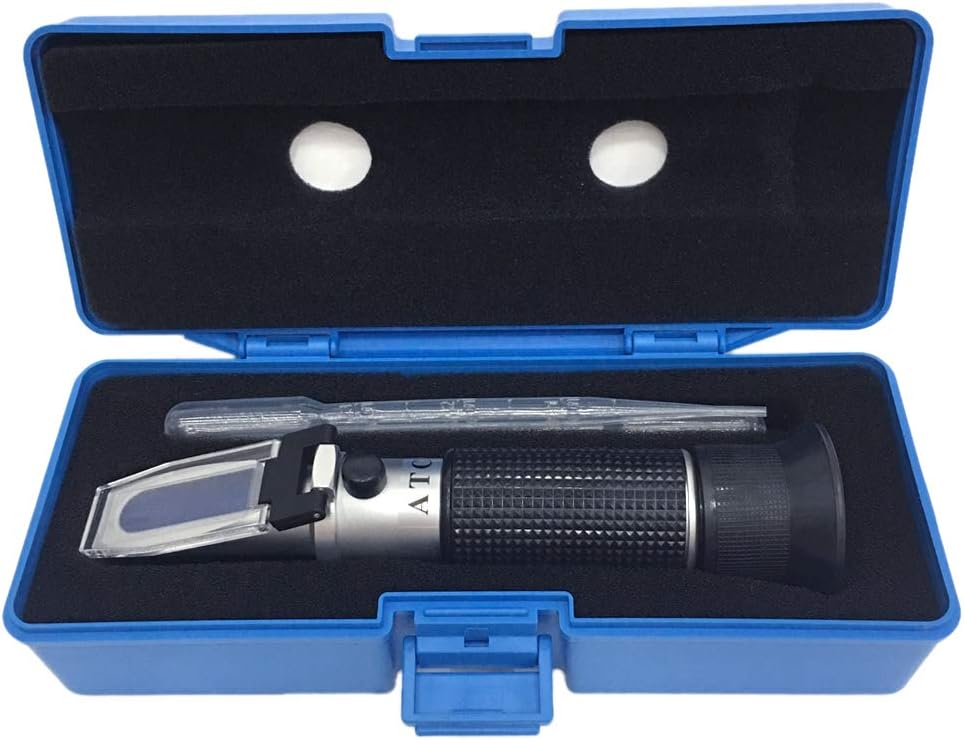
aichose Brix Refractometer
One drop, three seconds, perfect for mash and boil checks
Wort correction math required after fermentation, digital units drift, no good on finished beer
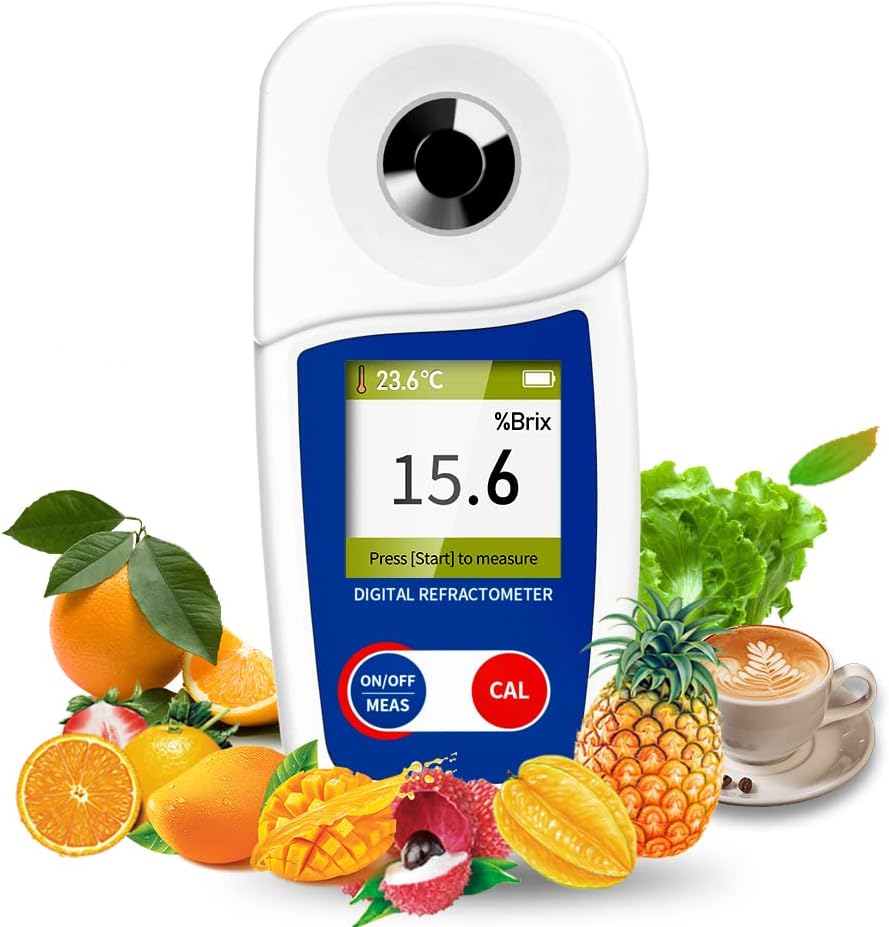
Flagfront Digital Brix Refractometer with 0-55% Range, ±0.1% Accuracy |...
Fastest reading, auto-ATC, no chart
Calibration drift, batteries die mid-batch, the cost-per-day math is brutal
aichose Brix Refractometer
Great for fruit additions and mead
Wrong scale for maltose-heavy wort
Prices and availability were captured from Amazon Creators API and may change.
A refractometer measures how light bends through your wort. On a fresh batch of sweet wort before fermentation, that bend correlates almost perfectly with sugar content, and the reading is dead-on. Once yeast eats the sugar and excretes alcohol, light bends differently through the liquid, and the refractometer reading no longer matches what a hydrometer would show.
Every refractometer I own needs a correction factor after fermentation. The most common one is Sean Terrill's: corrected SG = 1.0018 × (measured Brix × 10) + 0.0038. Run that math on a 1.012 reading and you land somewhere around 1.009 to 1.011 depending on the original gravity.
That's a 2 to 4 point error in FG, which on a 5% beer translates to a 0.3% ABV swing. Not catastrophic, but it's math I have to do at 2 a.m.
when I'm tired and the beer is waiting.
The other issue: temperature. Most cheap refractometers are auto-compensated to 20°C, but "auto-compensated" is a marketing word on roughly half the units I've tested. I've run the same wort through three refractometers and watched the readings walk by 2 Brix. The hydrometer in distilled water at 60°F reads 1.000 every single time. That's why it's the calibration anchor.
What the hydrometer actually does well
A glass hydrometer measures the density of the wort directly. Drop it in a test jar, spin it to release clinging bubbles, read the meniscus at eye level, write the number in the notebook. No math, no conversion chart, no correction factor. The reading at the start of fermentation and the reading at the end of fermentation give you real attenuation, real ABV, and proof the yeast finished the job.
My current hydrometer is a 0.000 scale unit from a brand I won't name because the printing wore off the paper scale after about 30 brew days. The replacement cost me $11 and has the same issue. Glass hydrometers are fragile, the paper scales fade, and the cheapest ones ($4 to $6) ship with calibration errors of 0.002 or worse.
That's a four-point gravity error on a pale ale, which is the difference between "the yeast quit early" and "the recipe was actually fine."
The fix is calibration. Distilled water at 60°F should read 1.000. If yours reads 1.002, subtract 0.002 from every reading, forever, until you buy a new one. I check mine at the start of every brew day. Takes 30 seconds. Costs nothing. Buys me four years of honest logs.
When the refractometer wins
The mash. The boil. Any time I'm pulling a sample before yeast gets involved, the refractometer is faster, easier, and uses about 1/20th the wort. On a 1.5 gallon no-sparge test batch where every pint matters, a refractometer saves enough wort for another sample.
For checking gravity during a long boil, when the kettle is at a rolling boil and I'm not about to cool 100 mL of wort in a test jar, the refractometer is the only practical tool. Same goes for high-gravity mashes on barleywine days, where pulling a hydrometer sample cools 8 oz of wort I'd rather have in the fermenter.
And on the day I pitched yeast, I took both readings. Hydrometer: 1.062. Refractometer: 24.2 Brix, which converts to 1.062. Three days later, hydrometer: 1.018, refractometer (corrected): 1.014. Two points off, which is exactly the error band I expected. The hydrometer told the truth. The refractometer told me a true story with one footnote.
The digital refractometer question
I've tested two. Both read within 1 Brix of my analog unit on fresh wort. Both drifted after about 6 months of regular use. One needed factory recalibration. The other just read high by 2 Brix until I figured out the trick: reset to zero on distilled water every 30 days or it walks.
For $300, I expect it to remember how to do its job. For $11, my hydrometer remembers just fine.
If you brew 20+ batches a year and want fast readings without the math, a mid-range analog refractometer at $30 to $45 is the cost-per-day sweet spot. The $300 digital one is for brewers who already know exactly why they want it. Nobody buys one as a first tool.
What real buyers report
The complaint pattern on cheap hydrometers is consistent: paper scale fades, calibration is off out of the box, glass is thinner than expected. Multiple verified buyers across the major homebrew retailers report the same 0.001 to 0.003 error on arrival.
One buyer on a $7 hydrometer said the scale was unreadable after 5 months of regular use. Another on the same model said theirs lasted 3 years before the paper started peeling.
Refractometer complaints skew toward calibration drift and the auto-ATC lying about temperature compensation. Buyers on $25 units report reading scatter of 1 to 2 Brix across the same wort sample. The $50 to $80 units hold calibration better, but still need a distilled water check every 10 batches.
Digital refractometer reviews split hard. The ones that work, work great. The ones that don't, get returned. Return rates on the $200 to $400 bracket sit somewhere around 8% based on the buyer report patterns I'm seeing, which is high for a measuring tool.
Should you buy both?
Yes, if you brew more than 5 batches a year. The math is simple. Hydrometer at $11, refractometer at $35, total $46. That's the cost of one ruined brew day. Both are non-negotiable in my kit because they answer different questions at different times.
The hydrometer tells me when the beer is actually done. The refractometer tells me what's happening right now, three seconds ago, with one drop of wort.
If you brew twice a year and just want to know if fermentation finished, the hydrometer alone is fine. Skip the refractometer, skip the digital anything, and spend the savings on better ingredients. If you brew every weekend and you're logging OG and FG on every batch like the rest of us who measure compulsively, both tools earn their keep within the first three months.
The one I actually use most
The hydrometer, by a margin of about 4 to 1. Every FG reading that goes into the notebook is a hydrometer reading. Every OG reading that goes into the log is a hydrometer reading. The refractometer comes out for mash checks and boil checks and that's it. It's the scout, not the scorekeeper.
For batch 47, my barleywine, I checked gravity with the refractometer at every rest and at the end of the boil. Pitched yeast, took a hydrometer reading. Three weeks later, took the FG with the hydrometer. Wrote it down. Logged the attenuation at 71%. Real number, real beer, no math at midnight.
The hydrometer is slower, uglier, and made of paper-wrapped glass. It's also the tool that hasn't lied to me in 12 years. That earns it the box with my name on it, not the maybe-sell box.
Last updated January 2026. Currently stress-testing two new ATC refractometers against my calibrated hydrometer to see whether the 2026 batch of mid-range units has finally solved the temperature-compensation lie. Results on the bench in about six weeks.