My first batch went into a fermenter in 2014, brewed on a dorm-room hot plate, and it tasted exactly like what it was: burnt adjunct lager. I have logged every batch since in a spiral notebook with a spreadsheet backup, and the habit that came out of it is the reason this site exists. The number on the instrument beats the adjective on the box, every time.
That is the lens I used for this comparison of home brewing kits and the small tools that support them. The four items below do not do the same job, and that is the first thing worth saying out loud. Two of them are ingredient kits that produce beer. One is a one-gallon mead kit built around reusable equipment. One is a dual-scale refractometer, which produces no beer at all and is still the item I would hand a brewer first.
My pick for most brewers in this group is the aichose dual-scale refractometer, because it is the only item here that makes every future batch more measurable. The kits earn their place on their own terms, but two of the three are consumables, and one of them assumes you already own a five-gallon pipeline.
One note on method before the table. I did not run all four of these side by side on a single brew day, and I will not pretend otherwise. Treat the table as a buying map rather than a taste test. What I can do is tell you what each product is, what it does well, and where it tends to let a brewer down.
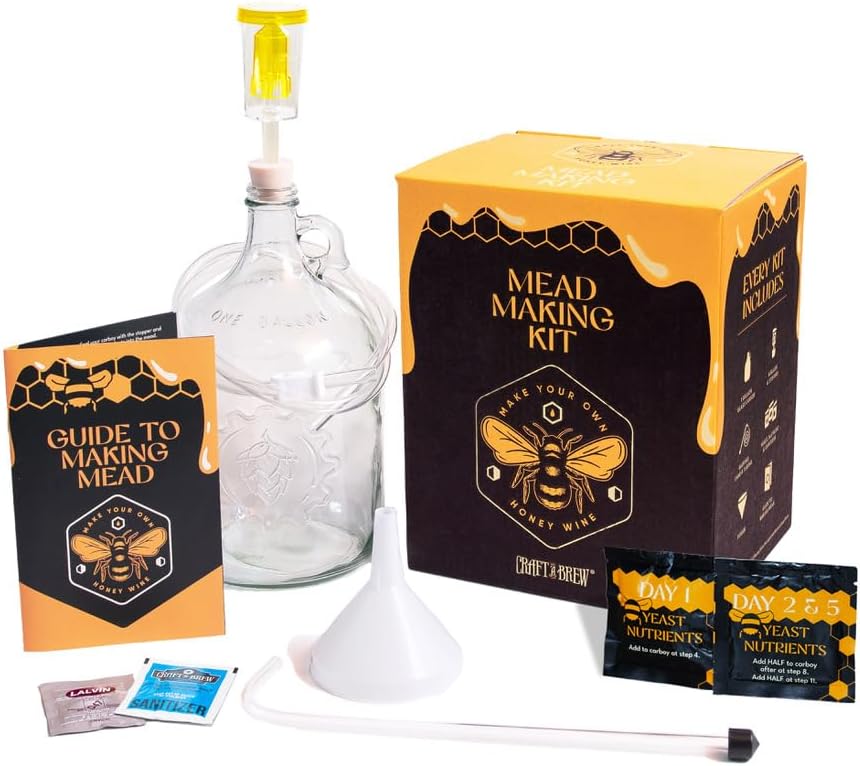
Craft A Brew Mead Making Kit
A no-boil fermentation and reusable equipment, so the second batch costs you honey and yeast and nothing else
One gallon is a small payoff, and mead rewards months of patience rather than a weekend
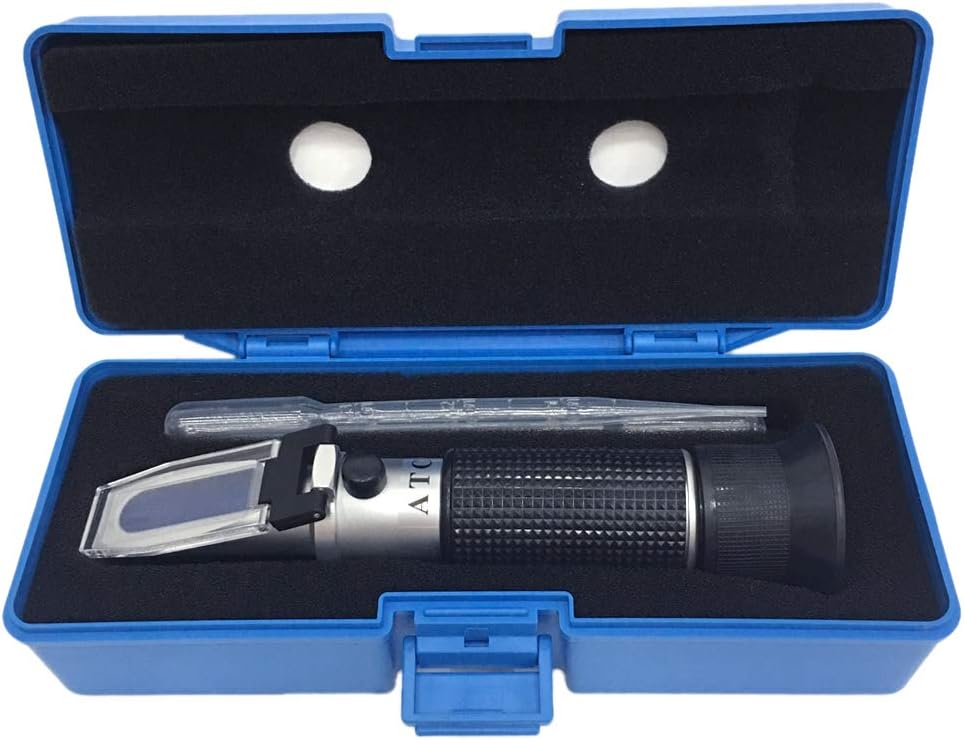
aichose Brix Refractometer with ATC, Dual Scale
Two drops instead of a sample, Brix and specific gravity on one scale, and automatic temperature compensation on both
Alcohol skews the reading once fermentation starts, so a hydrometer still has to confirm your final gravity
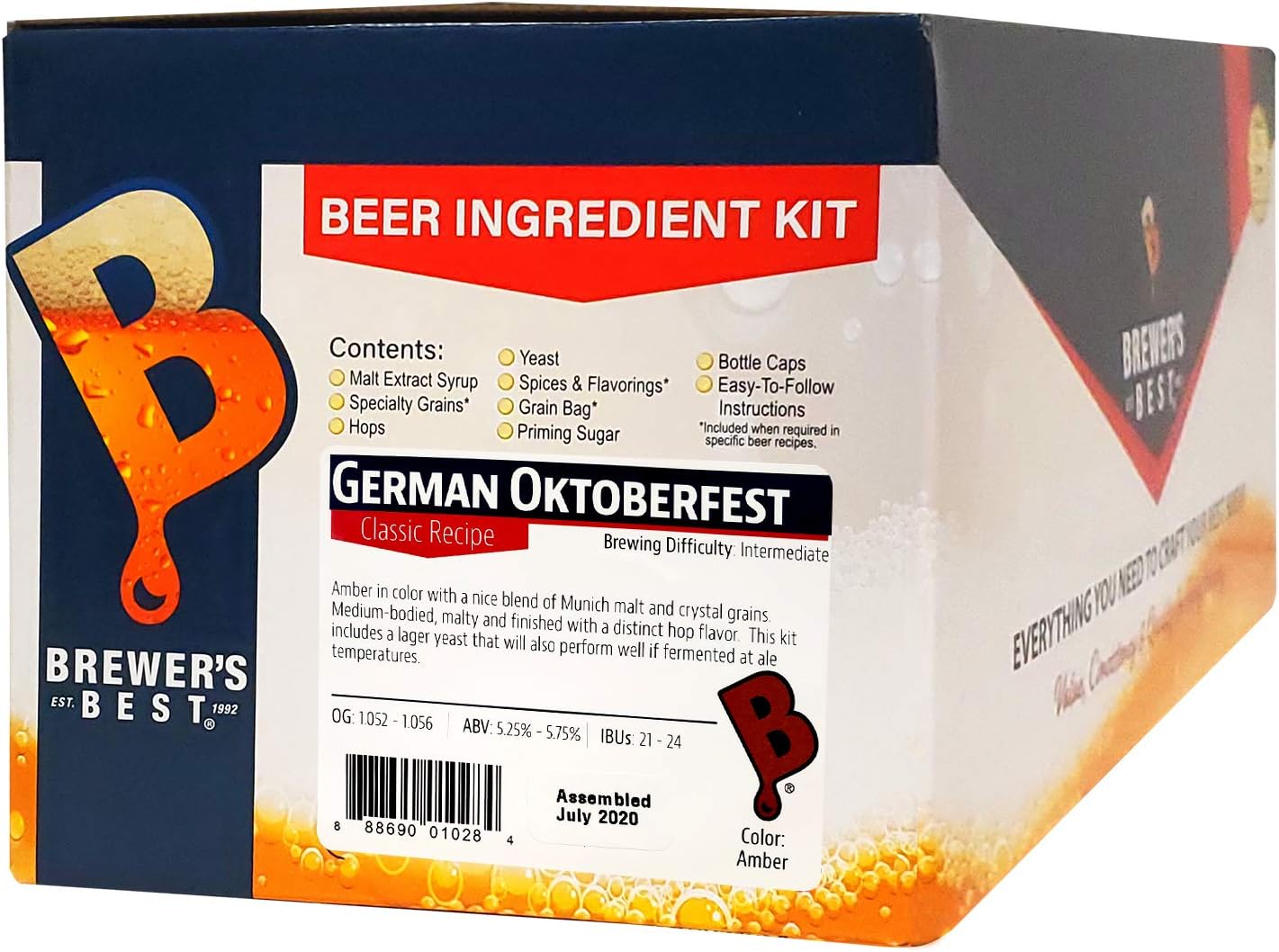
Brewer's Best German Oktoberfest Home Brewing Ingredient Kit
Style in a box: the fermentables, hops, and yeast for an Oktoberfest-style beer with no recipe math required
Oktoberfest is traditionally a lager style, and without fermentation temperature control you are brewing a different beer than the box promises
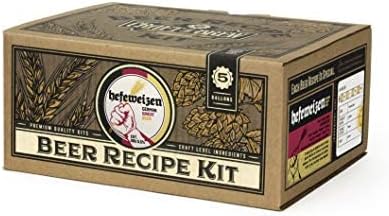
Craft a Brew Hefeweizen Beer Recipe Kit
Five gallons of a forgiving, expressive wheat ale with the hops, yeast, malts, and extracts already assembled
It is a refill, not a starter kit: no fermenter, no bottling gear, no capper
Prices and availability were captured from Amazon Creators API and may change.
The three questions I ask before anything earns bench space
Does it give me a number? This is non-negotiable. A tool that converts a guess into a reading is worth more than a gadget that converts money into shelf space. Gravity, temperature, volume, pH. If a product does not help me answer one of those, it has to justify itself some other way.
Can I use it more than once? Ingredient kits are consumables. You buy them, you brew them, they are gone. That is fine, but it means the value equation is a single batch, and a single batch is a poor place to learn a new skill. Reusable equipment and measuring tools compound. The refractometer in this group gets used on brew day, at packaging, and any time I want to check a starter. The mead kit's hardware gets reused for the second batch onward, even though the honey does not.
Does it match the batch size I actually brew? A one-gallon fermenter and a five-gallon fermenter are different hobbies sharing a vocabulary. Small batches are fast to chill, easy to store, and cheap to dump when they go wrong. Five-gallon batches are the volume most recipes and most kegging systems assume. Buying across both sizes without thinking about it is how people end up with a closet full of half-used gear.
That is the whole framework. Everything below is that framework applied to four specific products.
The refractometer, and why a number beats a guess
The aichose Brix Refractometer with ATC is the odd item in this comparison because it makes nothing. It measures. You place a couple of drops of wort on the prism, close the cover plate, and read the scale against a light source. The dual scale gives you Brix on one side and specific gravity on the other, which matters because brewers think in specific gravity and refractometers are built around sugar content in Brix. Having both on the same instrument saves you a conversion step on every reading.
The ATC in the name stands for automatic temperature compensation, which means the instrument corrects for sample temperature within its rated range instead of you doing the math in your head while the wort cools. That is the feature that makes a refractometer usable on a brew day, because brew-day samples are never all at the same temperature.
The practical win is sample size and speed. A hydrometer needs enough liquid to float in, which means pulling a cylinder's worth of wort out of the kettle, chilling it, reading it, and then deciding whether you are allowed to pour it back. A refractometer needs two drops. On a brew day where I want to check first runnings, pre-boil gravity, and post-boil gravity, that difference is the difference between taking three readings and taking one.
Now the honest limitation, because this is where refractometers get oversold. Once fermentation produces alcohol, the alcohol changes how light bends through the sample, and your reading drifts from the true specific gravity. You can correct for it with a conversion calculation, and most brewers do, but the correction gets less reliable the further fermentation has gone. My answer is not to pick a side. I keep a hydrometer calibrated in distilled water at 60°F for the final gravity reading and use the refractometer for everything before fermentation, plus a sanity check after. Two tools, one number, and the number is the point.
The refractometer is also the only item in this group that survives every other purchase. Drop it in a padded case and it outlives the kits, the fermenters, and probably the brewer's first two carboys.
The two beer kits, and the difference between a style and a plan
The Brewer's Best German Oktoberfest Home Brewing Ingredient Kit is an ingredient kit in the classic sense: one box holding what you need to make a specific style, so you are not assembling a grain bill or guessing at hop additions. The appeal is timing. If you want an Oktoberfest-style beer ready when the leaves turn, the thinking has already been done for you, and the ingredient list is built around the style rather than around a generic ale.
Where it loses is the part the box cannot solve. Oktoberfest is traditionally a lager style, and lager fermentation means cool, steady temperatures that most first-year brewers do not have a controlled space for. If your garage swings twenty degrees between day and night in September, you are not brewing a lager, you are brewing an experiment with a lager's name on it. That is not a knock on the kit. It is a knock on buying a lager kit before you own a way to hold a temperature. Do that and you have bought a lesson in fermentation control, which is a fine lesson and an expensive way to learn it.
The Craft a Brew Hefeweizen Beer Recipe Kit is a different proposition. It is a five-gallon recipe refill with hops, yeast, malts, and extracts included, which means it slots into a pipeline you already own rather than building one. Five gallons is the standard batch for a reason: it fills a keg, it bottles into a reasonable number of bottles, and every piece of equipment you buy later will be sized for it.
Hefeweizen is also a smart style to brew early, because the yeast is the star and the yeast is forgiving about everything except the wrong temperature. Warm it up and you get banana esters with no clove character to balance them, which is exactly how I invented my first banana bubblegum disaster on a hot plate. Keep it in the range the instructions give you and a wheat ale rewards you with something that tastes like a deliberate decision.
The catch is right there in the word refill. No fermenter, no bottling bucket, no capper, no siphon. If you do not already own those things, this product is half of a purchase, and the other half is a starter equipment kit you have not bought yet.
The one-gallon question
The Craft A Brew Mead Making Kit makes one gallon, and that single number shapes everything about it. A gallon is small. It fits on a kitchen counter, it chills fast, it stores in a closet, and it does not require a burner, a kettle, or a boil at all, because honey does not need to be boiled the way wort does. That makes it the lowest-friction fermentation in this group, and honestly the one I would hand a curious friend who has never sanitized anything in their life.
The equipment is reusable, which is the real argument. Batch one costs the kit. Batch two costs honey, yeast, and nutrients. Compare that to an ingredient kit, where every batch resets to zero cost, and you can see why I weight reusable gear so heavily.
The trade-offs are patience and payoff. One gallon does not fill many bottles, and mead is a slow fermenter that benefits from aging. If your goal is a beer in your hand three weeks from now, this is the wrong product and no amount of good brewing will change that. If your goal is to understand what a healthy fermentation looks like with the least possible equipment, it is a genuinely good place to start, and the volume is small enough that a mistake costs you a gallon instead of five.
Who should buy what
If you own no brewing equipment at all and you are not sure this hobby is for you, the mead kit is the cheapest experiment in this group and the one with the smallest failure cost.
If you already brew and you do not own a refractometer, buy the refractometer before you buy another kit. It is the only item here that improves every batch you will ever make, including batches made from the other three products.
If you brew five-gallon batches and you want a wheat beer that forgives a first attempt at a new style, the Hefeweizen refill is the straightforward pick, provided your equipment is already assembled.
If you have real fermentation temperature control and a fall calendar in mind, the Oktoberfest ingredient kit is a solid seasonal project. Without that control, wait a year and buy it when you can do it properly.
What I am watching next
Two things are on my list for the rest of 2026. First, warm-fermented lager strains, because the single biggest barrier to kits like the Oktoberfest box is temperature control, and a clean lager strain that behaves at ale temperatures would change who can brew those styles. Second, I want to run a full side-by-side of refractometer versus hydrometer on the same batch from first runnings to final gravity, logging every reading, so the correction math stops being folklore and starts being a table in my notebook.
Until then, the rule holds. Measure everything, write it down, and trust the instrument over the adjective on the box.