Related: Best Small-Batch Fermenter: 1 Gallon vs 6 Gallons
Every week somebody asks me which home brewing starter kit to buy first, and the honest answer depends on one number: how much beer you actually want to end up with. I have brewed more than 50 logged batches since a scorched Mr. Beer kit in 2014, and I spent three years as the assistant brewer at a 7-barrel brewpub in Grand Rapids, running gravity and pH checks on every tank, every day. That job taught me the habit behind everything on this site. Measure it and write it down. A hydrometer does not lie and a spec sheet does.
So this is not a list of the four cheapest things with a brewing keyword in the title. It is three products I would put on a brew stand or in a serving corner, plus one that has no business in a brewery at all, which I will explain honestly because it arrived in the same batch of gear.
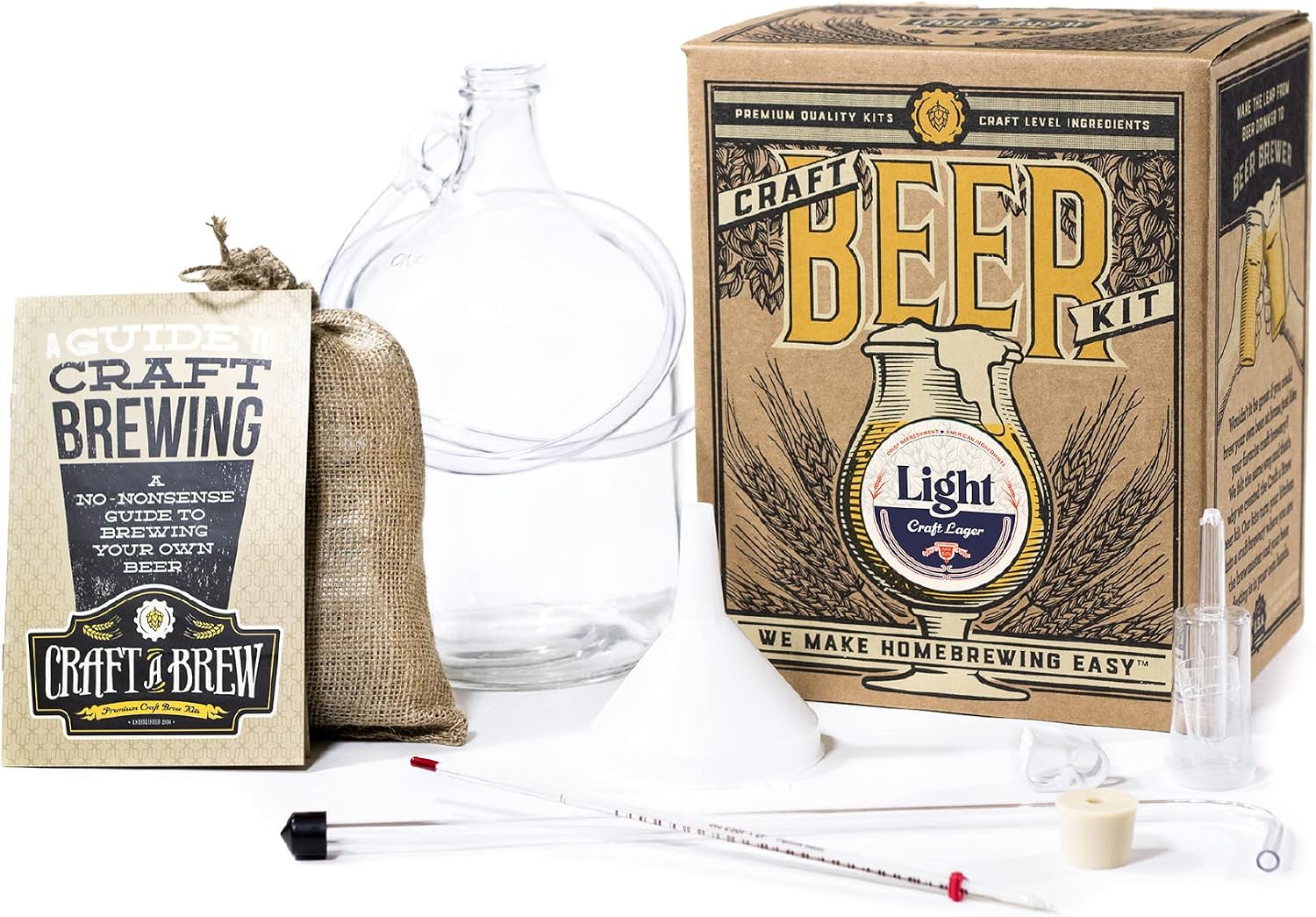
Best First Kit: Craft A Brew Light Craft Lager
If you have never brewed, start at one gallon. This kit is a complete equipment and supplies package built around a 1-gallon fermenter, and the small size is the whole point. A one-gallon batch fits on a kitchen counter, chills in a sink of ice, and finishes fast enough that you learn the entire pipeline, from wort to bottle, in about three weeks. I have watched far more people quit over a five-gallon brew day they were not ready for than over beer that turned out badly.
The first thing I check in any kit is whether a hydrometer is in the box, because you cannot brew consistently if you cannot measure. If it is not included, budget for one on day one. The second thing I check is the instruction sheet. If it says to trust your instincts on fermentation temperature instead of giving you a number, that kit is telling you it does not know either. Instincts are why my first batch hit 82°F and tasted like banana bubblegum.
Where the 1-gallon format loses is volume. You get roughly eight to ten bottles per batch, which means a recipe you finally dial in is gone before you can repeat it. That is fine for batches one through three, and it is exactly why most brewers move up by batch four. Check current Amazon price before you commit, and treat this as tuition rather than a forever kit.
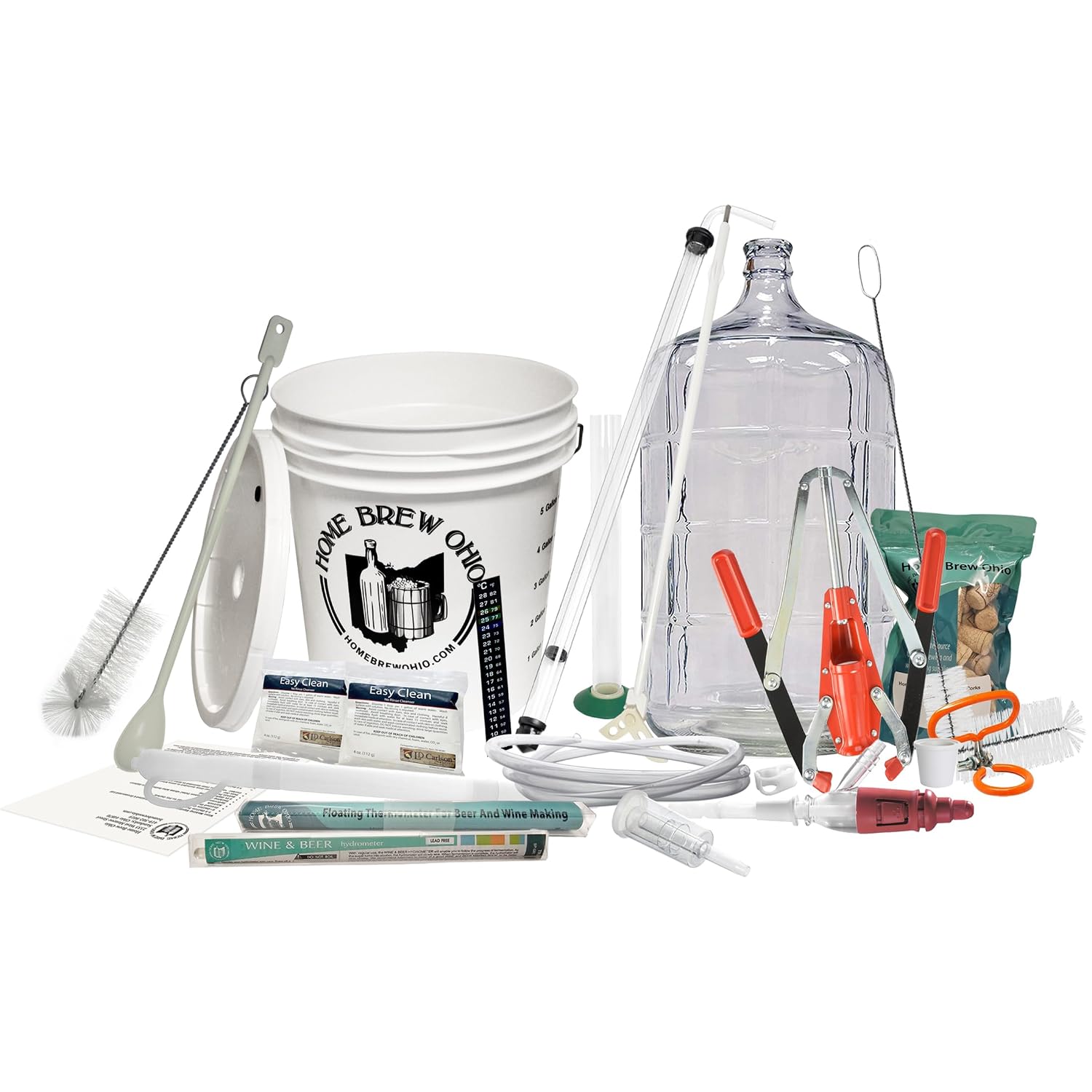
Best for Volume: Ultimate Wine Making Equipment Starter Kit with 6 Gallon Glass Carboy
A 6-gallon glass carboy is the workhorse vessel of this hobby, and this kit pairs one with the equipment that turns it into a working fermenter. Glass matters for two reasons. It does not scratch, and scratches are where infections live. It is also transparent, so you can watch the krausen rise and drop, which is how you learn what a healthy fermentation looks like without cracking the lid and letting oxygen in.
The name says wine making, and that deserves a plain answer. A carboy does not care what is inside it. Six gallons is the standard vessel size for a 5-gallon beer batch with headspace left for krausen, and the airlock, stopper, and siphon that come with a kit like this transfer straight to beer. If someone tells you a carboy is only for wine, they are selling you something else.
Two things to check before buying. Glass is heavy when full, and it is slippery when wet, so if you have a bad back or a narrow stairwell, a plastic or stainless fermenter is the smarter call and there is no shame in it. The other thing I would add on day one is a spare spigot and a spare airlock, because the most common and most preventable failure in this hobby is a fermenter that starts dripping on day twelve of a three-week batch. Check current Amazon price.
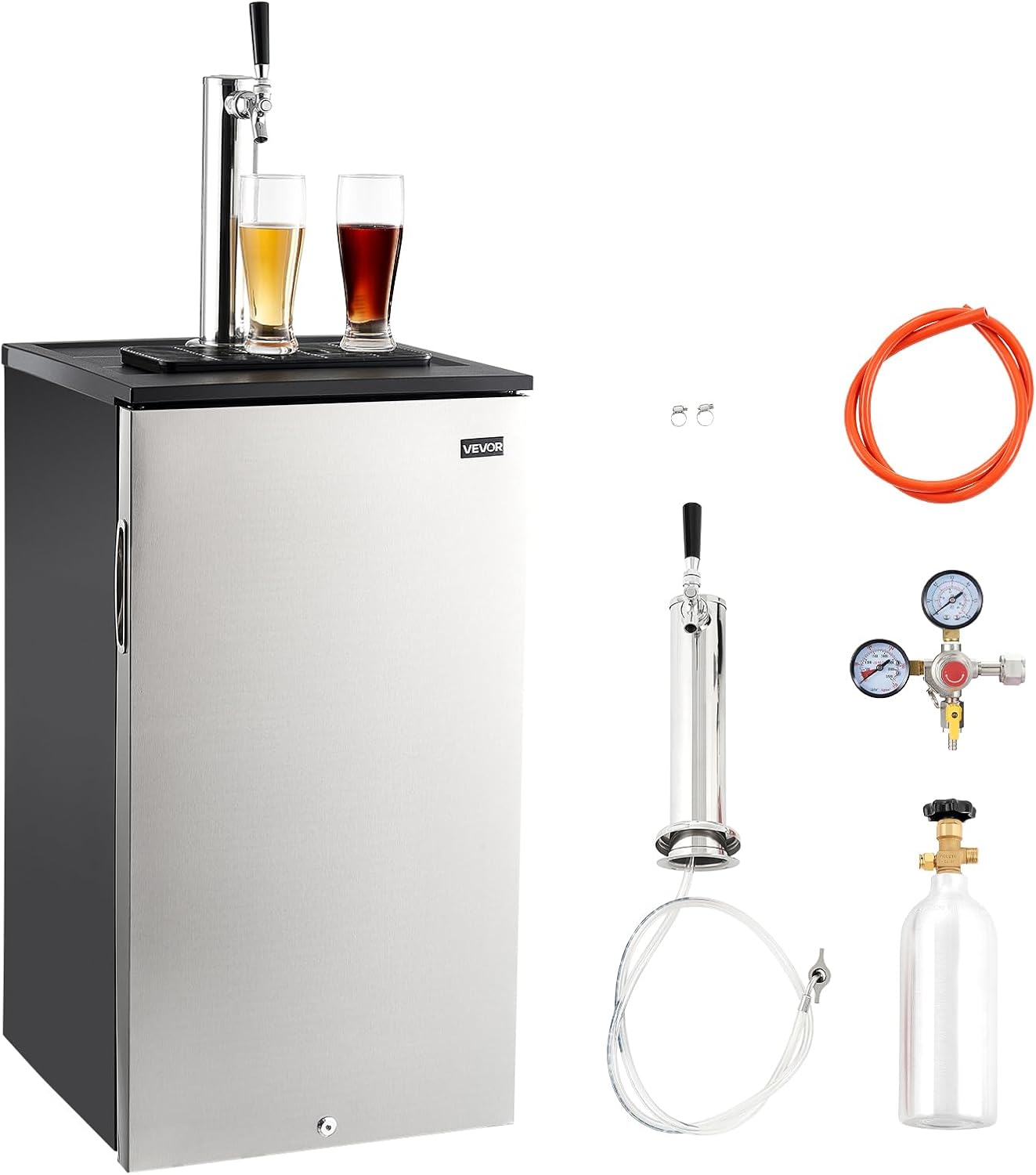
Best for Serving: VEVOR Beer Kegerator, Single Tap
Bottling is the tax you pay for not kegging. This single-tap kegerator is a draft dispenser built for D system couplers, holds one sixth keg, and includes shelves and a 2.5 lb CO2 tank, which makes it a complete serving setup rather than a refrigerator with a hole drilled in the door.
This is a purchase for batch ten, not batch one. Kegging does not make better beer on its own, but it removes the two things that ruin the most homebrew: oxygen pickup at packaging and carbonation that varies bottle to bottle because your priming sugar did not mix evenly. Carbonating in a keg means you set a pressure at a temperature and get the same pour every time. That is control, and control is the entire game.
Plan for two things. First, a kegerator needs a dedicated spot near an outlet, and a 92L unit is furniture, not a countertop appliance. Second, draft lines need cleaning every couple of weeks with no exceptions, because a dirty line makes every pour taste like the last one. If you will not commit to that schedule, bottles remain a perfectly good answer. Check current Amazon price.
Not brewing gear: Dog Rescue Oxygen Kit
I am not going to pretend this belongs in a brewery. This is a portable oxygen supply for pets, sized for animals from 0 to 11 lbs, and it ships with oxygen, a mask, a regulator, tubing, and a travel case. It is here because it came in the same batch of gear, and I would rather tell you what it is than quietly leave it out of the list.
The reason it earns a paragraph is that the discipline overlaps. In a brewery I keep a gas cylinder for wort aeration, and the lesson is identical on both sides: know what your gas is, know what your regulator is set to, and never store a cylinder where it can tip over. If you have a small dog and you travel or foster, this is a purpose-built kit for a real problem. It is not an aeration setup for wort, and please do not try to make it one.
How I judge gear before it makes this list
I do not write a recommendation off a spec sheet. My bench standard is three full brew days, and a product that fails on day one gets exactly one more chance before it goes in the box marked maybe sell. Day-one build quality is the strongest predictor of long-term value I have found. Gear with properly welded fittings and a thick base is still working at batch 100, while the things that needed babying at batch 10 are gone by batch 30.
For fermentation gear I check four things: does it seal, does it hold a steady temperature, can I clean it without scratching it, and can I pull a gravity sample without opening the lid. For serving gear I check pour consistency, seal integrity at the coupler, and how annoying the line cleaning is, because the equipment you dread cleaning is the equipment that quietly ruins batches.
And for everything, I calibrate the hydrometer in distilled water at 60°F before the brew day starts. If it reads 0.002 high, it reads 0.002 high all day, and a bad reading on a batch you waited three weeks for is worse than no reading at all.
What the numbers say
These four products are not competing with each other. They sit at different stages of the pipeline, which is why the reference table below reads the way it does.
The 1-gallon kit is the learning stage: small volume, short timeline, low cost of being wrong. The 6-gallon carboy is the volume stage, the vessel that takes you from eight bottles to a full case. The kegerator is the serving stage, where carbonation stops being a guess. And the oxygen kit is not a stage at all, which is exactly why it gets its own note instead of a ranking.
Two honest warnings. Capacity claims are marketing until you measure them, and a 6-gallon carboy holds 6 gallons to the neck, which means a 5-gallon batch with krausen headspace and no more. Second, nothing on this list fixes a temperature problem. If your garage swings 20 degrees overnight, an expensive fermenter makes the same bad beer as a cheap one. Control temperature first, buy gear second.
The reference table
This is the table I keep for anyone building a setup from scratch. Capacity is what the vessel actually holds, not what the label implies, and the last column is the thing I would verify before spending money.
| Gear | Where it fits | Capacity | What to check |
|---|---|---|---|
 Visit on Amazon → Craft A Brew Light Craft Lager Kit |
Learning | 1 gallon | Hydrometer in the box, real temperature numbers in the instructions |
 Visit on Amazon → Ultimate Wine Making Equipment Starter Kit with 6 Gallon Glass Carboy |
Volume | 6 gallons | Weight when full, spare spigot, a spot you can lift from safely |
 Visit on Amazon → VEVOR Beer Kegerator, Single Tap |
Serving | 1 sixth keg | D system coupler, line cleaning schedule, outlet and footprint |
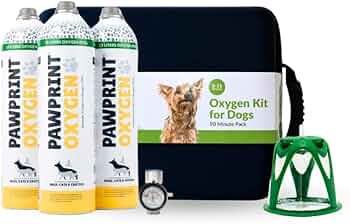 Visit on Amazon → Dog Rescue Oxygen Kit |
Not brewing | 0-11 lbs pet | Not for wort aeration, cylinder storage |
What I would buy in what order
If you are starting today, buy the 1-gallon kit and a hydrometer, brew three batches, and log OG and FG on every one. When you know you are staying in the hobby, move to the 6-gallon carboy and brew five-gallon batches until your process is boring and repeatable. Only then does the kegerator make sense, because serving gear amplifies a good process and exposes a sloppy one.
Should you buy the Craft A Brew Light Craft Lager kit?
Yes, if you have never brewed. One gallon, one afternoon, and a pipeline you can learn end to end before spending real money. Add a hydrometer if one is not in the box, and write your gravity readings down. If you already know you want five gallons at a time, skip this and go straight to the carboy.
Should you buy the Ultimate Wine Making Equipment Starter Kit with 6 Gallon Glass Carboy?
Yes, if you brew five-gallon batches and want a vessel that outlives three plastic buckets. Glass is heavier and it demands respect when you lift it, but it does not scratch, it does not hold smells, and it lets you watch fermentation work. Add a spare spigot and you have eliminated the most common failure in the hobby.
Should you buy the VEVOR Beer Kegerator?
Yes, if you are past batch ten and tired of priming sugar math. One sixth keg, a 2.5 lb CO2 tank, and a D system coupler is a complete draft setup, and a kegerator that holds temperature will pour better beer than you were bottling. Clean the lines on schedule or it will not. If you are still on batch two, this is the wrong purchase no matter how good the listing looks.
Should you buy the Dog Rescue Oxygen Kit?
Yes, if you have a small dog and you travel, foster, or work rescue. It is a complete portable oxygen kit for animals from 0 to 11 lbs, and it is the one item on this page that has nothing to do with beer. Buy it for the right reason or not at all.