I brewed my first batch in 2014 on a dorm room hot plate with a Mr. Beer kit that scorched so badly I thought I had invented a new style. I still call it burnt adjunct lager. Twelve years and 50+ logged batches later, I have brewed everything from a 1.030 session bitter to a 1.100 barleywine, spent three years as the assistant brewer at a 7 barrel brewpub in Grand Rapids, and learned the same lesson over and over: gear decides more than the recipe does. So when people ask me which home brewing starter kits to buy, my answer is never a single box. It is a sequence.
This comparison covers the four purchases I would make first if I were starting over with a kitchen stove, a garage corner, and a spiral notebook. A triple scale hydrometer kit, a 2 gallon conical starter kit with bottles, a one gallon mead making kit, and an American amber ingredient kit. Three of them make something you can drink. One of them tells you the truth about what the other three made, and it is the cheapest thing on this list.
The short answer: buy the measuring tool first, then the fermenter that fits the space you actually have, then the ingredient kit that matches your patience. The mead kit is the best side quest in the hobby and the worst first purchase if you hate waiting.
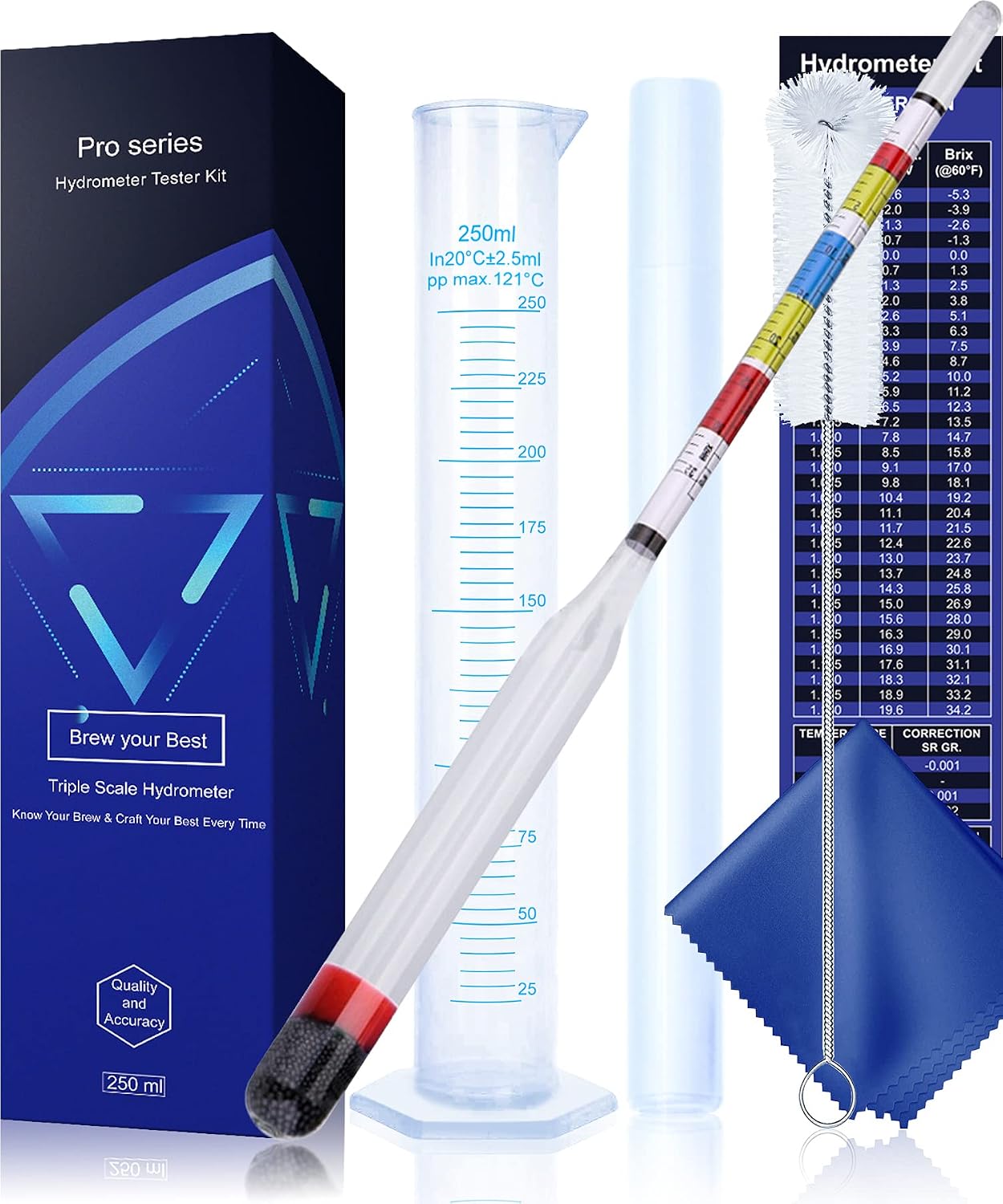
Hydrometer Test Kit, Triple Scale Alcohol Tester for Wine, Beer, Kombucha and Mead, with Test Jar
Three scales in one float, and the test jar means you pull a sample instead of dropping glass into the fermenter
It is a tool, not a batch. Nothing ferments until you buy something else too
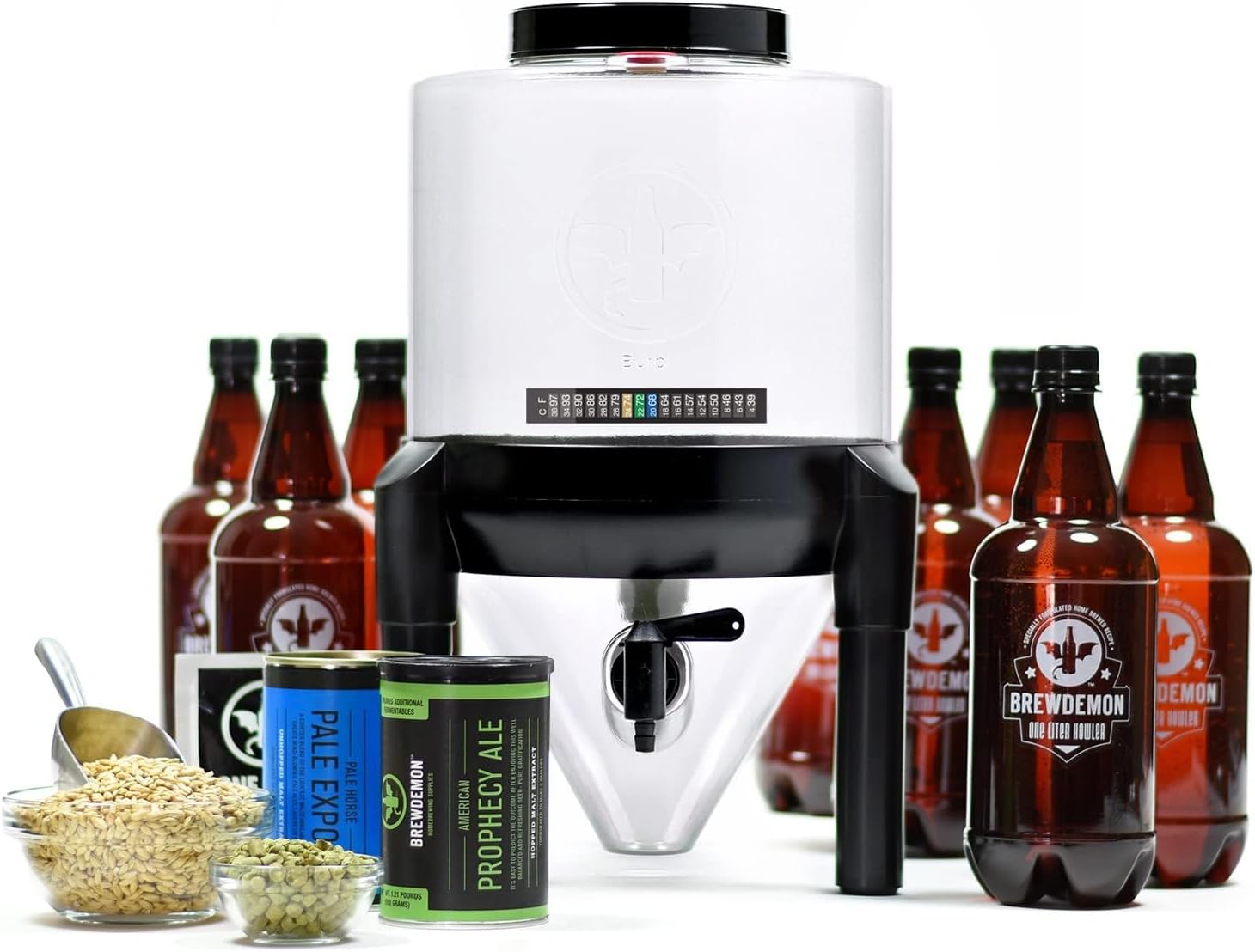
Craft Beer Kit Plus - 2 Gallon Conical Starter Kit with Bottles
Small batch size keeps brew day under control, conical shape drops trub away from your samples, bottles included
You will outgrow two gallons, and any valve on any fermenter is a future drip you have to watch
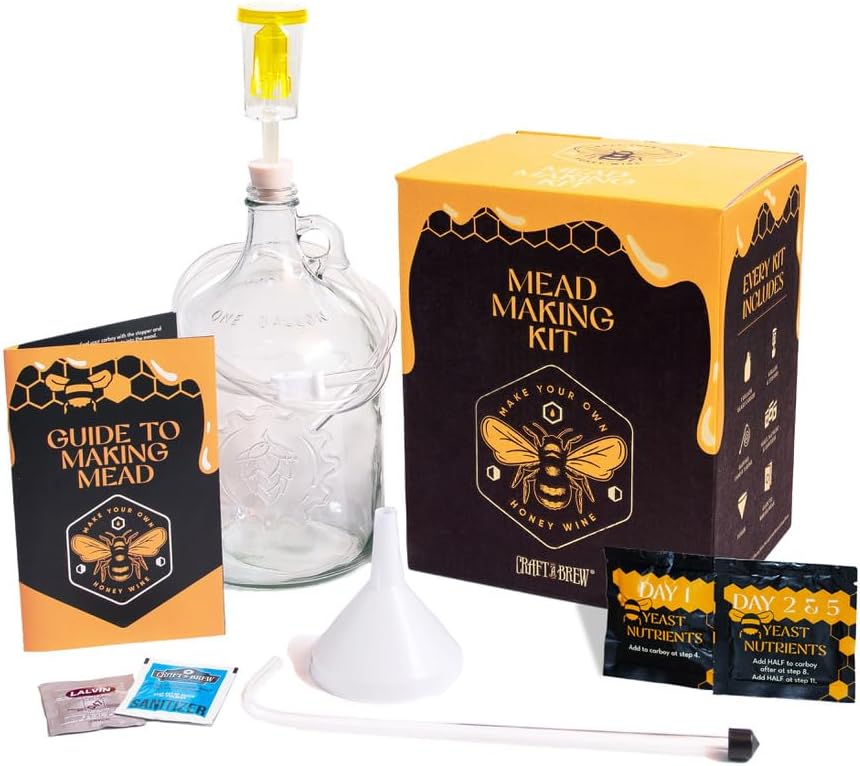
Craft A Brew - Mead Making Kit - Reusable Make Your Own Mead Kit - Yields 1 Gallon of Mead
Reusable hardware means batch two costs you honey and yeast, and mead teaches patience better than beer does
Honey is not cheap per bottle, and a gallon of mead is a months long commitment, not a weekend
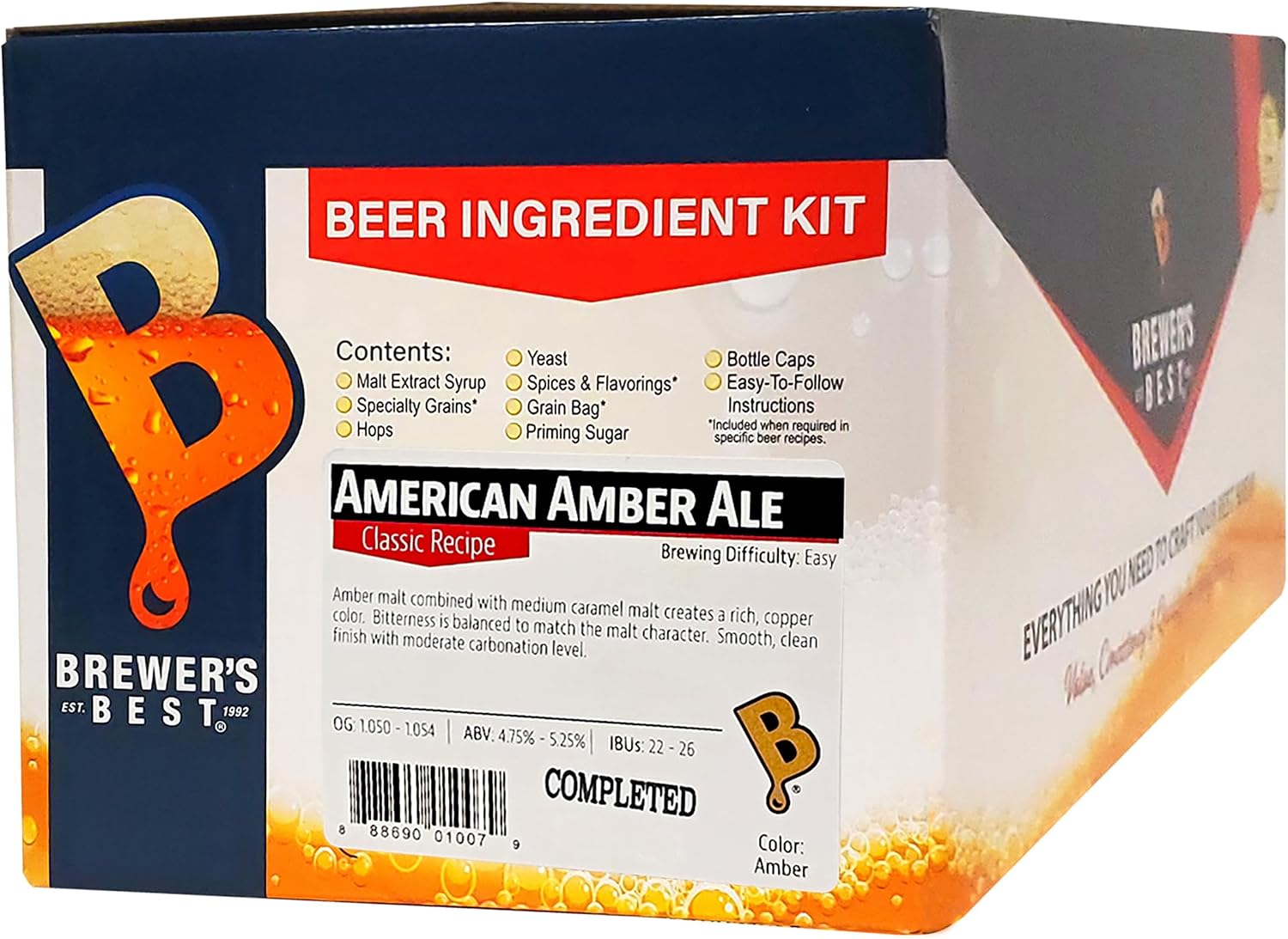
American Amber Homebrew Beer Ingredient Kit
Forgiving style that hides small process mistakes, and it forces you to practice gravity readings on real wort
It is ingredients only. No kettle, no fermenter, no hydrometer, no bottles
Prices and availability were captured from Amazon Creators API and may change.
How I sort a list like this
These four products are not four versions of the same thing, so I am not pretending to rank them head to head. I am ranking them by order of purchase, which is the only ranking that matters to somebody standing in their kitchen wondering where the money goes first.
My filter is simple. Does it survive a full brew day without embarrassing itself? Does it hand me a number I can write in the notebook? Will it still be on my bench at batch 100, or will it be in the box labeled "maybe sell" by batch 30? I have watched a $35 pump die mid sparge on batch 41, and I have watched a welded in thermometer read 10 degrees off on a kettle that cost more than my first three fermenters combined. Cheap gear that works beats expensive gear that lies, every single time.
Every number I care about in brewing comes off an instrument, not a spec sheet. Original gravity, final gravity, attenuation, and the gap between them. That is why the cheapest item here sits at the top of the list.
The measuring tool comes before the fermenter
A hydrometer is a glass float that measures the density of a liquid. Drop it in wort and it tells you how much sugar you started with. Drop it in finished beer and it tells you how much sugar the yeast left behind. The difference between those two readings is your alcohol by volume, and it is the only honest answer to the question "did this batch work?"
This kit is a triple scale float, which means one instrument reads specific gravity, Brix, and potential alcohol. The detail that matters more than the scales is the test jar. A tall sample tube lets you pull a few ounces of wort, float the hydrometer in that, and read it at eye level without opening the fermenter lid and without risking a broken glass float inside your beer. I have done it the other way. It ends with a siphon, a flashlight, and bad language.
Two habits turn a hydrometer from a gadget into a tool. First, calibrate it. Distilled water at 60°F should read 1.000. If yours reads 0.002 high, write that correction in your notebook and apply it to every reading for the life of the instrument, because a hydrometer that reads high at the start of the day reads high all day. Second, take both readings. An original gravity with no final gravity is trivia. A final gravity that has not moved in three days is proof fermentation finished, and proof is what you need before you bottle.
A kit that ships without a hydrometer is asking you to guess, and guessing is how my first batch hit 82°F and tasted like banana bubblegum. If you already own a fermenter and nothing else, this is the one item on this list I would buy today.
The 2 gallon conical kit: small batches, real feedback
The case for a small batch is not that it makes less beer. It is that it makes the same mistakes cheaper. A 2 gallon batch boils on a kitchen stove, chills in a sink of ice water, and bottles in a single sitting. When something goes wrong, and on batch one something goes wrong, you have lost a small afternoon instead of a full day and a pile of ingredients.
The conical shape is the interesting part. A cone pulls trub and yeast down into a narrow point, away from the side of the vessel, which makes it easier to pull a clean sample for a gravity reading and easier to leave the sediment behind when you package. Bottles are included, which removes the most annoying errand in the hobby.
Here is the honest trade-off list. Two gallons is a gateway size, not a destination size, and by batch three you will be eyeing something bigger. Any fermenter with a valve is a fermenter with a future leak, and a dripping spigot is the most common and most preventable failure in home brewing, so inspect the seal and consider a spare valve on day one. And read the kit contents carefully: some starter kits include a hydrometer and some quietly do not, and the ones that do not are selling you a batch you cannot measure.
The mead kit: the best way to learn patience
Mead is honey, water, yeast, and nutrient, and that is the whole recipe. There is no mash, no boil, and no hop schedule, which makes it a gentle first ferment and a brutal lesson in waiting. A one gallon batch fits on a counter and asks almost nothing of your stove.
This kit is built around a reusable one gallon setup. That word reusable is the whole value proposition. Your second batch costs you honey, yeast, and nutrient, not hardware, which is exactly how a starter kit should behave. The honey bill is real, and mead takes months rather than weeks before it tastes like something you want to share, so do not start one the week before a party.
What mead teaches you is process discipline. You learn to take gravity readings on a schedule instead of once. You learn that nutrient additions staggered across the first few days of fermentation matter. You learn to degas and to keep the must warm and stable, because honey has no roasted malt flavor to hide behind. Brewers who make good mead tend to make good beer, and it is not a coincidence.
If you brew beer in the summer and want something fermenting while the garage is too hot for ale yeast, this is the kit I would reach for.
The amber ingredient kit: the cheapest lesson in fermentation
Read the name carefully, because it tells you what you are buying. This is an ingredient kit, not an equipment kit. It supplies the malt extract, the steeping grains, the hops, and the yeast, and it assumes you already own the kettle, the fermenter, the bottling gear, and the hydrometer. If you do not own those things yet, this belongs later in the sequence, not earlier.
An American amber is a smart first style for a reason. The color and the caramel backbone are forgiving, which means a slightly high fermentation temperature or a rushed chill will not announce itself the way it would in a delicate lager or a pale ale. It lets you focus on the mechanics that actually decide whether your beer is good: a full rolling boil, a fast chill, a healthy pitch of yeast, and stable temperature through the first 72 hours.
The batch size on the listing is the detail to check before you pair it with a fermenter, because ingredient kits and small conical fermenters do not always agree on volume. Buy the kit that matches the vessel you own, not the other way around.
What this kit cannot do is teach you anything twice. Brew the same recipe two or three times, change one variable at a time, and write down what happened. That is the difference between brewing and gambling.
The order I would actually buy in
If you are starting from zero, the hydrometer kit comes first because it is the cheapest item here and it makes every later purchase measurable. A batch you cannot read is a batch you cannot repeat, and repeating batches is the entire skill.
Second comes the fermenter that fits your reality. A 2 gallon conical kit with bottles is the right call for an apartment, a small kitchen, or anyone who wants a brew day that ends before dinner. If you have a garage and a burner, buy the size you will still want in a year.
Third comes the ingredient kit, once you have something to ferment it in and something to measure it with.
The mead kit sits outside the sequence. It is the second hobby inside the hobby, and it is the one I recommend to brewers who are bored rather than brewers who are new. Buy it when you want a fermenter working while you read about beer, not when you are trying to learn what wort tastes like.
What I would skip entirely is the instinct to buy everything at once. Four kits opened on the same weekend teach you nothing except how much sanitizer you own. One kit, one notebook, one gravity reading at a time.
What I am watching next
I am building a survivability score for the 2026 gear rankings, weighted by how many full brew days a product survives before it breaks, leaks, or foams over, and the new pressure fermenters are the test case. The pitch is that pressure shortens the pipeline from brew day to glass, and that is measurable. So is the cleaning time, the seal life, and whether the thing holds pressure at day 30 without a hiss. If a vessel cannot survive three brew days without me babysitting it, it does not get a recommendation, no matter what the spec sheet claims.
The bottom line
Buy the hydrometer kit first. It is the cheapest item on this page and the only one that tells you whether the other three worked. Then buy a fermenter sized to your kitchen and your patience, then buy the ingredients that match the style you actually drink. Add the mead kit when you want a second fermenter doing something interesting while you wait on the first one. That order costs less than one all in one electric system, and it will teach you more in six months than that system would in two years.