Related: Brew Day Gravity Readings: How to Read OG and FG Without Guessing
My first batch fermented on a dorm-room hot plate in a plastic bucket, and the beer tasted exactly like that sentence. Twelve years and more than 50 logged batches later, including three years as the assistant brewer at a 7-barrel brewpub in Grand Rapids, I still think about home brewing starter equipment the same way I did after batch one: buy the pieces that hold a number, and let the recipe wait until the gear stops lying to you.
That is the argument of this guide. A kettle big enough that a boilover is annoying instead of catastrophic. An ingredient kit whose style forgives a beginner and still tastes like beer. A second fermentation project that teaches the same sanitation and gravity discipline with a different sugar source. And a serving vessel that gets beer out of the fermenter without a full draft system. Those four jobs cover batch one through batch ten, and I will say plainly where each of these stops being the right answer.
One honest note on method before we start. My rule for anything that goes on my own brew stand is three full brew days before it earns a recommendation, and a piece that fails on brew day one gets exactly one more chance. I cannot run that test for you from a desk, so I am not going to pretend I did. What I can do is tell you the spec lines and failure points I check first, the ones that have cost me brew days, and why these four products fit the jobs a starter setup actually has.
What separates starter gear that lasts from starter gear that quits
Three failure points have cost me brew days, and every one of them shows up in the spec sheet before you buy.
The first is hardware you cannot service. A welded-in thermometer that reads 10 degrees off is a lie you cannot fix with a wrench. Weldless fittings, the kind you tighten and replace yourself, are worth more than any feature printed in bold on a box.
The second is a kettle that is too small for the boil you actually run. A rolling boil with hops in it wants room, and a pot filled to the rim at the start of the boil is a pot that foams over at minute 40. Headspace is not wasted volume. It is insurance.
The third is a kit that skips the hydrometer. You cannot brew consistently if you cannot measure, and a kit that ships without the single most important tool in the hobby is telling you something about how it was put together. Buy the hydrometer on day one either way.
CONCORD Stainless Steel Home Brew Kettle (80 QT / 20 Gal): the backbone
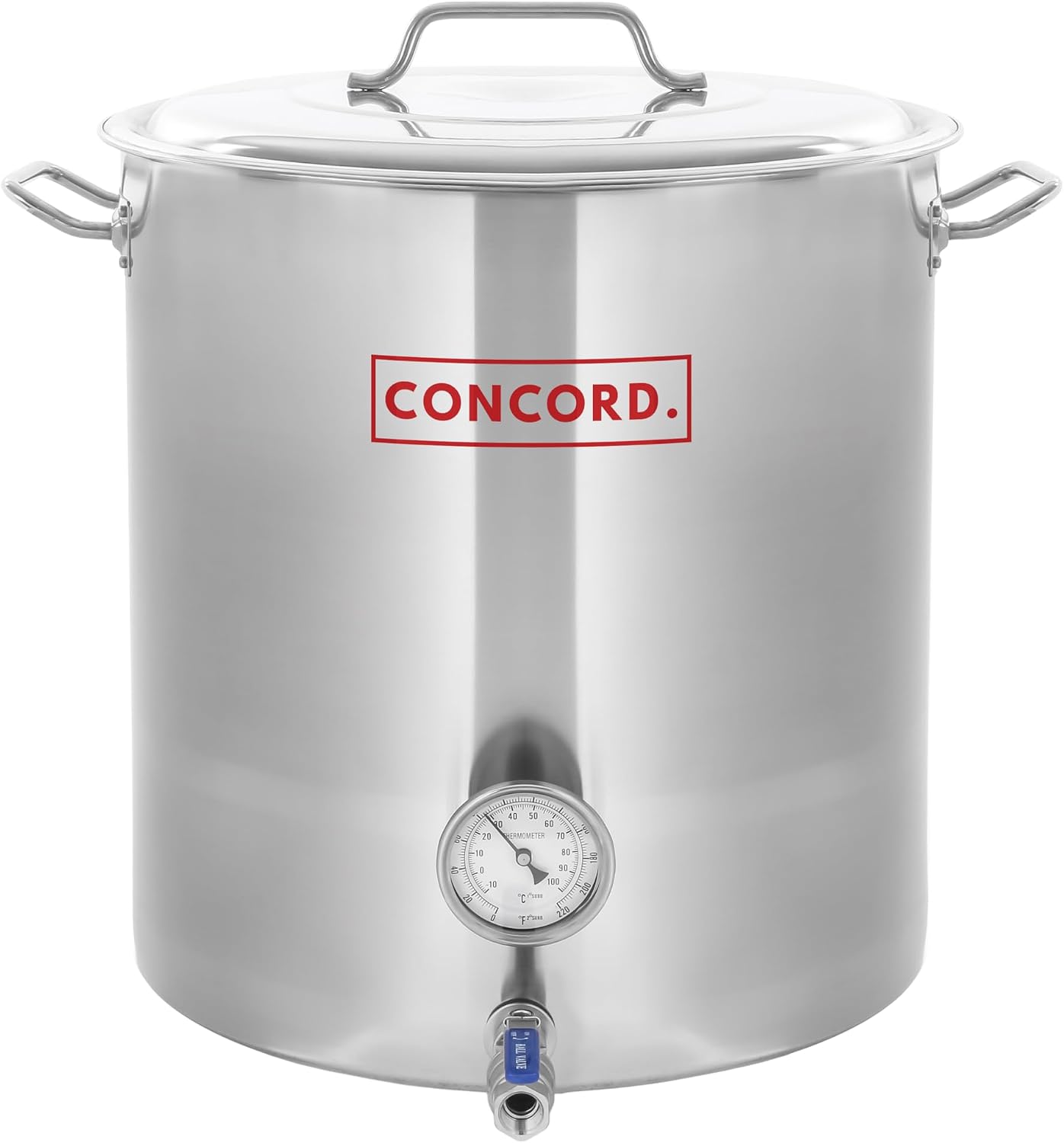
This is a 20 gallon stainless stock pot with weldless fittings, and the size is the whole point. A five gallon batch in a 20 gallon kettle has four times the headspace it needs, which means the hot break has somewhere to go and the boilover that ruins your stove never happens. Brew ten or fifteen gallon batches and it is simply the correct size instead of an oversized one.
The weldless fittings line is the part I care about most. Welded-in hardware is permanent, and permanent hardware that reads wrong is a permanent problem. Weldless means the valve and any fittings can be tightened, swapped, or removed with hand tools, which is exactly the kind of serviceable build quality that survives past batch 100 instead of living in a box labeled "maybe sell."
Stainless also means there is no coating to flake and nothing to hold onto yesterday's hop sludge. A stock pot this size is a pot you clean with a sponge and a hose, not a science project.
Where it stops being right: 20 gallons of wort is heavy, it wants a propane burner and outdoor space, and if your plan is five gallon batches on a kitchen stove, you are paying for volume you will never use and lifting a pot you cannot lift. Buy the size that matches your burner first and your ambition second.
American Cream Ale Homebrew Beer Ingredient Kit: the beer to brew first
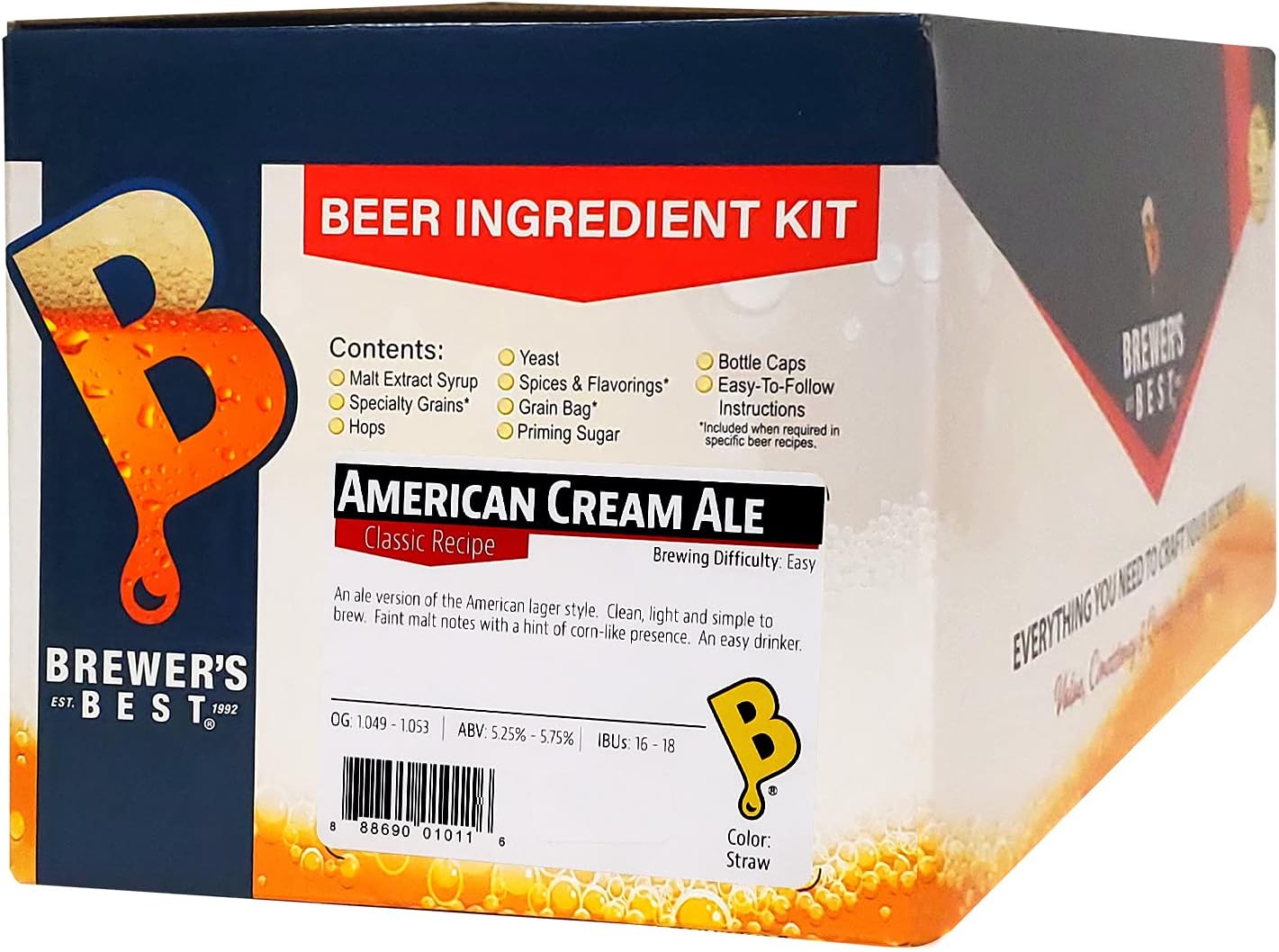
Style choice matters more than equipment when you are brewing batch one, and cream ale is one of the few styles I would hand a beginner without hesitation. It is clean and light. There is no roasted malt and no wall of hops to hide behind, so if your fermentation ran hot or your sanitation slipped, you will taste it and you will learn from it. That sounds like a downside. It is the opposite. A forgiving style that still shows you your mistakes is how you get better at this.
It is also an ale, which means you are not running a lager fermentation with a temperature controller you do not own yet. Keep it in a cool corner of the basement and let the yeast do its job.
The catch is in the name. This is an ingredient kit, so it assumes you already have the kettle, the fermenter, the sanitizer, and the hydrometer. If your starter setup is still missing a hydrometer, fix that before you brew, because original gravity and final gravity are the only honest proof that fermentation finished. Everything else is a guess with a calendar attached.
Craft a Brew Home Merlot Making Kit: the second fermentation
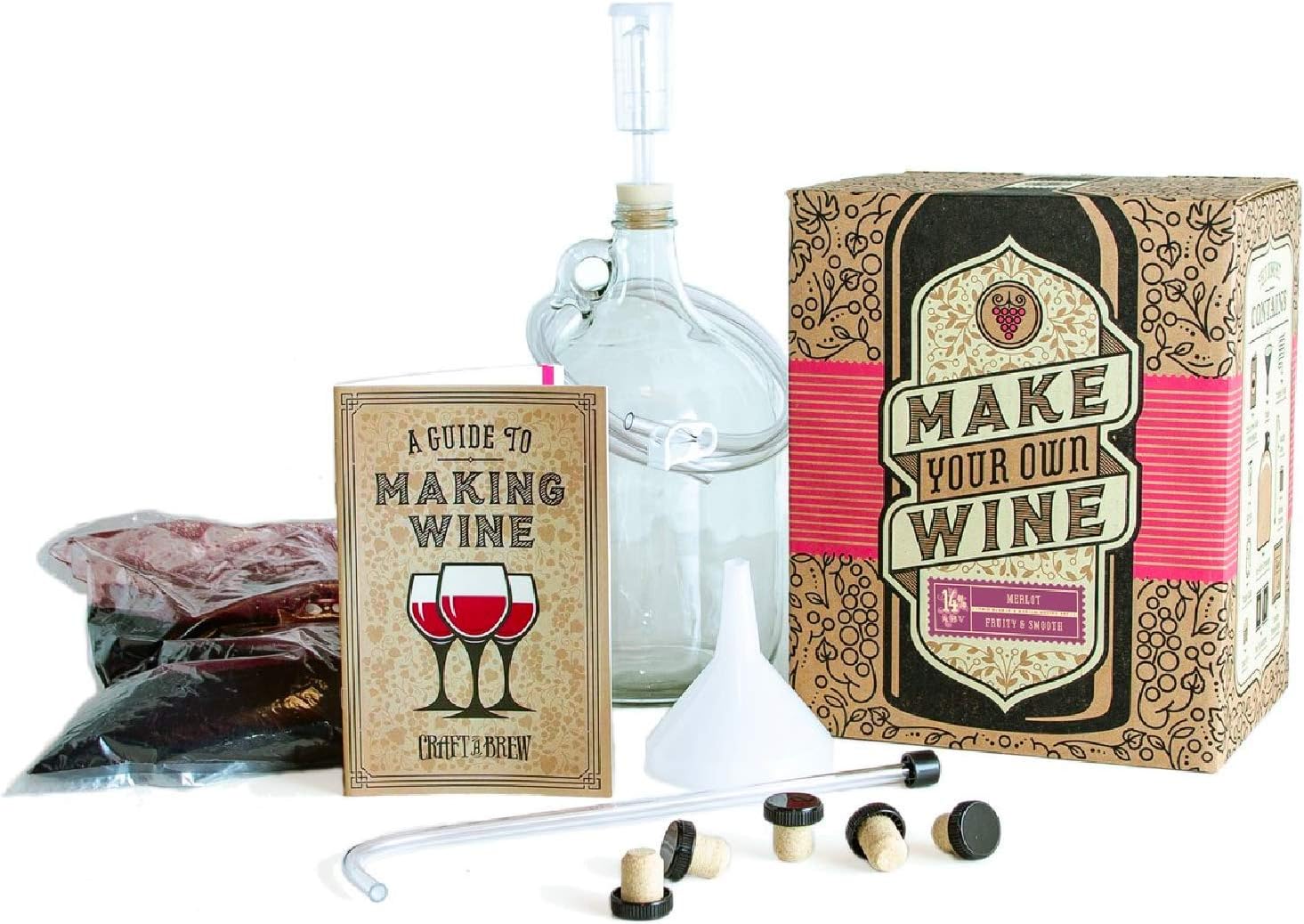
Here is why a wine kit belongs in a conversation about starter beer gear. Fermentation is fermentation. The three habits that decide whether your beer is good, sanitation, gravity readings, and temperature control, are the exact three habits that decide whether your wine is good. Wine just teaches them on a slower clock and with a different sugar source, and it does it at counter scale instead of garage scale.
This kit ships with ingredients and supplies, which is the right way to build a starter project. Craft a Brew has a reputation in the hobby for kits that arrive complete rather than as a bag of concentrate and a shrug, and a first fermentation project is the worst possible place to discover that a piece is missing.
The honest caveat: wine is patient and you are not. Beer goes from brew day to glass in weeks. Wine takes months, and the waiting is the actual skill you are practicing. If you want something to drink in three weeks, brew the cream ale instead. If you want a second project that sits quietly in the corner and rewards you in the fall, this is the one.
TMCRAFT 128oz Mini Keg Tap System: getting the beer out of the bucket
128 ounces is one gallon, and one gallon of your own beer on tap is a genuinely different experience than one gallon in bottles. This is a stainless steel growler with a tap system and a matte black finish, and it solves a real problem in a starter setup: you want to pour a glass of your beer without owning a kegerator, a CO2 tank, and a regulator.
Stainless is the material I want in anything that touches finished beer, because it does not hold onto the last thing that was in it. Matte black is a cosmetic detail until you carry it to a friend's house, and then it is the difference between a piece of gear and something that looks like it belongs on a bar.
Where it stops being right: one gallon goes fast, and this is a serving tool, not a packaging plan. If you need fifty bottles of shelf-stable beer from a five gallon batch, bottles and a capper still win. Buy this for the pour, not for the cellar.
The home brewing starter equipment reference table
This is the table I would hand someone assembling a first setup. It is organized by the job each piece does on brew day, because that is the order in which you actually need them.
| Gear | Job on brew day | Best for | Notes |
|---|---|---|---|
 Visit on Amazon → CONCORD Stainless Steel Home Brew Kettle (80 QT / 20 Gal) |
Boil | 10 to 15 gallon batches, or 5 gallon batches with real headspace | Check current Amazon price. Weldless fittings you can tighten and replace yourself. |
 Visit on Amazon → American Cream Ale Homebrew Beer Ingredient Kit |
Ferment | First beer, batch one through five | Check current Amazon price. Ingredients only, so bring your own kettle, fermenter, and hydrometer. |
 Visit on Amazon → Craft a Brew Home Merlot Making Kit |
Ferment, second project | Counter-scale brewing that ages | Check current Amazon price. Ingredients and supplies included. Patience is not. |
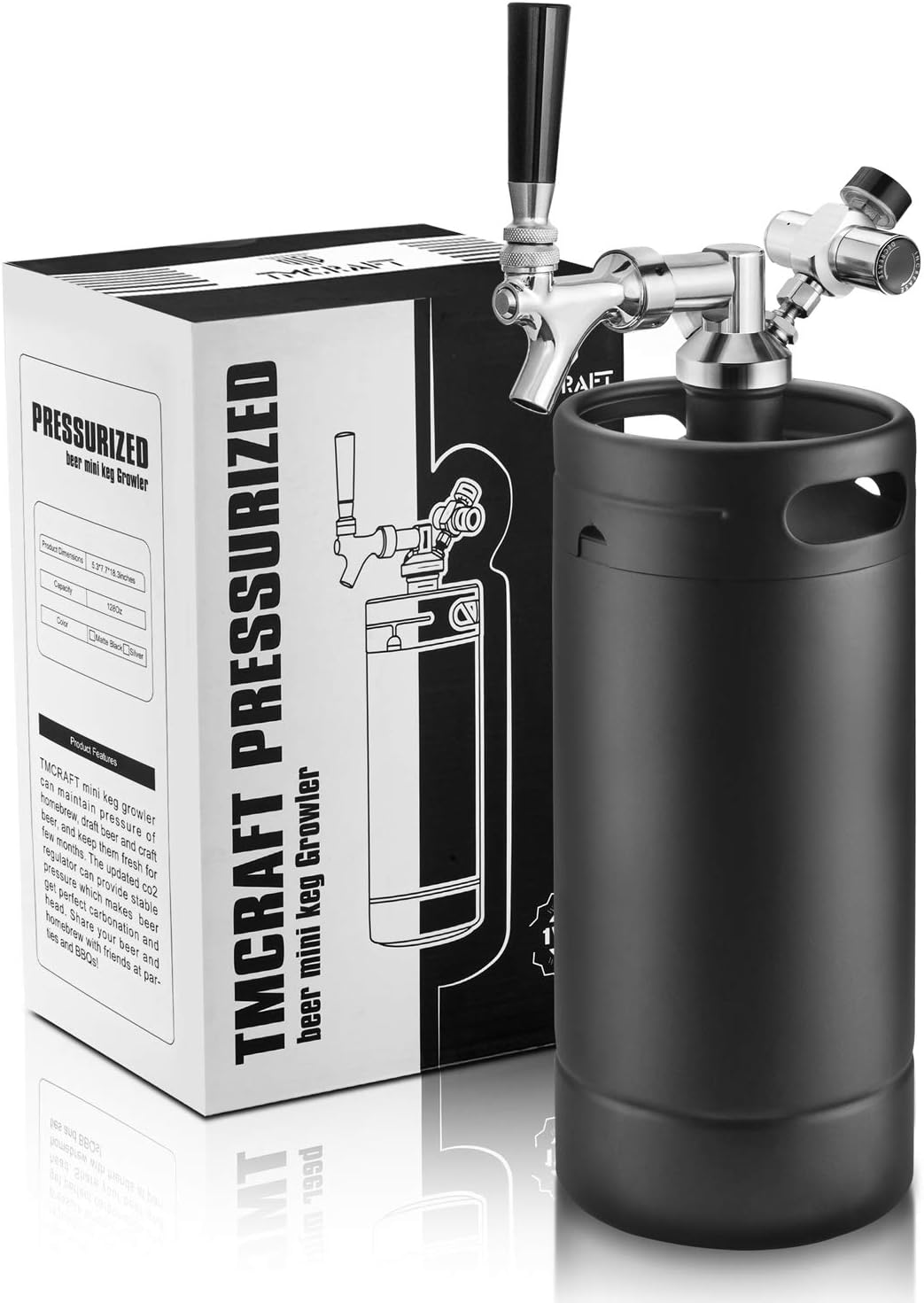 Visit on Amazon → TMCRAFT 128oz Mini Keg Tap System |
Serve | Small batches, parties, draft style pours | Check current Amazon price. 128 ounces is one gallon, so plan accordingly. |
Analysis: what the spec sheets tell you and what they do not
A spec sheet will tell you a kettle is 80 quarts and stainless. It will not tell you whether the fittings leak at temperature, and that is the only kettle question that matters. Weldless hardware is the closest thing to an answer you can read before you buy, because it puts the fix in your hands instead of a fabricator's. Any kettle that requires a specialist to service a valve is a kettle that will eventually sit in a corner.
A kit will tell you it includes ingredients. It will not tell you whether the yeast was stored cold or whether the extract has been on a shelf since last spring. Freshness is the number that never appears on the box, and it is the reason I would rather buy ingredients close to brew day than sit on them. Extract kits are not wine. They do not improve with age.
Nothing on these spec sheets tells you your final gravity, and that is fine, because your hydrometer does. Calibrate it in distilled water at 60°F before the batch, read your original gravity after the boil, and read again when the airlock slows down. The gap between those two numbers is the entire story of your fermentation: real attenuation, real alcohol, and proof the yeast finished the job instead of stalling out and leaving you with a sweet, flat beer you cannot explain.
The one number I want you to write down is not on any of these pages. It is the temperature of the room where your fermenter sits. My first batch hit 82°F in a closet, and I invented a banana bubblegum beer nobody asked for. A cheap thermometer and a notebook entry would have prevented it. The gear matters, but the log is what turns gear into repeatable beer.
Should you buy the CONCORD 80 QT kettle?
Yes, if you brew ten gallons or more, or if you brew five and want the boilover problem solved permanently. Twenty gallons of stainless with weldless fittings is serviceable hardware, and serviceable is the word I keep coming back to. You can tighten it, replace it, and clean it without a specialist.
If you brew five gallon batches on a kitchen stove, this is the wrong kettle. It is too big to move full and too big to fit under most hoods. Match the kettle to the burner and the batch size you actually brew, not the batch size you daydream about.
Should you buy the American Cream Ale ingredient kit?
Yes as a first beer, and specifically because cream ale refuses to hide your mistakes. A clean, light style with no roasted malt to bury a bad fermentation is a teaching tool disguised as a recipe, and it is an ale, so you are not managing a lager fermentation without a temperature controller.
Just read the label honestly. This is ingredients. Your kettle, fermenter, sanitizer, and hydrometer are on you, and if the hydrometer is the one you skip, you have skipped the only tool that tells you what actually happened.
Should you buy the Craft a Brew Merlot kit?
Yes if you want a second fermentation project that lives on a counter and rewards you months later. It ships with ingredients and supplies, and the habits it teaches, sanitation, gravity, and temperature, transfer straight back to beer.
No if you measure a project by how fast you get to drink it. Wine is slow on purpose, and the slowness is the lesson. Brew the cream ale while the merlot waits.
Should you buy the TMCRAFT mini keg tap system?
Yes if the gap in your setup is the pour. A gallon of stainless with a tap turns a small batch into something you serve instead of something you bottle, and it is the least expensive way I know to get draft style beer out of a homebrewed batch without buying a kegerator.
No if you need packaging. One gallon is one gallon, and a five gallon batch still wants bottles. Buy this to drink your beer well, not to store it long.