Related: Home Brewing Water Chemistry: The Boring Math That Makes Better Beer
I have logged more than 50 batches since 2014, and the lesson that keeps repeating is the one nobody wants to hear: the gear matters more than the recipe. I have brewed genuinely good beer on cheap equipment that I understood, and I have dumped beer made on expensive equipment I did not understand. Shopping for all grain home brewing equipment is really shopping for control. Control of temperature, control of flow, control of how much of your Saturday disappears into cleaning. Everything else on the box is marketing.
This guide covers the four products I would put in front of a homebrewer right now: a five-gallon ingredient kit, two electric all-in-one systems, and a dual-tap kegerator. I am not going to tell you any of them is easy to clean, because nothing is easy to clean after hop sludge has dried on it. What I will tell you is what each one is for, where it fits into a brew day, and who should walk away.
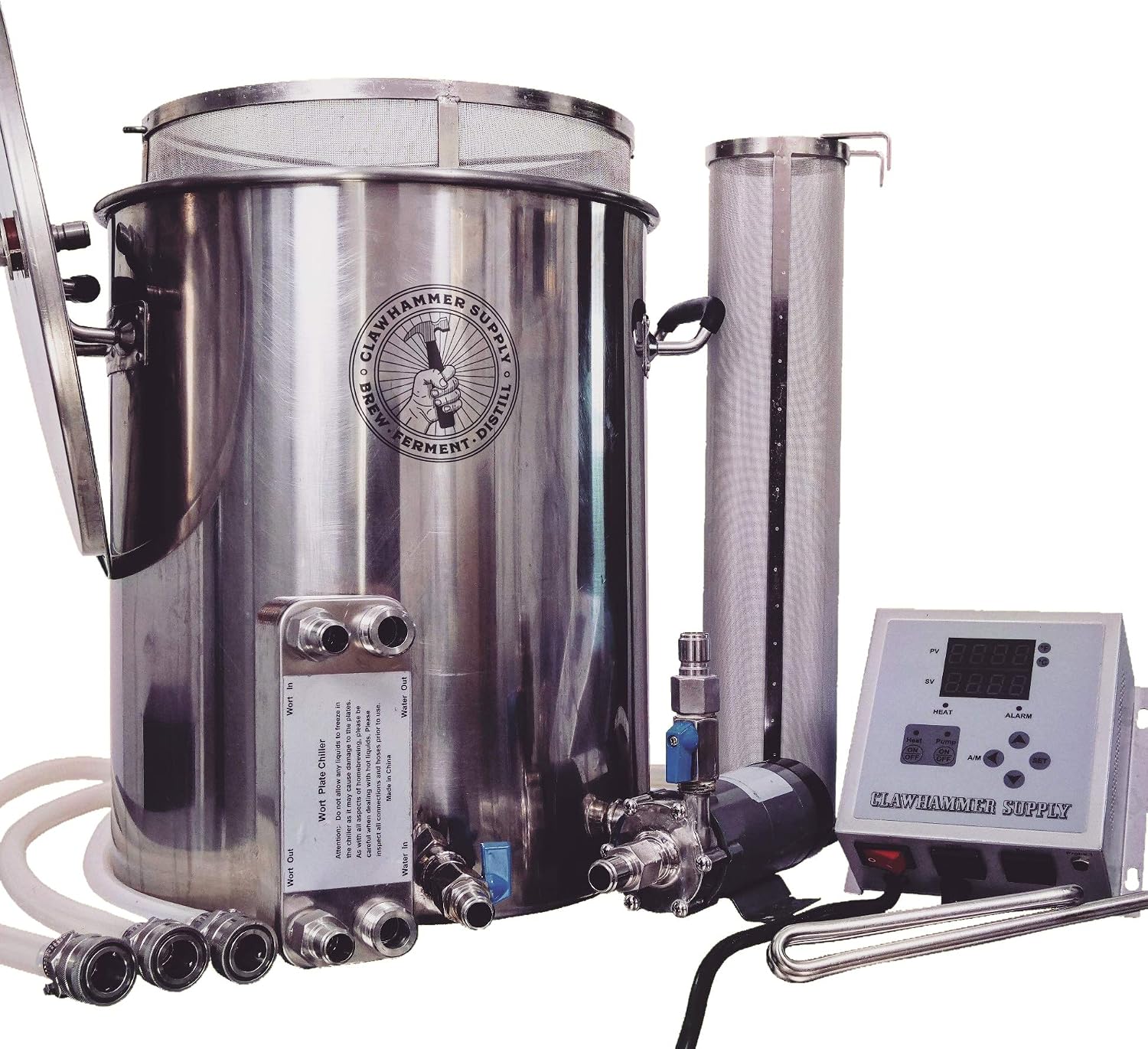
Best Overall: Clawhammer Supply 10.5 Gallon Electric All-in-One Brewing System
This is the system I would build a garage around. It is a 10.5 gallon, 304 stainless, electric, semi-automated BIAB rig that runs on a standard 120V circuit and handles both all grain and extract. That combination is the entire point: you can start with extract, move to all grain without buying a second vessel, and never have to explain to anyone why there are now three kettles in the garage.
The 10.5 gallon capacity is the spec I care about most. Five gallons of finished beer plus a full-volume mash plus a rolling boil needs headroom, and headroom is what separates a brew day from a cleanup project. Semi-automated means the controller carries part of the schedule, which is exactly where homebrewers lose consistency. Not in the recipe. In the fifteen minutes they spent distracted while the mash sat a couple of degrees cool.
What you give up is speed and simplicity. An electric all-in-one asks you to learn its controller before it asks you to learn a recipe, and 120V will not match a propane burner on raw heating speed. That is a fair trade for brewing indoors, on a counter, with no flame and no wind. If you are on batch one, this is not your system. If you are on batch five and tired of babysitting a cooler mash tun, it is.
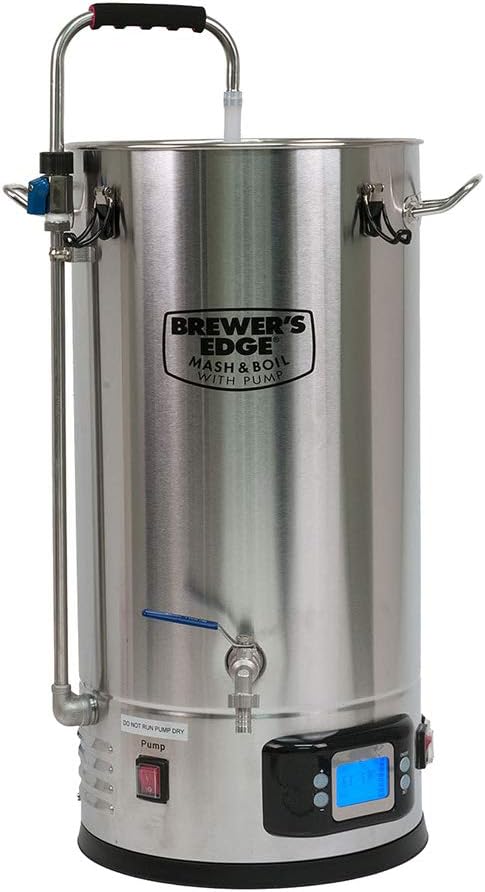
Best Value: Brewer's Edge Mash and Boil with Pump
The Mash and Boil with Pump is the system I point brewers toward once they have decided they want all grain and want it in one vessel without paying all-in-one flagship money. Seven and a half gallons, all grain capability, and a pump included. That pump is the part that matters most. Recirculation keeps the mash temperature even and keeps liquid moving through the grain bed instead of channeling through one path, and an uneven mash is where a cheap setup usually shows its seams.
The tradeoff is size and headroom. A 7.5 gallon vessel is sized for five-gallon batches, which is exactly what most people brew, and it is not the vessel for a 1.100 barleywine or a ten-gallon batch split across two fermenters. If you want the system that grows with you, that is the Clawhammer above. If you want the system that makes five gallons of well-controlled wort in a small footprint, this one does the job.
One honest warning: a pump is another thing to clean and another thing that can clog. Recirculation is only as good as your crush, and a sticky sparge will find the weakest point in any system.
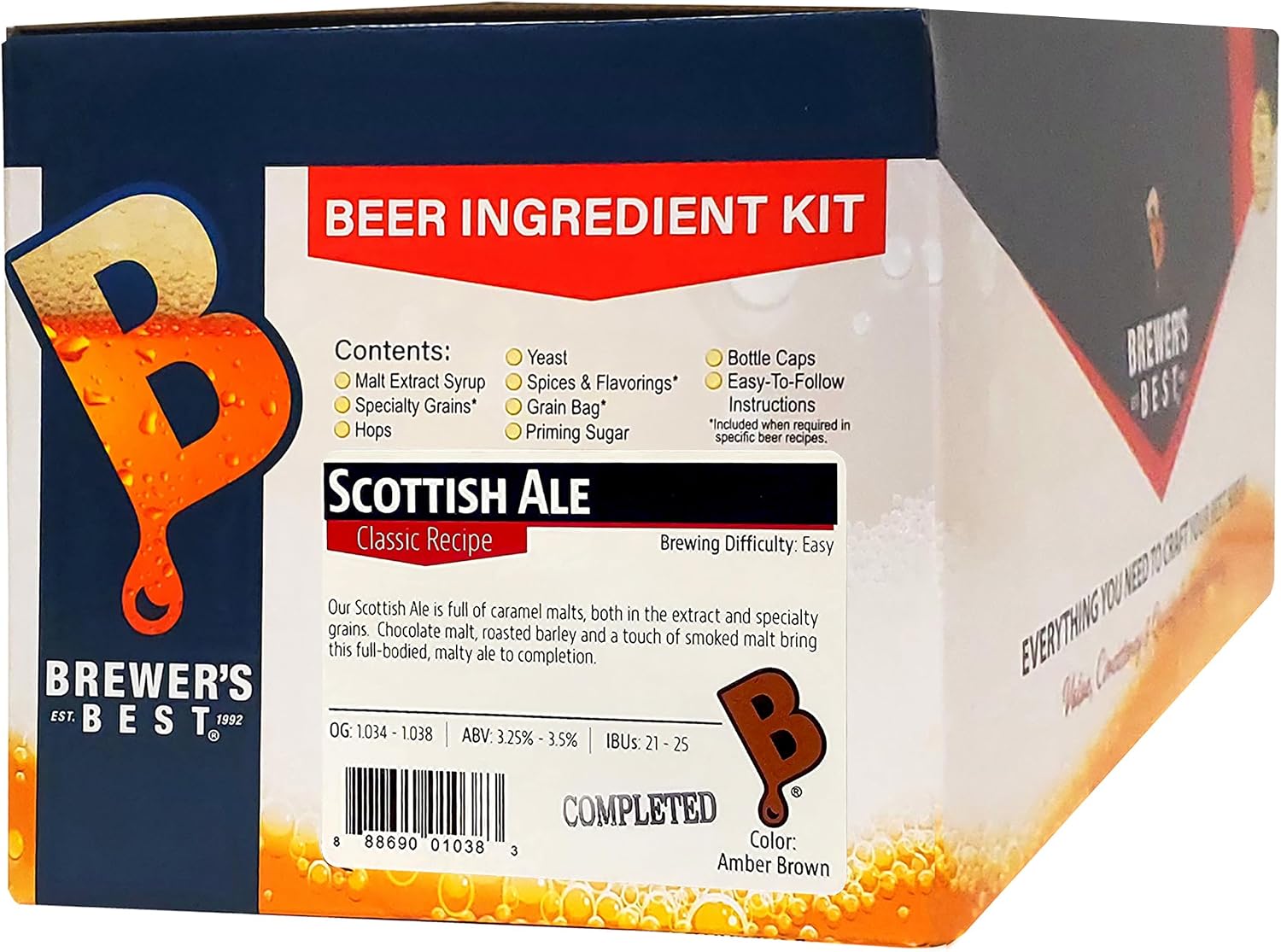
Best Starting Point: Brewer's Best Home Brew Beer Ingredient Kit (5 Gallon), Scottish Ale
The Brewer's Best Scottish Ale kit is the entry point, and it is an ingredient kit rather than hardware, which is the right way to spend money on batch one. It slots into whatever fermenter and kettle you already own or plan to buy, and a Scottish ale is a forgiving first batch: malt-forward, not dependent on aggressive hopping, and drinkable even when your fermentation temperature drifts a little.
The catch is that ingredients are only half the equation. If your equipment list does not include a hydrometer, buy one the same day you buy this kit. An ingredient kit without a gravity reading is a recipe you can never repeat, and the single most common reason a new brewer's second batch tastes different from the first is that nobody wrote down the original gravity.
Pair this with a five-gallon fermenter, a bottling bucket, and a notebook, and you have a real pipeline. Pair it with nothing and you have a bucket of sweet liquid and a guess.
Best for Serving: VEVOR Beer Kegerator, Dual Tap
Kegging changes how much you actually drink your own beer. Bottling turns a five-gallon batch into an afternoon of sanitizing and a closet full of bottles you have to store, chill, and remember to bring to parties. A dual-tap kegerator with D system couplers, a 5 lb CO2 tank included, and room for two sixth barrels or two ball lock kegs solves the serving side in a single purchase.
Two taps is not a gimmick. It is the difference between a keg you finish and a keg you get tired of, because you can keep a pale ale and a stout on at the same time. Ball lock compatibility also matters if you are already kegging in Cornelius kegs, since it means you are not locked into commercial sixth barrels just to use the thing.
What a kegerator does not do is fix a bad pour. If your beer comes out as foam, that is a CO2 balance and line length problem, not a refrigeration problem, and no appliance on the market will solve it for you. Get the serving pressure right first, then buy the fridge.
How I score brewing gear before it earns a spot
I run a survivability score on every piece of gear I evaluate, and it weighs one question above all others: how many full brew days does this survive before it breaks, leaks, or foams over? A product that fails on brew day one gets one more chance and then it is out. Nothing on my bench has ever broken once and then behaved itself afterward.
The criteria are boring and they are the whole game:
- Does it hold the temperature it claims to hold, checked against a calibrated instrument rather than a built-in display?
- Does it clean up after hop sludge has dried on it, not after a rinse in the sink?
- Does anything drip, especially at a spigot or a fitting that gets taken apart and reassembled every batch?
- Does it work on the circuit you actually have, without tripping a breaker mid-boil?
- Would I use it for my own next batch, or does it go back in the box labeled "maybe sell"?
The hydrometer rule applies to everything above it. I calibrate mine in distilled water at 60°F before every brew day, and I log OG, FG, and attenuation for every batch. Gear that cannot be measured around is gear I cannot recommend, because a recommendation without a number behind it is a press release with extra steps.
Analysis: where the money actually goes
The four products here map to four different problems, and buying the wrong one for your stage is how people waste money.
The Brewer's Best kit solves the recipe problem. It is the cheapest way to find out whether you enjoy brew day at all, and it is deliberately hardware-free so your money goes to ingredients instead of a third plastic bucket.
The two electric systems solve the control problem. Between them the difference is headroom and budget. The Clawhammer gives you 10.5 gallons and a single vessel that covers extract through all grain BIAB. The Mash and Boil gives you 7.5 gallons, all grain, and a pump for recirculation at a lower entry point. Neither one fixes fermentation temperature, and fermentation temperature is the number one thing that ruins homebrew. If you have $500 to spend and no temperature control on your fermenter, spend part of it there first.
The kegerator solves the packaging problem. It is the last purchase in the chain, not the first, because kegging beer that fermented warm and finished sweet just gets you five gallons of mediocre beer on draft.
Home brewing equipment comparison table
| Product | Best for | Batch size | Price |
|---|---|---|---|
 Visit on Amazon → Brewer's Best Scottish Ale ingredient kit |
First and second batches | 5 gallons | $43.95 |
 Visit on Amazon → Clawhammer Supply electric all-in-one system |
Extract and all grain BIAB in one vessel | 10.5 gallon vessel | Visit on Amazon → |
 Visit on Amazon → Brewer's Edge Mash and Boil with Pump |
All grain on a small footprint | 7.5 gallon vessel | $439.99 |
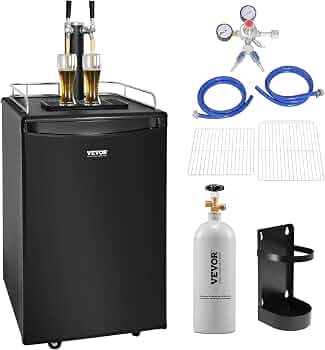 Visit on Amazon → VEVOR dual tap kegerator |
Serving two beers on draft | Holds two sixth barrels or two ball lock kegs | $606.54 |
A note on 120V brewing
Both electric systems here run on a standard 120V household circuit. That is the reason they are usable in an apartment, a basement, or a garage with ordinary wiring, and it is also the reason they will never heat like a propane burner. Plan your brew day around the system rather than expecting the system to match a flame. If you are the kind of brewer who wants the wort boiling five minutes after the mash ends, an electric all-in-one will feel slow, and that feeling is accurate.
Should you buy the Clawhammer Supply system?
Yes, if you want one vessel that covers extract today and all grain BIAB later, and you are willing to learn a controller before you learn a recipe. The 10.5 gallon capacity is the spec that earns the recommendation, because headroom is what keeps a five-gallon batch inside the kettle. Skip it if you have not brewed yet, and skip it if you have no interest in a semi-automated brew day. It is a batch-five purchase, not a batch-one purchase.
Should you buy the Brewer's Edge Mash and Boil?
Yes, if you have committed to all grain and you want recirculation without flagship pricing. The included pump is the feature that separates it from cheaper single-vessel systems, and 7.5 gallons is the honest size for five-gallon batches. Understand the ceiling before you buy: this is not the system for a 1.100 barleywine or a ten-gallon brew day. If those batches are in your future, the Clawhammer is the better long-term buy.
Should you buy the Brewer's Best Scottish Ale kit?
Yes, as a first or second batch. It is an ingredient kit, so it assumes you already have or are buying a fermenter, a kettle, and a bottling setup, and a Scottish ale is forgiving enough to survive a beginner's temperature swings. Buy a hydrometer the same day. A kit you cannot measure is a recipe you cannot repeat, and repeating your good batches is the entire point of keeping a notebook.
Should you buy the VEVOR kegerator?
Yes, once you are already kegging or ready to start. Two taps, D system couplers, a 5 lb CO2 tank, and space for two sixth barrels or two ball lock kegs covers the serving side in one purchase, and dual taps mean you are not stuck drinking the same beer for a month. Buy it last, though. Fix your fermentation temperature first, then your CO2 balance, then the fridge.