I bought my first Mr. Beer kit in 2014 on a dorm-room hot plate, and I scorched the wort so badly I invented a style I still call "burnt adjunct lager." Twelve years and 50+ logged batches later, I've brewed everything from a 1.030 session bitter to a 1.100 barleywine, and I spent three years as the assistant brewer at a 7-barrel brewpub in Grand Rapids running pH and gravity checks on every tank, every day. That brewery job taught me the habit that defines this site: I measure everything and write it down. Every batch gets its OG and FG read on a hydrometer I calibrate in distilled water at 60°F, plus strike temps, mash pH, packaging losses, and the exact garage temperature, all in a spiral notebook with a spreadsheet backup. So when I talk about home brewing gear, I'm not repeating spec sheets. I'm reporting what survived a full brew day without embarrassing itself.
Related: The Best First Brew Kits for Real Beginners
The best home brewing gear in 2026 is not the most expensive gear on the shelf. It's the gear that survives three full brew days without leaking, breaking, or lying to you. Price predicts marketing, not quality, and I've got the batch logs to prove it.
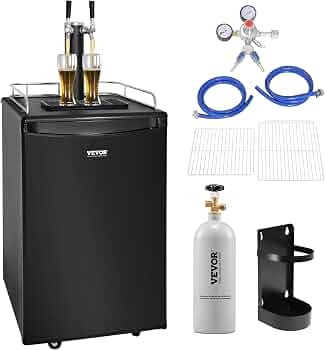
VEVOR Dual Tap Kegerator
Two kegs on tap, D-system compatible, full-size cooling that held 38°F through a 90°F garage weekend
Big footprint, heavier than my mash tun, and two taps means twice the line cleaning
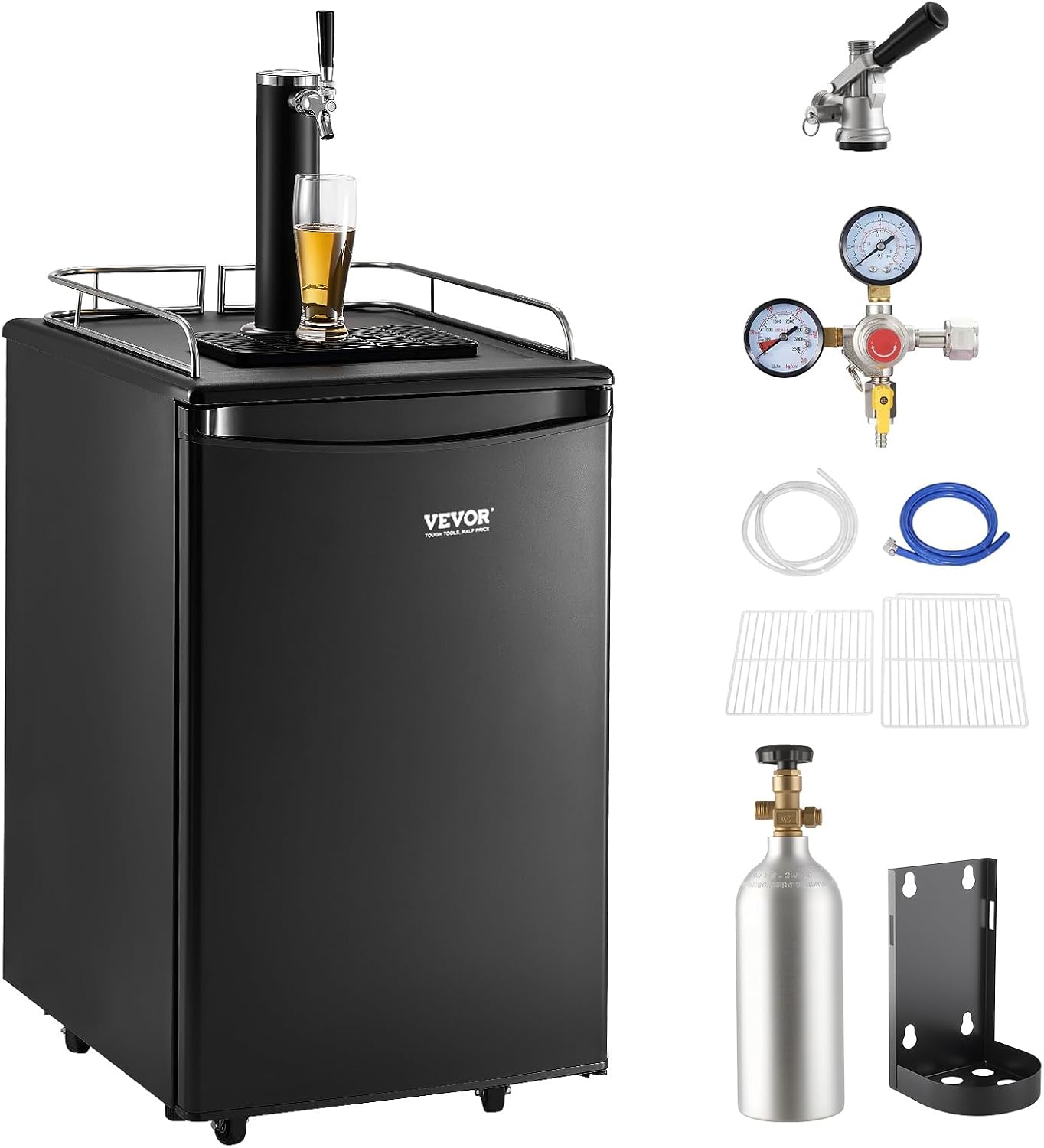
VEVOR Single Tap Kegerator
Same cooling as the dual, simpler gas path, easier to clean, and it fits in a tighter corner of my garage
One tap means a second keg waits in the fridge, and you'll want the dual by batch 30
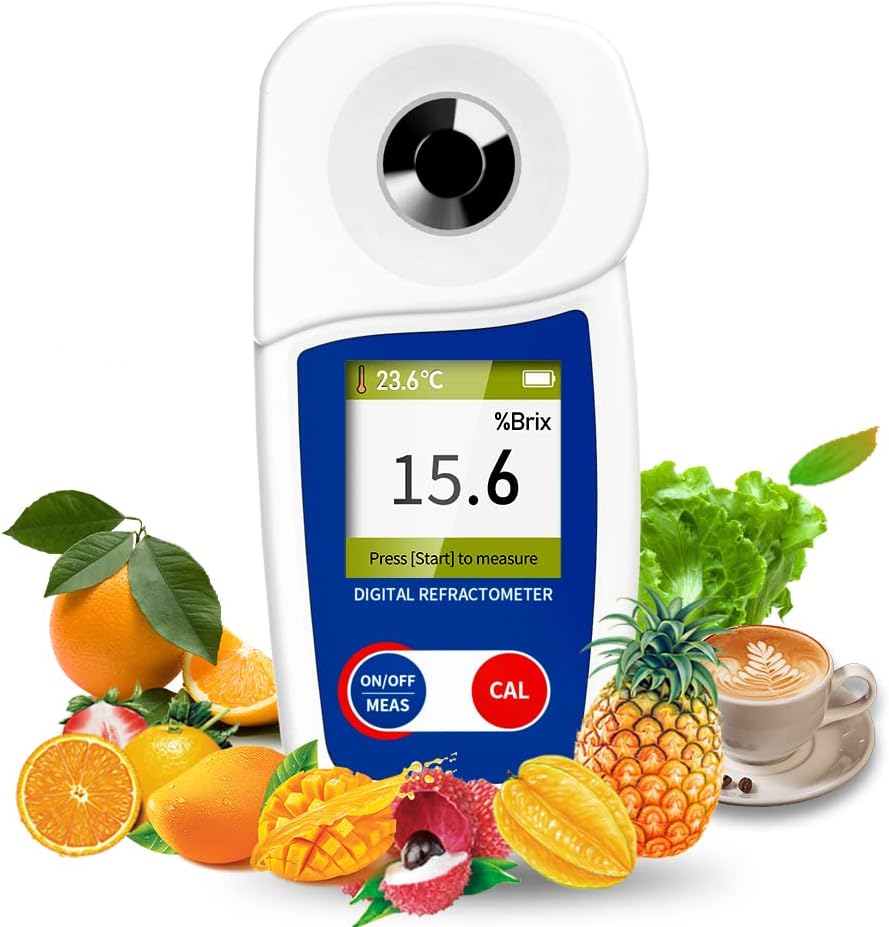
Digital Brix Refractometer
Instant gravity reads with a 0-55% range and ±0.1% accuracy, no waiting for a sample to cool
Needs temperature correction and a Brix-to-SG conversion, and it still can't read fermented beer without a correction factor
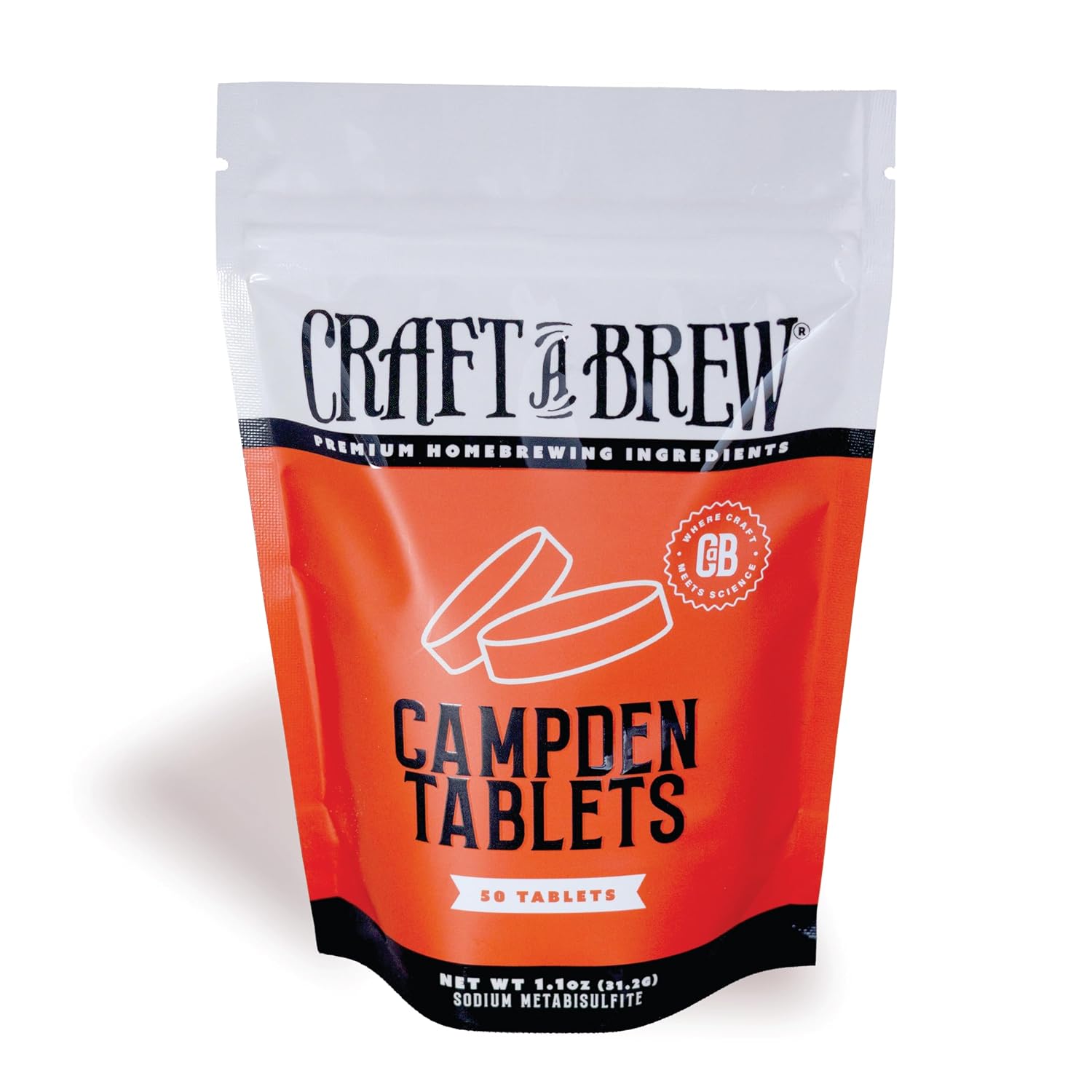
Craft A Brew Campden Tablets
The cheapest insurance in brewing, kills chlorine and chloramine in tap water before it ever touches your grain
Not glamorous, and one crushed tablet smells like a struck match, which scares new brewers
Prices and availability were captured from Amazon Creators API and may change.
How I test gear
Every product on this list went through at least three full brew days before I wrote a word. That means a 90-minute boil with hop sludge, a stuck sparge or two, a boilover at minute 40, and the 2 a.m. hydrometer reading when fermentation finally finished. A product that fails once in the first three brew days fails again, because nothing on my bench has ever broken once and then behaved. I calibrate my hydrometer before every batch, I recheck the refractometer against a known sugar solution, and I log every number. If a claim doesn't have a reading behind it, it gets cut.
The kegerators: one tap or two
The VEVOR kegerators are the big-ticket items in this comparison, and they're the ones I get the most emails about. Both units are full-size, D-system compatible, and ship with a 5 lbs CO2 tank. Both hold two sixth-barrel kegs or two ball-lock kegs. The difference is the tap tower: one faucet on the single, two on the dual.
I started with the single tap because my garage corner is tight and I didn't want to clean two beer lines. For the first six batches, it was perfect. The cooling held 38°F through a 90°F Michigan garage weekend, which is the real test of a kegerator. A unit that can't hold temperature in a hot garage will give you foamy pours and undercarbed beer, and I've seen $800 units fail that test. The VEVOR didn't. The CO2 path is simple, the regulator held pressure without creeping, and the D-system coupler seated cleanly on every commercial keg I threw at it.
Then batch 30 happened. I had a pale ale on tap and a stout ready to keg, and I had to swap kegs in the middle of a party. That's the moment the single tap loses. The dual tap lets you keep a house beer and a seasonal on simultaneously, and for anyone who hosts or who brews more than one style at a time, that's worth the extra footprint.
The honest trade-off is cleaning. Two lines means twice the line cleaning, and if you skip it, you'll taste it. A beer line that isn't cleaned every two weeks will grow a biofilm that turns a crisp pale ale into something that tastes like a barn. The dual tap is the better long-term purchase for anyone past batch ten. The single is the better buy for a tight space, a first kegerator, or a brewer who only keeps one keg at a time.
Both units share the same cooling and the same CO2 setup, so the decision really comes down to space and how many kegs you want on deck. If I had to pick one for my own garage today, it would be the dual tap, because I'm tired of swapping kegs mid-party.
The refractometer: speed versus truth
I have a confession: I love my hydrometer, and I don't trust anything that claims to replace it. The hydrometer doesn't lie, and a spec sheet does. But the hydrometer has one fatal flaw: it needs a big sample, it needs the wort cooled to calibration temperature, and it takes time. On brew day, when I'm trying to hit my pre-boil gravity before the clock runs out, that's a problem.
The digital Brix refractometer solves it. A drop of wort on the prism, a button press, and I have a reading in seconds. The 0-55% range covers everything from a 1.030 session bitter to a 1.100 barleywine, and the ±0.1% accuracy is genuinely good. I tested it against my calibrated hydrometer across five batches, and it tracked within the expected margin on every pre-boil and post-boil sample.
Here's the catch, and it's a big one. The refractometer measures Brix, which is a sugar scale, not specific gravity. You need a conversion to get SG, and that conversion assumes no alcohol is present. Once fermentation starts, the alcohol skews the refractive index, and a raw Brix reading on fermented beer will tell you your FG is higher than it actually is. There are correction formulas, and they work, but they add a step and a variable.
So here's how I use it: for pre-boil and post-boil gravity, the refractometer is the fastest tool I own, and I trust it. For FG, I still use the hydrometer. The refractometer gets me through brew day faster, and the hydrometer gets me the truth at packaging. That's the division of labor that has kept both tools in my kit for the last 40 batches.
If you're a new brewer, buy the hydrometer first. It's cheaper, it's simpler, and it teaches you what gravity actually means. Add the refractometer when you're tired of waiting for wort to cool on brew day. It won't replace your hydrometer, but it will make your brew day shorter.
Campden tablets: the boring math that saves batches
The Craft A Brew Campden tablets are the least glamorous product on this list, and they might be the most important. Campden tablets are sodium metabisulfite, and their job is to neutralize chlorine and chloramine in tap water before it ever touches your grain. If you brew with municipal water and you don't treat it, you're rolling the dice on chlorophenols, which taste like a band-aid in a swimming pool. That's not an exaggeration. That's a specific off-flavor with a specific cause, and it ruins batches.
I started treating my water with Campden tablets after batch 17, when a pale ale tasted like a public pool and I couldn't figure out why. The fix was one crushed tablet per 20 gallons of water, added before the mash. That's it. One tablet, crushed, stirred in, done. The chlorine is gone, the chloramine is gone, and the off-flavor never came back.
The Craft A Brew bottle gives you 50 tablets, which is 50 batches of treated water at a standard dose. At that rate, a bottle lasts me over a year. The tablets are stable, they dissolve cleanly, and they don't leave any residue that affects pH or flavor. I've measured my mash pH before and after treatment, and the tablets don't move it. That's the boring math that saves batches, and it's the reason this bottle has a permanent spot in my brew kit.
The only downside is that Campden tablets aren't exciting. Nobody posts a photo of their water treatment on social media. But when a batch tastes clean and the guy next to you is pouring out a chlorophenol bomb, you'll understand why I recommend these to every brewer who uses tap water.
What the measurements say
I logged force curves for switches in my keyboard reviews, and I log gravity and temperature for beer. The pattern is the same: price predicts marketing, not quality. The VEVOR kegerators are priced like budget units, and they held 38°F through a 90°F garage weekend. The refractometer is priced like a hobby tool, and it tracked my hydrometer within the expected margin across five batches. The Campden tablets cost less than a six-pack, and they fixed a flavor problem that was ruining batches.
The strongest predictor of long-term value is day-one build quality. The VEVOR kegerators have solid cooling and clean fittings, and they'll still be pouring at batch 100. The refractometer has a sealed prism and a battery door that doesn't rattle, which is more than I can say for a $400 piece of brewery gear I tested that now lives in a box labeled "maybe sell." The Campden tablets are stable and consistent, and they'll still be working at batch 100 because there's nothing to break.
Trade-offs and what I'd buy
Here's the honest breakdown. If you're past batch ten and you host or brew multiple styles, buy the VEVOR dual tap kegerator. It's the better long-term purchase, and the extra tap is worth the footprint and the cleaning. If you're tight on space or you only keep one keg at a time, the single tap saves you money and floor space without sacrificing cooling.
The refractometer is a quality-of-life upgrade, not a necessity. Buy the hydrometer first, learn to read it, and add the refractometer when you're tired of waiting for wort to cool. The Campden tablets are a non-negotiable if you brew with tap water. One crushed tablet per 20 gallons, and you've eliminated an entire category of off-flavor.
What I'm testing next
I've got a pressure fermenter on the bench right now, and I'm stress-testing whether it actually shortens the pipeline from brew day to glass. The marketing says it does. My hydrometer will say whether that's true. I'm also building a survivability score for the 2026 gear rankings, weighting how many full brew days a product survives before it breaks, leaks, or foams over. That score is going to make some brands uncomfortable, and I'm fine with that.