Related: Best Home Brew Starter Kits for Small Apartments
I brewed my first batch in 2014 on a dorm-room hot plate with a kit that scorched so badly I invented a style I still call burnt adjunct lager. Twelve years and more than 50 logged batches later, my advice has not changed: the smartest first purchase in this hobby is small. A one-gallon home brew kit fits on a kitchen counter, ferments in a closet, and costs less than a night out. The catch is that most beginners buy the wrong version of it, then blame themselves when the beer tastes like green apples.
Three years as the assistant brewer at a 7-barrel brewpub in Grand Rapids taught me the habit that runs this site. I measure everything and I write it down: original gravity, final gravity, strike temperature, fermentation temperature, packaging losses, all of it in a spiral notebook with a spreadsheet backup. A one-gallon batch punishes sloppy habits faster than a five-gallon batch does, because you are working with roughly 128 ounces of wort. A two-degree fermentation swing or a hydrometer that reads 0.002 high matters more when the whole batch is that small.
So this is a buying guide for the small-batch brewer, and it is also about the thing nobody photographs: where the gear lives between brew days. Everything below earned its spot on a real brew day.
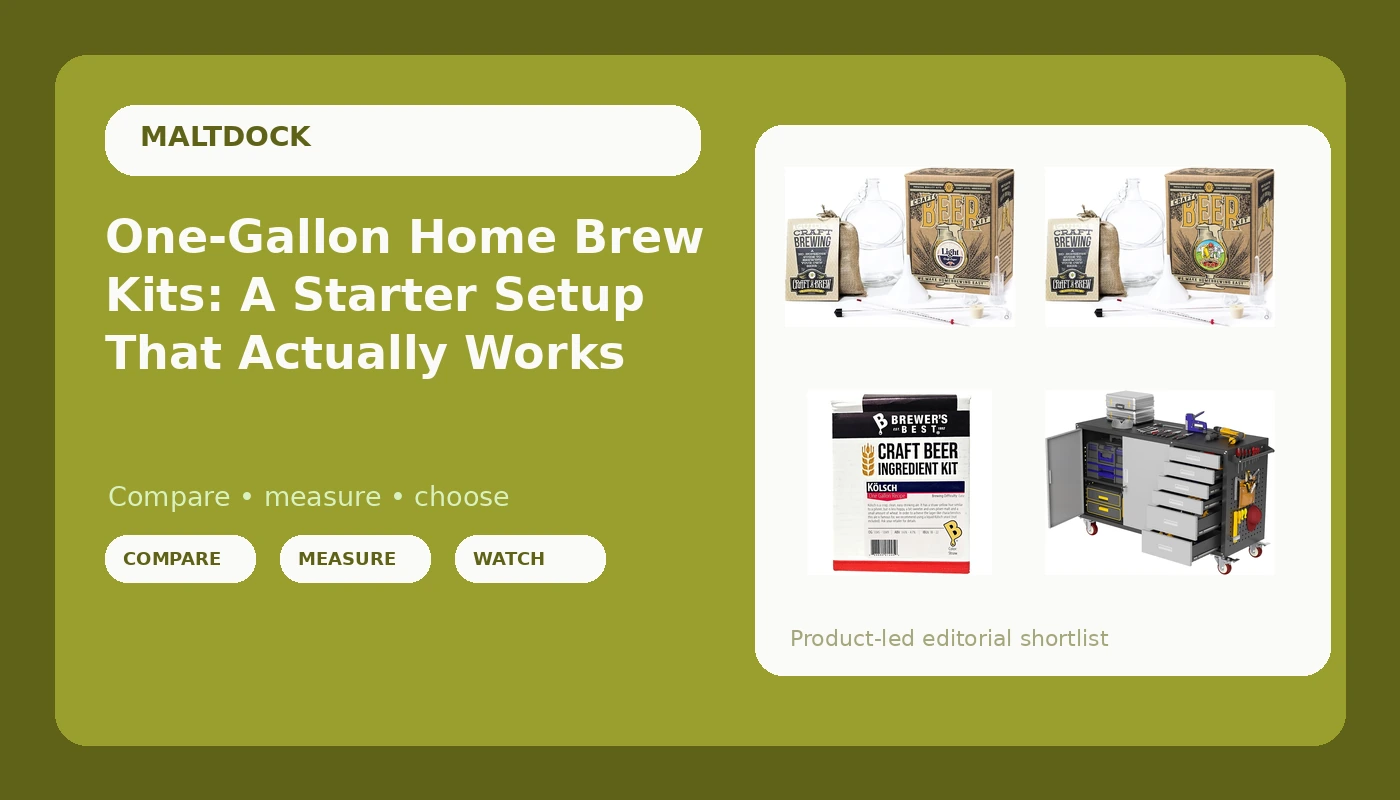
Best Overall: Craft A Brew Light Craft Lager Kit
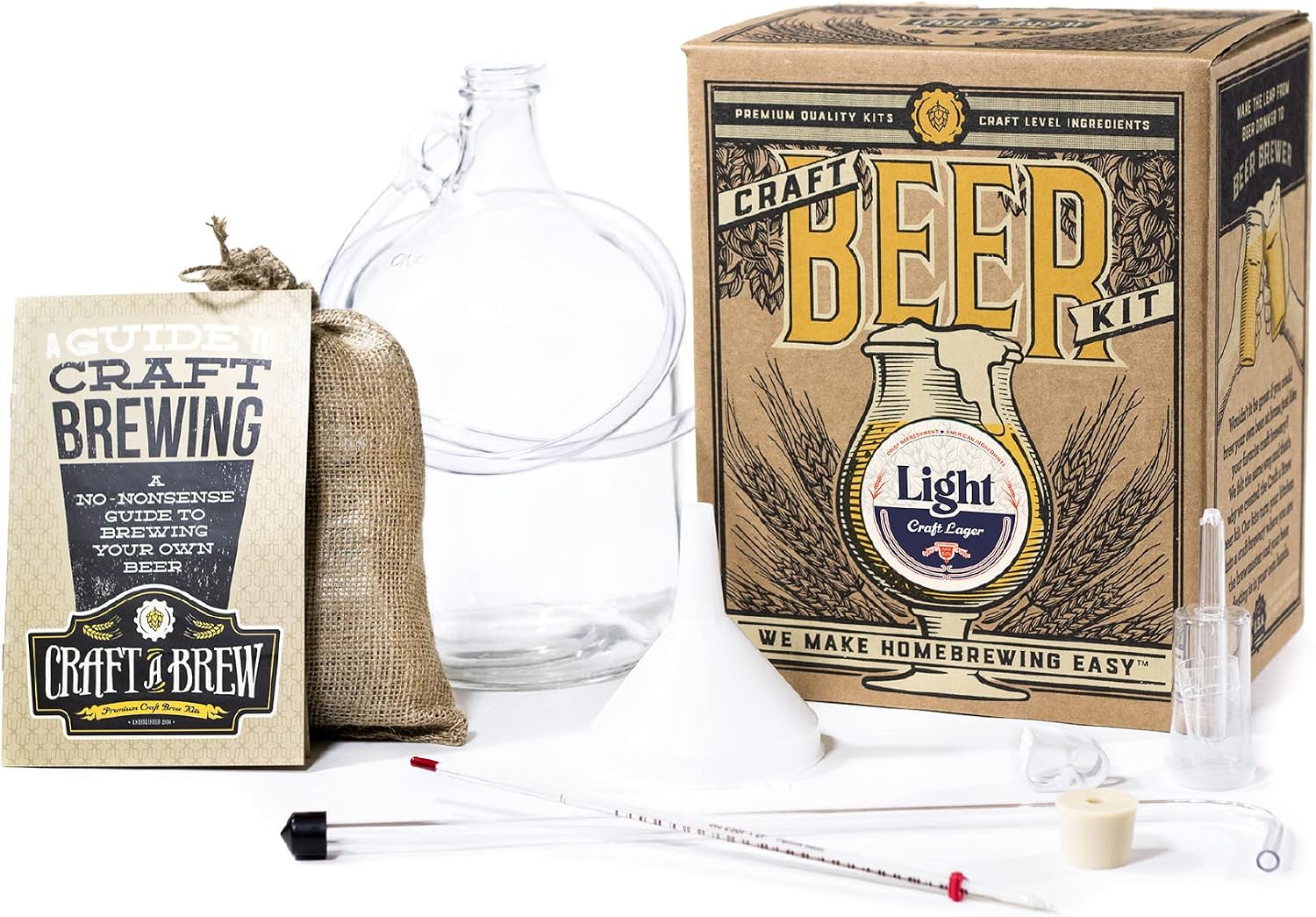
If you want one box that carries you from zero to bottled beer, this is the one I point people toward. It is a complete equipment and supplies kit built around a one-gallon fermenter, and the reason it beats the cheaper starter kits on the shelf is the hydrometer. Craft A Brew puts one in the box. Most kits do not. You cannot brew consistently if you cannot measure, so a kit that skips the single most important tool in the hobby is telling you exactly how it expects you to brew.
The light lager is a fine first style, with one honest caveat. Lager yeast wants a cooler fermentation than ale yeast does, and the kit's instructions set the temperature window you are supposed to hold. Read that number before you pitch, not after. If your basement or garage sits in the low 50s through a Michigan winter, you are in great shape. If your only option is a 72-degree closet in July, brew this one in January or plan on a different yeast. Trusting my instincts is why my first batch fermented at 82 degrees and tasted like banana bubblegum.
What I like most is the size of the job. One gallon is about three hours from kettle on to fermenter sealed, cleanup included, which means you actually brew again next month instead of letting the gear collect dust until spring.
Best for Fall Brewing: Craft A Brew Oktoberfest Ale Kit
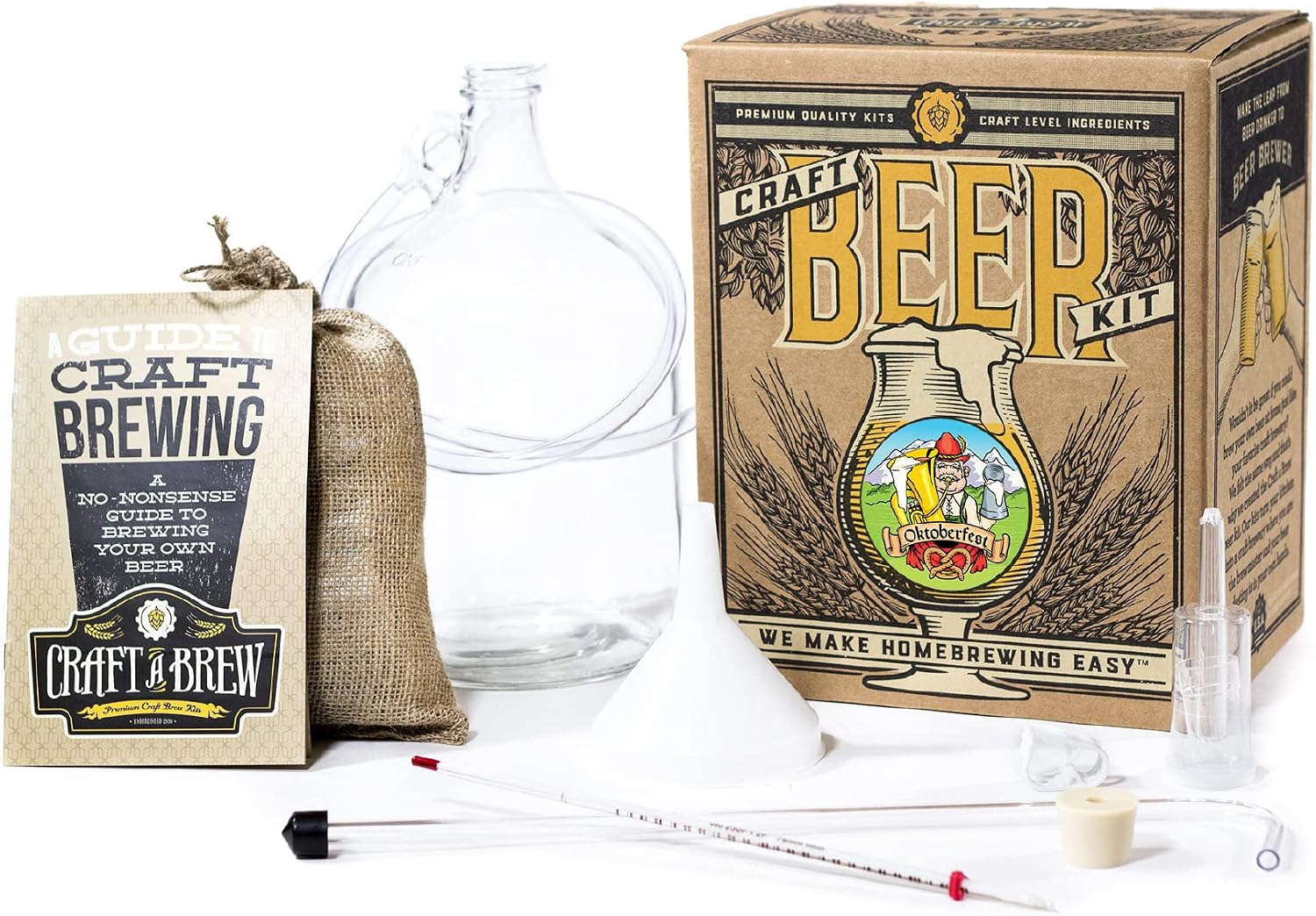
Same hardware package, different beer, and that difference matters more than it sounds. The Oktoberfest Ale is an ale rather than a lager, so it ferments warm. A normal room in a normal house is fine, and you are not fighting your own thermostat for three weeks. If you want to brew in September and drink in October, this is the box that gets you there without a fermentation chamber.
The style itself is built for toasty, bready malt character, which is a good match for a small batch because there is less volume to hide behind. You taste the malt or you taste the mistake.
Because the two Craft A Brew kits share the same one-gallon format, buying a second one also buys you a second fermenter. That is the quiet advantage of standardizing on one small system: two batches in the pipeline, one set of habits, one shelf of gear.
Best Value Ingredient Kit: Brewer's Best Kolsch
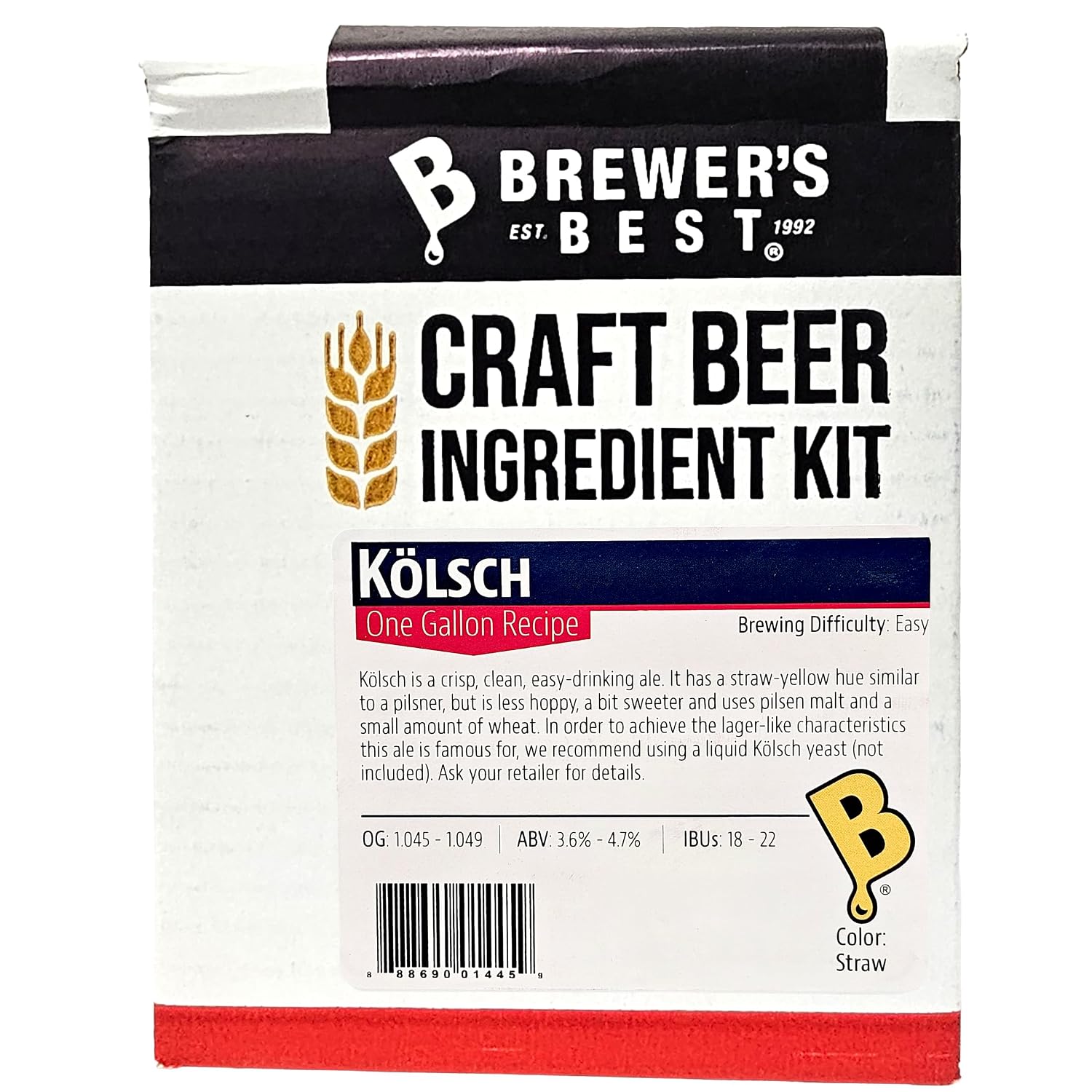
This one is different in an important way: it is an ingredient kit, not an equipment kit. You get the malt extract, the steeping grains, the hops, the yeast, and the priming sugar. You do not get a fermenter, an airlock, a hydrometer, or a capper. If you already own the hardware, that is a feature, because you are paying for beer instead of plastic.
Kolsch is a strong second or third batch for a specific reason. It is a clean, pale, lightly hopped beer, which means there is nowhere for a flaw to hide. If your fermentation ran warm, you will taste it. If your sanitation slipped, you will taste that too. Brewing a kolsch is the cheapest diagnostic test you can run on your own process, and it is a genuinely pleasant beer to drink while you read the results.
My one rule with any ingredient kit: check the yeast date, and if it is old, build a starter with a little dried malt extract instead of pitching tired yeast into fresh wort.
The Bench That Holds All of It: Eltean 55-Inch Rolling Workbench
Home brewing expands to fill whatever surface you give it. Mine started on a kitchen table and ended with bottles on the floor, sanitizer on the counter, and a capper living in a drawer nobody could open. The Eltean rolling workbench is what I would buy first if I were setting up a garage from scratch.
The spec sheet lists 1,000 pounds of capacity, six drawers, a storage cabinet, a pegboard, and an adjustable shelf. I do not load a brew bench anywhere near 1,000 pounds, and I do not buy furniture on that number. What I care about is whether the drawers hold a capper, spare spigots, a hydrometer in its case, and a coil of tubing without becoming a junk drawer, and whether the pegboard keeps the sanitizer, the bottle brush, and the funnel off the surface where the wort goes. That is the difference between a brew day that flows and a brew day spent hunting for an airlock.
The wheels matter more than they sound. A brew bench has to be a bottling station, a cleaning station, and a storage unit, and it has to move when the car comes home. Lock the casters before you set a full fermenter on top.
How I test a one-gallon kit
Three full brew days minimum, and that is not a formality. A kit that fails on brew day one gets exactly one more chance, then it is out of the guide no matter who makes it.
Here is what I am watching for.
Sanitation and cleaning access. A fermenter with a narrow mouth and a spigot you cannot take apart is a fermenter that grows something by batch three. If I cannot get a brush into every surface that touches wort, I mark it down.
The measuring tools. Does the kit include a hydrometer, and does it read 1.000 in distilled water at 60 degrees Fahrenheit? A hydrometer that is off by 0.002 makes every number in your notebook a lie, including the alcohol content you brag about.
Temperature guidance. Instructions that give me a number I can hold with a thermometer get a pass. Instructions that tell me to trust my instincts get a hard no.
The spigot. Plastic spigots drip. It is the most common and most preventable failure in this hobby, and I would rather find out on brew day one than discover a puddle under the fermenter on day ten.
Bottling day. Capper, bottle filler, priming sugar, and enough bottles. A kit that gets you all the way to a carbonated beer is a kit that gets used again.
One-gallon home brew kit comparison table
| Setup | What you get | Best for | Price |
|---|---|---|---|
 Visit on Amazon → Craft A Brew Light Craft Lager |
Complete one-gallon equipment and supplies, hydrometer in the box | A first batch with every tool included | $54.95 |
 Visit on Amazon → Craft A Brew Oktoberfest Ale |
Complete one-gallon equipment and supplies, warm-fermenting ale | Fall brewing without temperature control | $54.95 |
 Visit on Amazon → Brewer's Best Kolsch |
Ingredients only: malt, hops, yeast, priming sugar | Batch two and beyond, once you own hardware | $24.95 |
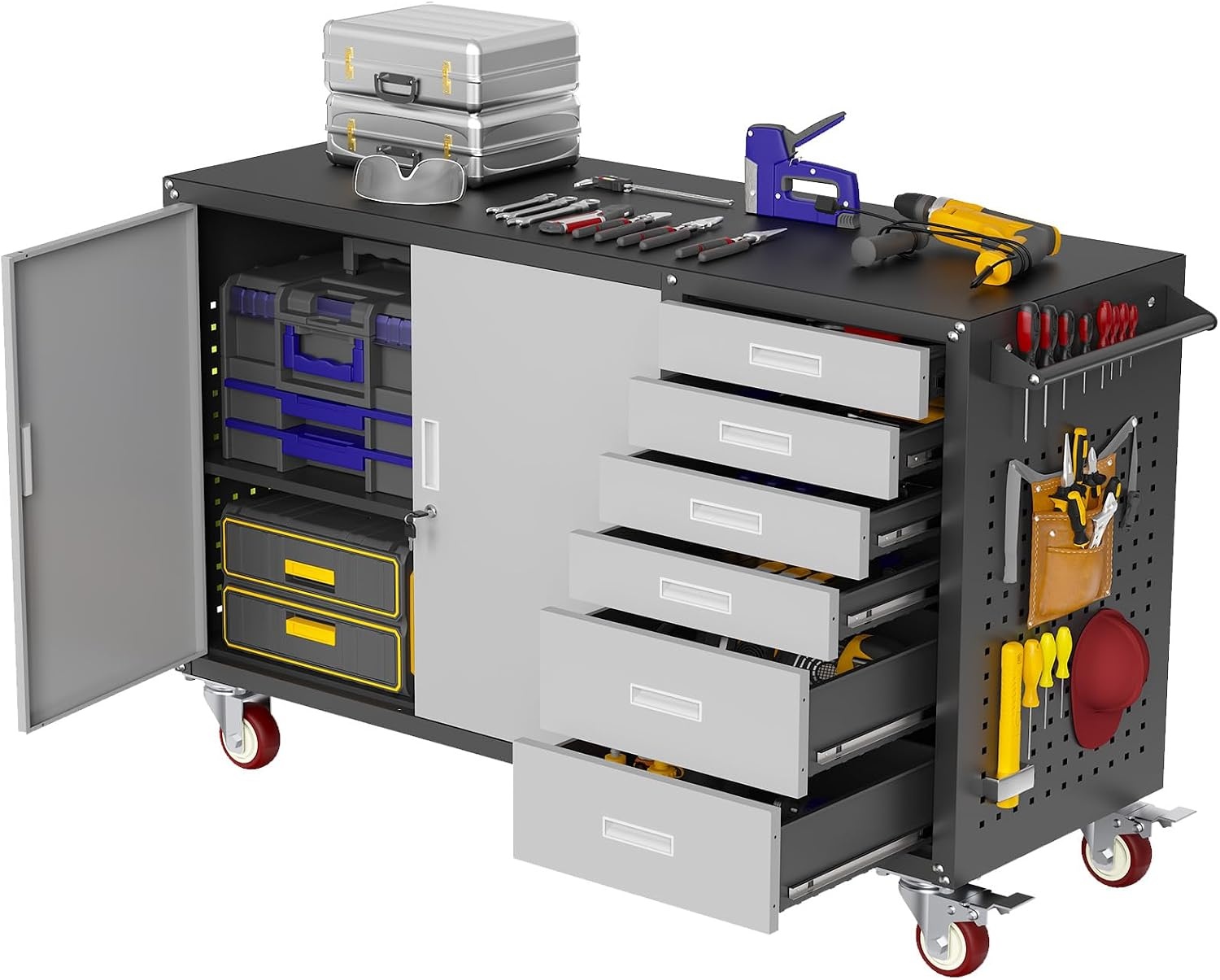 Visit on Amazon → Eltean rolling workbench |
Six drawers, storage cabinet, pegboard, adjustable shelf, wheels | A permanent garage brew space | $269.99 |
What actually decides whether the beer is good
Once the gear is settled, a batch is decided by three numbers and one habit.
The first number is original gravity, the gravity of the wort before fermentation. The second is final gravity, the reading when fermentation is finished. The gap between them is attenuation, and it tells you how much sugar the yeast actually ate. It is also the only honest way to calculate alcohol. A stout that finishes high is not sweet, it is under-attenuated, and those are two different problems with two different fixes.
The third number is fermentation temperature, and it is the one beginners ignore. Yeast does not care what the thermostat in the hallway says. Tape a thermometer to the side of the fermenter, because active fermentation runs several degrees warmer than the room, and that is the temperature the beer is actually experiencing.
The habit is writing all of it down. I keep a refractometer in the kit for fast readings during brew day, but every number that goes in the notebook comes off the hydrometer, calibrated in distilled water at 60 degrees Fahrenheit. The refractometer is faster and I still do not trust it alone.
Should you buy the Craft A Brew Light Craft Lager kit?
Yes, for most first-timers. It is the complete package, it includes the tool that separates brewing from guessing, and the one-gallon format means a failed batch costs you an afternoon instead of a weekend. Brew it in a cool season if your house runs warm.
Should you buy the Craft A Brew Oktoberfest Ale kit?
Yes, if you want a fall batch and you are not ready to manage lager temperatures. It ferments at room temperature, it drinks like the season, and it shares the same one-gallon format, so it works as your second fermenter too.
Should you buy the Brewer's Best Kolsch ingredient kit?
Yes, if you already own a fermenter, an airlock, a hydrometer, and a capper. It is the least expensive way to brew another batch, and kolsch is the honest style that will tell you whether your process is clean and your fermentation temperature is under control.
Should you buy the Eltean rolling workbench?
Yes, if your brew gear has already taken over the kitchen. Six drawers, a cabinet, a pegboard, and an adjustable shelf give every small part a home, and the wheels let one bench be your brew stand, your bottling line, and your storage. Buy the bench before you buy your fourth gadget, not after.