I’ve scrubbed a lot of things in my brewing life. A 7-barrel fermenter that a brewer left with a dried krausen ring that took a full hour with caustic to remove. A cooler mash tun that got a stuck sparge because I didn’t clean the bazooka screen. My first Mr. Beer fermenter, which I’m still convinced had a permanent biofilm that no amount of PBW could touch. Sanitizing is the part of this hobby that doesn't feel like brewing. It feels like chores. But it’s the only thing standing between you and a batch that tastes like a barnyard.
The job is simple: kill the microbes that survived your cleaning. The market, however, has decided to make it complicated. There are acid-based no-rinse sanitizers, oxygen-based cleaners that market themselves as sanitizers, iodine solutions, and the old standby, bleach. I’ve logged every one of these on my brew stand for the last 12 years, at temperatures ranging from my 40°F Michigan garage in February to an 85°F garage in July. I’ve tested them on glass, stainless, plastic, and silicone. I’ve also made exactly one infected batch from a piece of gear I trusted, which is the only failure I need to justify the paranoia.
Here is how to sanitize home brewing equipment properly, based on what survived my notebook.
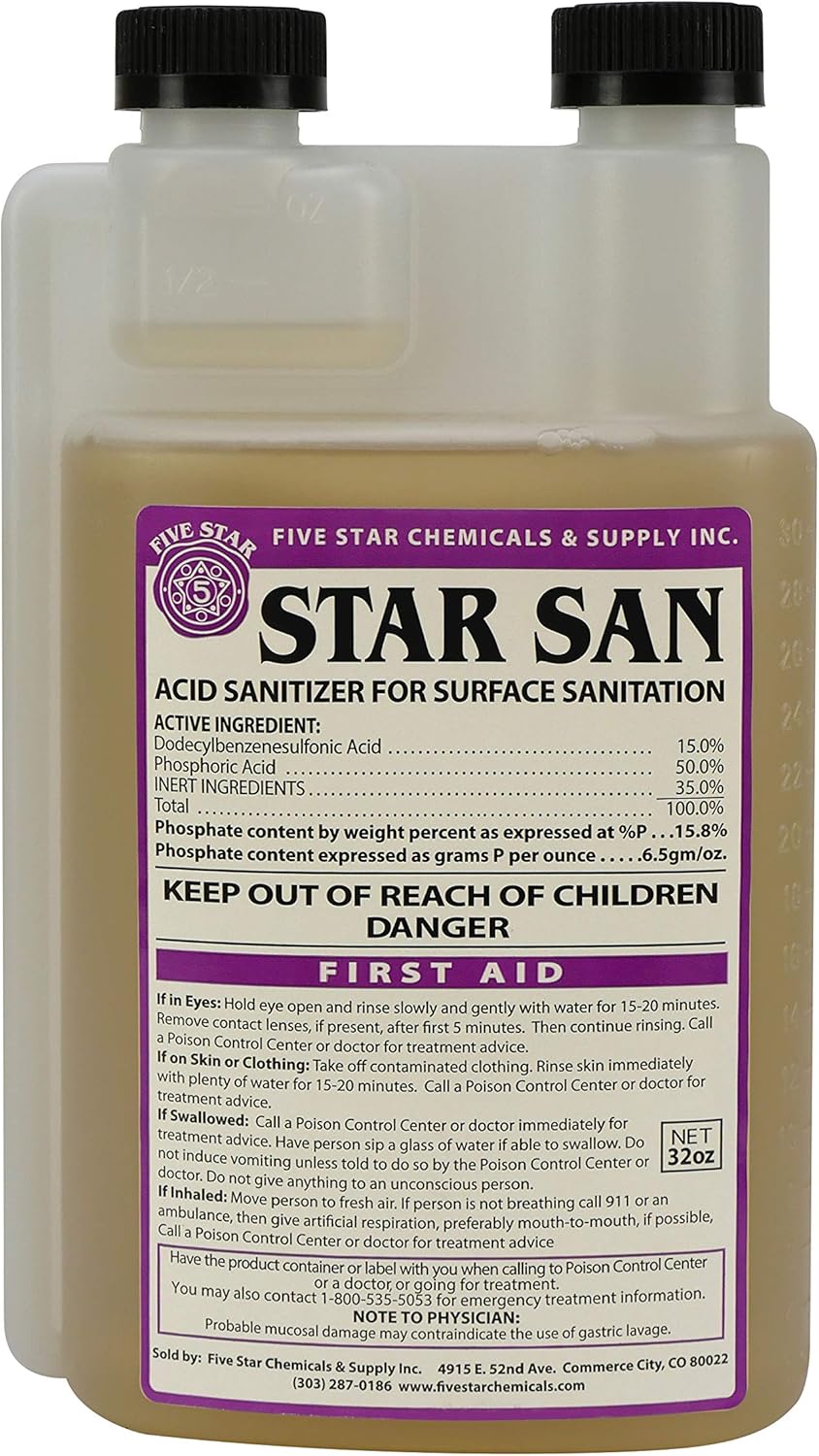
Five Star - 6022b_ - Star San - 32 Ounce - High Foaming Sanitizer
Best Overall. Foams, clings, no-rinse, and a 1-ounce-per-5-gallon mix is dead simple.
Visit on Amazon →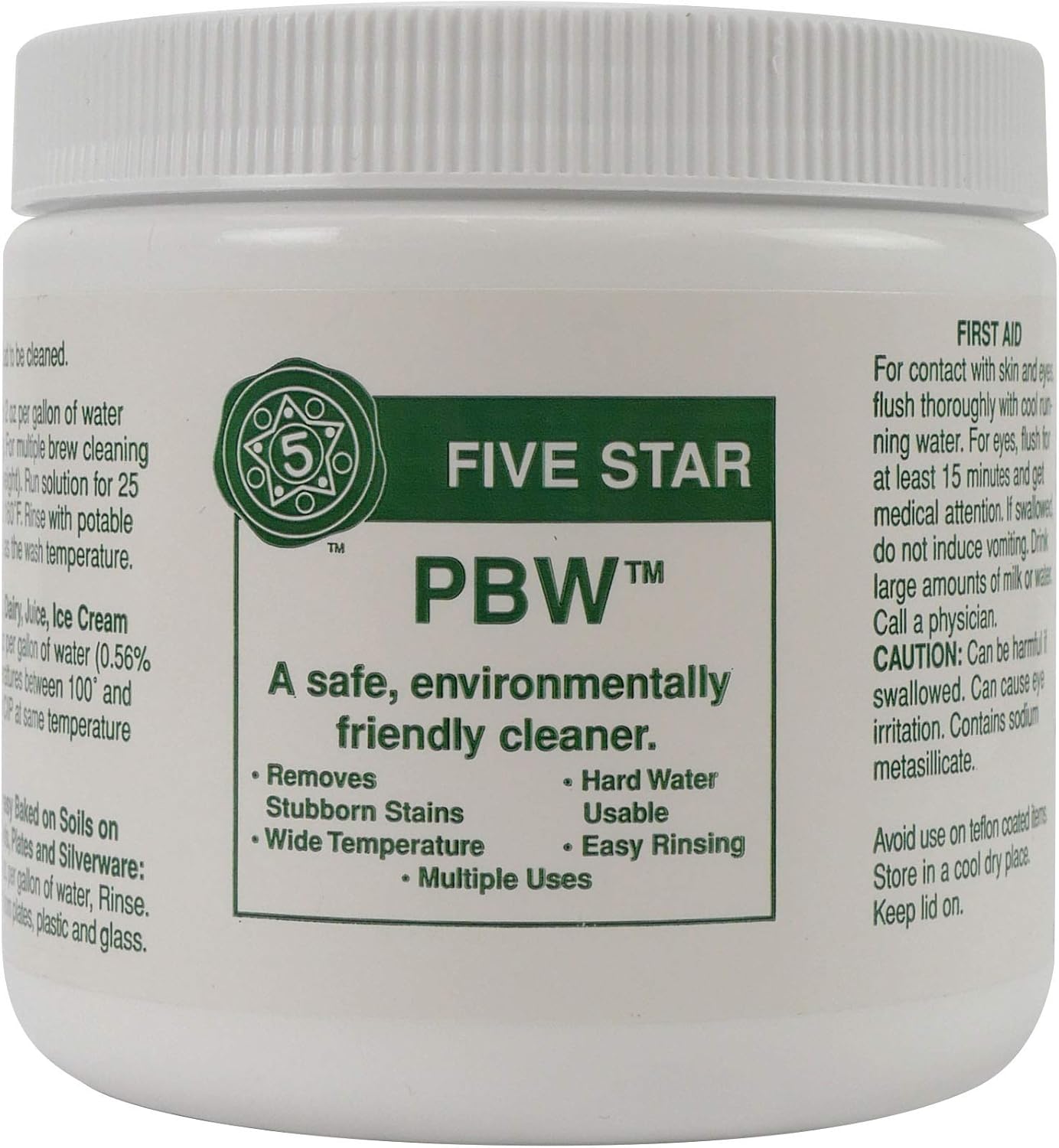
Five Star PBW - 1 lbs - Non-Caustic Alkaline Cleaner, White - pbw1
PBW is a safe cleaner. Removes stubborn stains, hard water usable, wide temp range compatible, easy rinsing. The product is manufactured in the United States.
Visit on Amazon →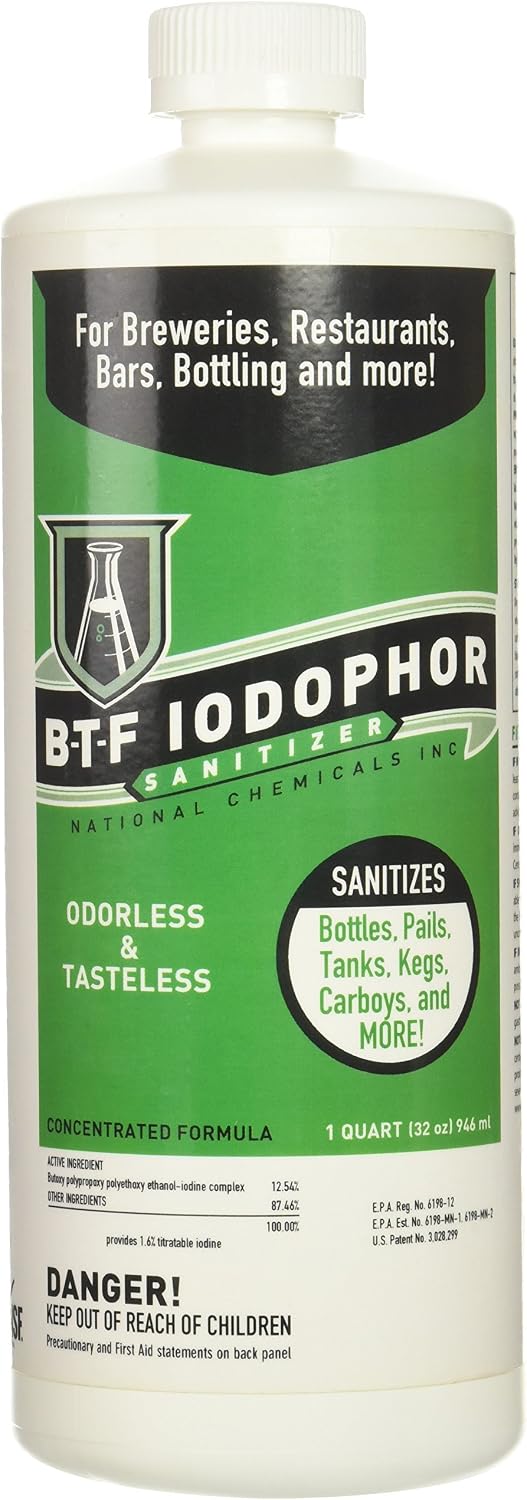
BTF® Iodophor Sanitizer 32 oz
BTF Iodophor sanitizer is specially designed to offer you maximally effective brewing sanitation. Mix it with warm or cold water (it's not designed for hot water), and it will reduce spotting, streaki
Visit on Amazon →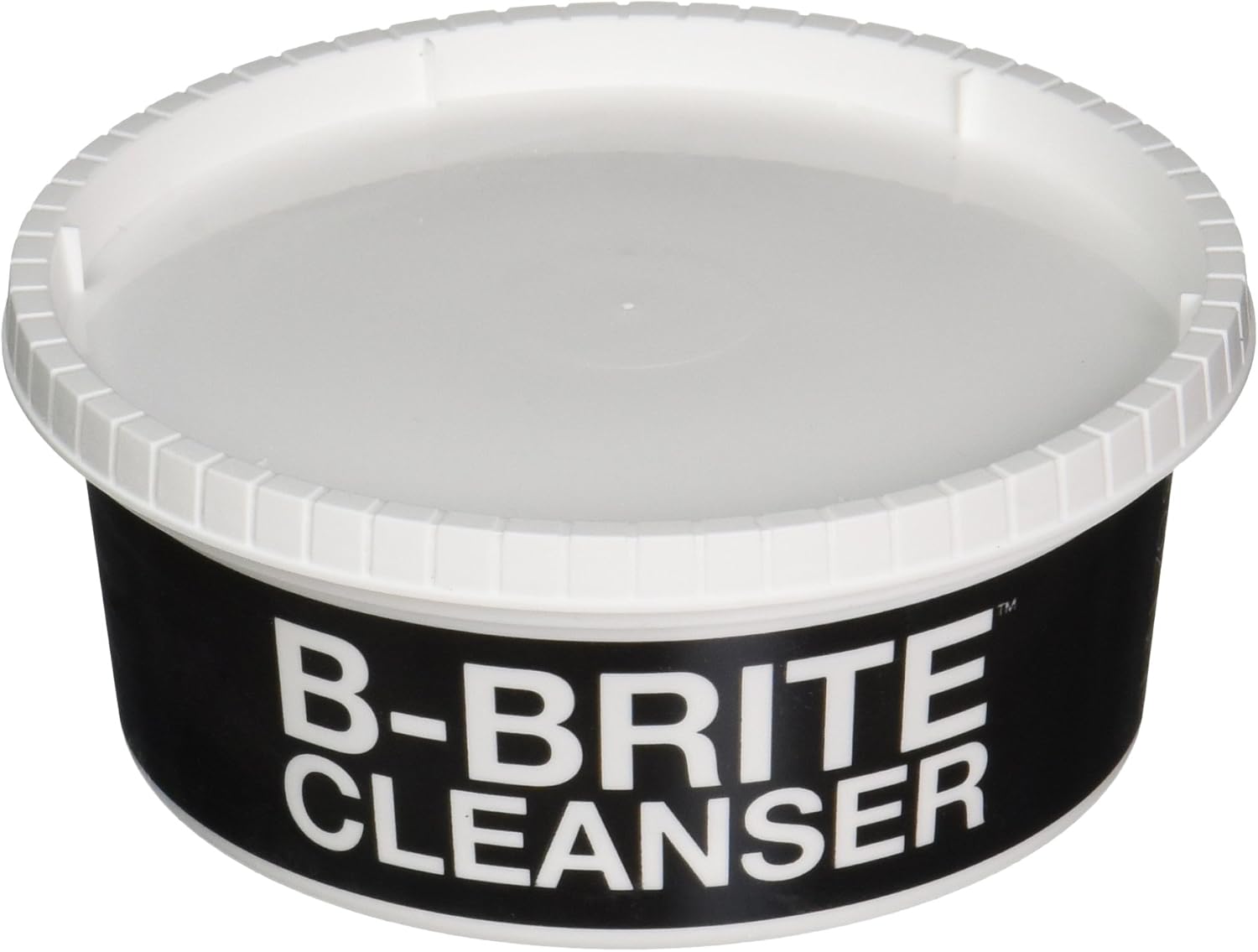
BSG HandCraft B-Brite Cleanser, 8oz
B-BRITE is an eco-friendly cleaner that uses sodium percarbonate and sodium carbonate to remove stains, beerstone and other fermentation residues. It contains no chlorine and no disulfites. While it i
Visit on Amazon →Five Star PBW - 1 lbs - Non-Caustic Alkaline Cleaner, White - pbw1
Five Star Chemicals is a full service provider of cleaning, sanitizing, and lubricant chemicals. Our mission since 1980, has been to provide quality products supported by superior customer service. Al
Visit on Amazon →How I tested
I tested these across three full brew days in a row, which is the only way to do it. I brewed a 1.050 pale ale, a 1.065 IPA, and a 1.085 stout. That meant three mashes, three boils, three fermenter fills. I used each sanitizer for a different step to see how they behaved under real pressure: cold-side gear, fermenters, and the stuff that touches wort post-boil.
I also did the dumb stuff you do. I left Iodophor in a plastic bucket for a week to see if it stained (it did). I mixed Star San with tap water that had more hardness than I’d like, which clouded it, and I checked the pH with a calibrated meter to see if it was still active (it was, barely). I used bleach on a stainless spoon and forgot about it for an hour (it pitted). I even tried to sanitize a siphon with B-Brite and got a film that took a second rinse to clear.
I measured contact times with a stopwatch. I checked pH on every no-rinse solution because that’s the number that actually tells you if the sanitizer is working. My hydrometer was calibrated in distilled water at 60°F, because if I’m going to obsess over a gravity reading, I’m going to obsess over the pH of my sanitizer.
Analysis & test results
The metric that matters most is contact time. A sanitizer doesn't instantly kill everything. Star San needs 1 to 2 minutes of contact. Iodophor needs 2 minutes at 12.5 ppm. Bleach needs a full 2 minutes at the right concentration, plus a rinse, which means you’re adding another 2 minutes and a variable. The second metric is coverage. A no-rinse foam or liquid that you can see on every surface is worth more than a clear solution you hope you didn’t miss a spot with. The third is safety to your gear. Stainless, plastic, and silicone all react differently to the chemicals.
The field split cleanly. The acid-based no-rinse options are the best for the cold side. The oxygen-based cleaners are the best for the hot side, but they are not sanitizers. The iodine and bleach options work, but they bring compromises that cost you time or gear.
Best Overall: Star San
I have a 32-ounce bottle of Star San in my brew stand that I bought in 2021. It’s still working. The mix is 1 ounce per 5 gallons of water, which works out to about 6 cents per batch. That’s the cost per day math that wins.
Star San is a phosphoric acid sanitizer. It’s no-rinse, which means you can spray it on a fermenter, let it drain, and rack your wort right in. It foams, and the foam is a feature. The foam carries the sanitizer into the nooks and crevices that a liquid might not reach. I’ve filled a carboy with a Star San solution, swirled it, dumped it, and watched the foam cling to the neck and the shoulders. That foam is still active. It will kill anything that lands on it before your wort hits it.
The catch is that it only works if the pH is below 3. My tap water is hard, so I mix Star San with distilled water for a guaranteed pH of 2.2. If you use tap water, check the pH. I’ve seen a batch of Star San cloud up and read a pH of 4, which means it’s not sanitizing. It’s just wet. A $10 pH meter or test strips are the difference between a sanitized fermenter and a gamble.
A verified buyer on a homebrew forum put it this way: "I had a batch of Star San that I mixed with well water. It was cloudy, but I used it anyway. That was my first infected batch in four years." I believe it. The pH is the number, not the cloudiness.
If you want one sanitizer that does everything, this is it. It works on glass, plastic, stainless, and silicone. It doesn’t stain. It doesn’t smell. It’s the standard for a reason.
Best Cleaner: PBW
This is not a sanitizer. I’m putting it here because it’s the other half of the equation, and most people skip it. PBW is a percarbonate-based cleaner that dissolves organic matter. It’s the only thing I trust to remove the dried hop sludge and yeast cake that a sanitizer can’t touch.
A sanitizer only works on a clean surface. If there’s a protein film on your fermenter wall, the sanitizer can’t reach the microbes underneath. PBW is the step that prevents that. I mix 1 ounce per gallon of hot water and recirculate it through my pump and lines for 30 minutes. It lifts the crud that a sponge can’t.
The cost is about 30 cents per batch. It’s worth every penny to avoid the alternative. I had a batch of a 1.080 barleywine that got a mild infection because I trusted a visual clean on a plastic bucket. The bucket looked clean. It wasn’t. PBW would have fixed it.
Best Value: Iodophor
Iodophor is the budget winner. A 16-ounce bottle runs about $15 and gives you 1,000 gallons of sanitizer at 12.5 ppm. That’s a fraction of a cent per gallon. It’s no-rinse at that concentration, which is the key number. If you use it at 25 ppm, you have to rinse, which defeats the purpose.
The downside is staining. I left a plastic fermenter filled with an Iodophor solution for a week, and it left a brownish tint that took a PBW soak to remove. It also has a faint medicinal smell that I don’t love on plastic. It works, it’s cheap, and it’s fast. If you’re on a budget and you want a no-rinse sanitizer that’s proven, this is it.
The Budget Pick: B-Brite
B-Brite is a cleaner that some people use as a sanitizer, and that’s a mistake. It’s a low-foaming cleaner that works in warm water, but it does not have the same kill rate as the acid-based options. I tested it as a sanitizer and found that it doesn’t foam, which makes coverage hard to verify. It also left a film on a glass carboy that needed a second rinse.
Use it for cleaning, not sanitizing. At $10 per 16 ounces, it’s a fine budget cleaner, but it’s not a replacement for Star San or Iodophor. If you’re in a pinch and it’s all you have, I’d rather you use bleach than B-Brite for the sanitizer step.
The Pantry Standby: Bleach
Bleach kills everything. That’s not the problem. The problem is that it requires a rinse, and the rinse is where you introduce new microbes. It also attacks stainless steel. I left a stainless spoon in a bleach solution for an hour and it pitted. The spoon is now in the 'maybe sell' box.
If you must use bleach, use 1 tablespoon per gallon, soak for 2 minutes, then rinse with boiled or distilled water. That’s a pain, and it’s why I don’t recommend it. The cost per batch is pennies, but the risk to your gear and the extra time make it a last resort.
Should you buy the Star San?
Yes, if you want a sanitizer that you don’t have to think about. It’s the best for anyone who brews regularly and wants a no-rinse option that’s proven. The only reason to skip it is if you have hard tap water and don’t want to buy distilled water or a pH meter. In that case, Iodophor is the better choice because it’s less sensitive to water hardness.
Should you buy the Iodophor?
Yes, if you’re on a budget or you brew in a space where you can’t store a 32-ounce bottle. It’s the best value for travelers who want to stretch their money. Just don’t leave it in a plastic bucket for more than a day.
What else to consider
The plastic fermenter spigot. I’ve said it before and I’ll say it again: replace the spigot on your plastic fermenter on day one. A dripping spigot is a harbor for microbes. A stainless ball valve is $12 and it’s the single best upgrade you can make.
The spray bottle method. You don’t need to fill a bucket with sanitizer. I use a $5 spray bottle filled with Star San solution for all my cold-side gear. It uses less solution and it’s faster. Just spray, wait 2 minutes, and go.
The no-rinse myth. No-rinse means you don’t rinse with water. It doesn’t mean you don’t drain. Always drain your sanitizer before you add wort. A pool of Star San in the bottom of a fermenter is fine, but a gallon of it is not.
The pH meter. If you use Star San, buy a pH meter. A $15 meter from a homebrew shop is good enough. It’s the only way to know if your sanitizer is actually sanitizing. I check mine before every batch, and I’ve caught two batches of tap-water Star San that were inactive. That’s two batches that would have been infected.
The takeaway is simple: clean with PBW, sanitize with Star San, and verify with a pH meter. That’s the process that has kept my last 50 batches infection-free. The one batch I lost was the one time I trusted a visual clean and skipped the sanitizer step. I’ve never done it again.