I have brewed more than 50 logged batches across twelve years, and the honest math of this hobby is that the beer is the easy half. The other half is cleaning and sanitizing, and it is the half that decides whether your batch tastes like beer or like a wet basement. That is why this comparison of home brewing kits and bottle washers puts four products on one page: two beer kits that make wort and two washer-sterilizer-dryer machines that make the aftermath disappear. They compete for the same counter space, the same outlet, and the same Saturday afternoon, and only one of those categories makes you a better brewer faster.
The short answer: the Craft A Brew one-gallon lager kit is the best first purchase for most people, because it arrives complete and a ruined batch costs you an afternoon instead of a month. The Brewer's Best smoked porter kit is the better beer, but only for someone who already owns a fermenter, a kettle, and a hydrometer. The two washer-sterilizer-dryer machines are a luxury right up until bottling day becomes the reason you stop brewing, and then they are not a luxury anymore.
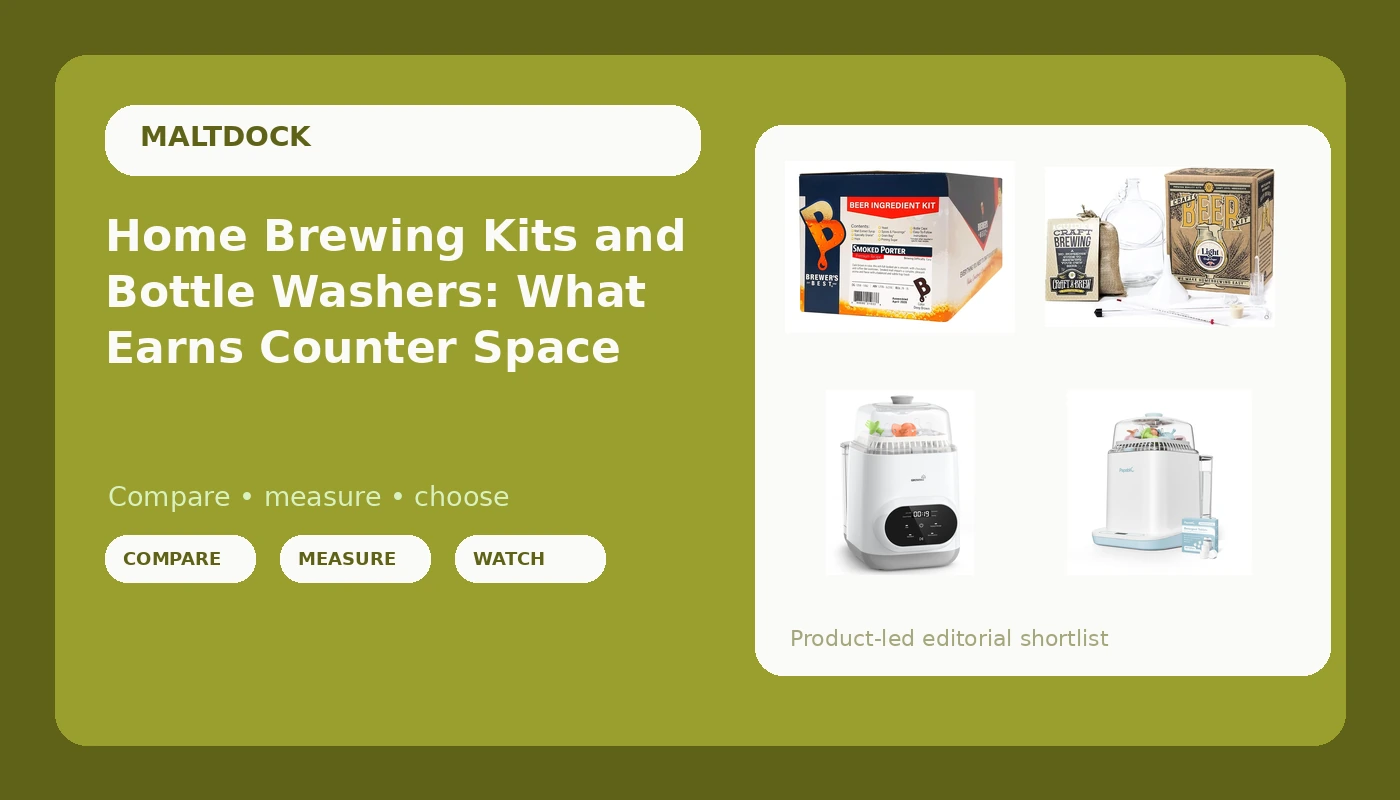
Brewer's Best 1033 Smoked Porter (5 gallon)
A full five-gallon batch of a real, opinionated style with fresh extract and steeping grains
Ingredients only. No fermenter, no kettle, no hydrometer, no bottles
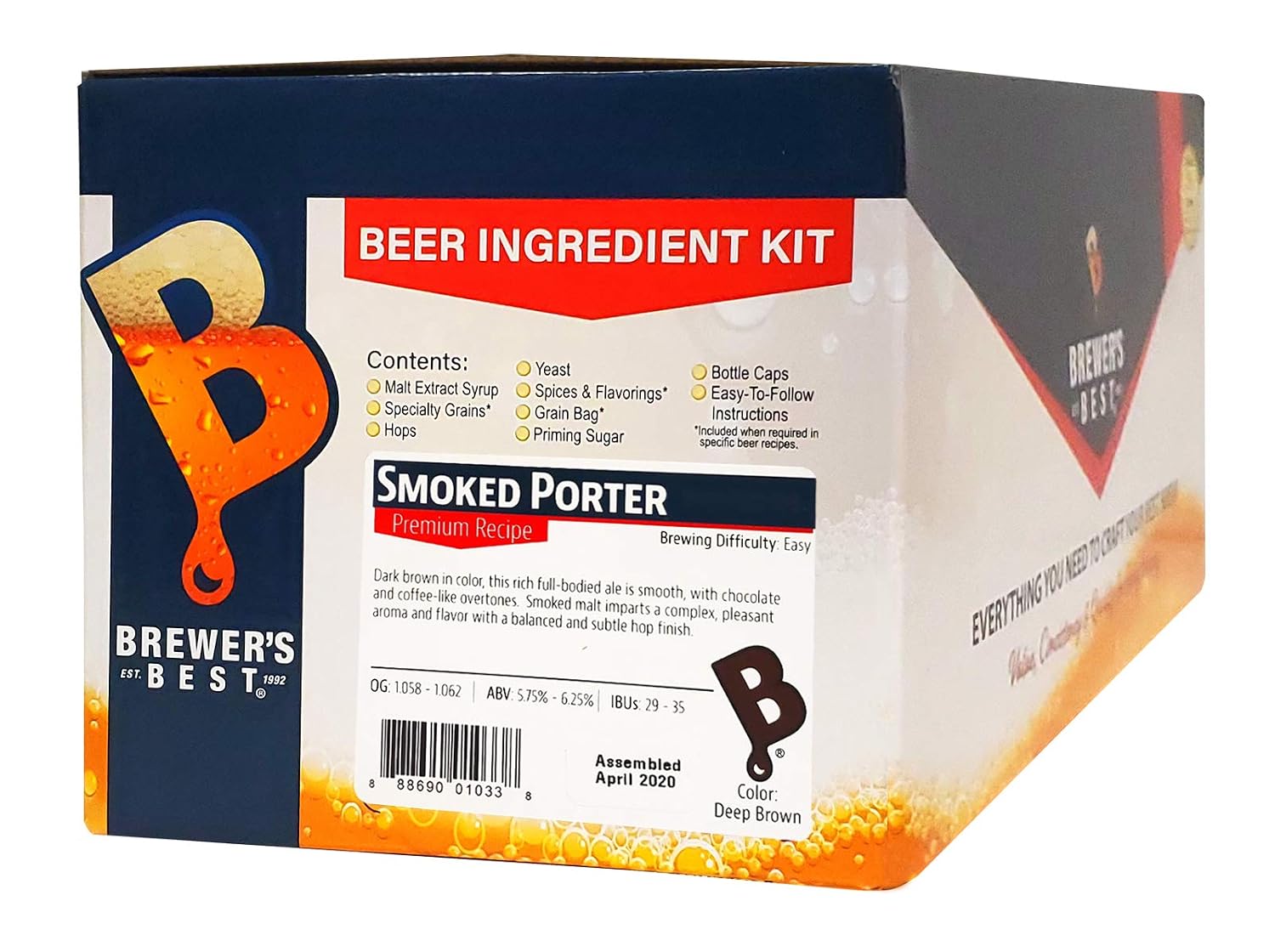
Craft A Brew Light Craft Lager (1 gallon)
Complete equipment and supplies in one box, tiny footprint, small-batch risk
A lager is the least forgiving first beer, and one gallon is a short pipeline
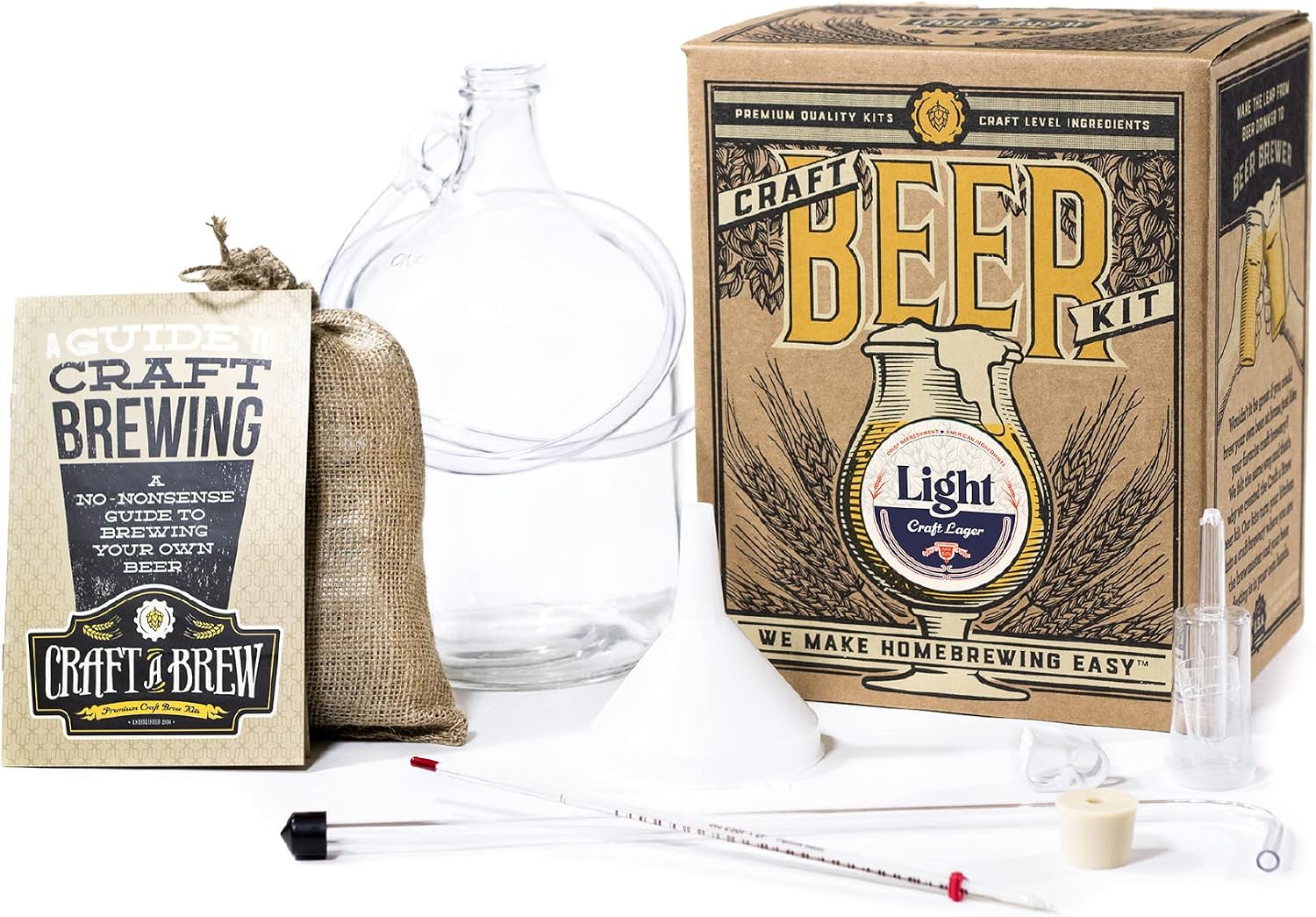
Grownsy EaseClean Bottle Washer
All-in-one wash, sterilize, and dry in one machine instead of three steps by hand
The most expensive way to solve a chore, and it is not built around beer bottles
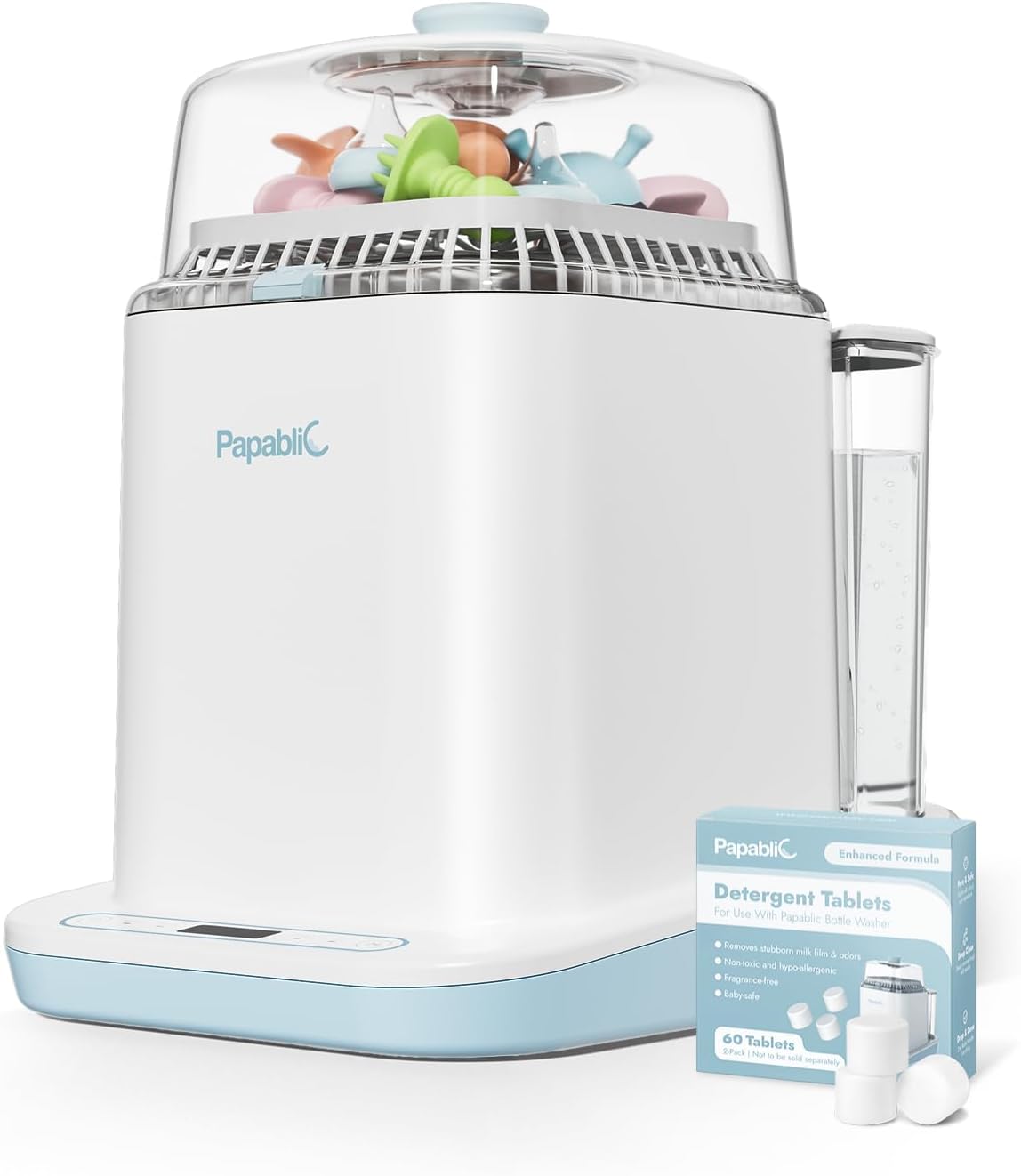
Papablic Bottle Washer Pro
Four functions, and it ships with 60 detergent tablets so you can start immediately
Tablet refills are a subscription you did not plan for, and the counter space is real
Prices and availability were captured from Amazon Creators API and may change.
Two categories, one bottleneck
A beer kit is a recipe plus raw materials. The Brewer's Best entry is an ingredient kit, which means extract, steeping grains, hops, yeast, priming sugar, and a sheet of instructions, with the hardware left for you to already own. The Craft A Brew entry is a starter kit, which means the recipe plus the equipment to actually ferment and package it. Neither one is a bottle washer, and a bottle washer is not brewing gear at all.
The reason all four belong in the same article is that the bottleneck in a home brewery is not the boil. It is packaging day, when you have a fermenter full of beer that is ready right now and a pile of bottles that must be spotless before a single ounce goes in. Everything on this list is competing for that job, and the kits and the machines attack it from opposite ends.
Brewer's Best 1033 smoked porter: the five-gallon ingredient route
Five gallons is the standard homebrew batch, and it is the size every recipe, every bottling bucket, and every keg in the hobby is built around. Buying at that size is how you get your cost per bottle down and how you stop feeling like you are brewing a sample. The trade-off is that a five-gallon batch demands a five-gallon rig: a kettle big enough for a full boil, a fermenter with headspace, a siphon, a bottling bucket, and a hydrometer so you actually know what you made.
Smoked porter is a confident style choice. Smoke malt is polarizing in a way that a pale ale never is, and in a dark, roasty beer the smoke has to sit on top of chocolate and coffee notes instead of hiding behind them. That makes it a great second or third batch and a strange first one. If you brew it, ferment it cool and steady, because a porter will forgive a lot of small process errors and absolutely will not forgive a warm, swinging fermentation temperature.
The honest criticism: an ingredient kit is a shopping list with a recipe attached. If you do not already own the equipment, this purchase is the middle of a project, not the start of one. Kits that skip the hydrometer are the kits I complain about most, and the fastest way to fix that gap is to buy the measuring tool on the same day you buy the ingredients.
Craft A Brew light craft lager: the one-gallon complete route
This is the opposite philosophy. One gallon, complete equipment and supplies, everything in the box, ready to brew on a kitchen stove. For a beginner, that is worth more than batch size. A small batch means a short boil, a small kettle, a fermenter that fits on a shelf, and a mistake that costs you an afternoon rather than a month of waiting.
The catch is the style. A light lager is the least forgiving beer in the hobby. There is no roast, no hops, and no smoke to hide behind, so every off-flavor from a warm fermentation or a rushed package shows up in the glass. Lager yeast also wants cool, stable temperatures, which is exactly what most beginners cannot provide in a garage in July. If you want this kit to succeed, plan the fermentation before you plan the brew day, and put the fermenter somewhere you can actually hold a steady temperature.
The second honest criticism is volume. A one-gallon batch nets you a small handful of bottles, not a case. You will drink it faster than you can brew it, and by batch three you will be shopping for a five-gallon setup. That is fine. It is the same arc most of us followed, and it is a much cheaper arc than buying a big system first and discovering you hate bottling.
The cleaning half: Grownsy EaseClean Bottle Washer
The EaseClean is an all-in-one washer, sterilizer, and dryer. For a homebrewer, the appeal is not the wash cycle, it is the dry cycle. Clean bottles are easy. Dry bottles are the annoying part, because a no-rinse sanitizer works best on a bottle that is not full of tap water, and hand-shaking a case of longnecks is a bad use of your evening.
I have not run a full brew season on either of these machines, so treat this as category judgment rather than a test result. What I can say with confidence is that neither one was designed around a twelve-ounce longneck. They are built for baby bottles, pump parts, and the small, wide-mouthed shapes that come with a nursery. Before you buy, confirm that a standard beer bottle fits the rack, and confirm that the machine will accept the narrow neck without a special insert.
The cleaning half: Papablic Bottle Washer Pro
The Papablic is the same idea with a longer name and a different set of trade-offs. It is marketed as a four-in-one sanitizer for bottles, pump parts, and baby essentials, and it ships with 60 detergent tablets, which means you can run it the day it arrives instead of hunting down the right cleaner.
That tablet count is the thing to think about. Consumables are how appliances quietly become subscriptions, and proprietary tablets are the worst version of that. A bucket, a bottle brush, and a no-rinse sanitizer cost less than a single refill cycle and do the same job on a slower schedule. Where the Papablic wins is consistency: every bottle gets the same wash, the same heat, and the same dry, every time. That matters, because the most common cause of a ruined batch in a home brewery is not a bad recipe, it is one bottle that did not get clean.
If there is a baby in your house, both of these machines earn their counter space twice over, and that changes the math completely. If there is not, you are buying a very nice solution to a chore that a five-dollar brush already solves.
Where each one loses
The Brewer's Best kit loses on completeness. It is the best beer on this list and the worst first purchase, because it assumes a brewery you may not have built yet.
The Craft A Brew kit loses on style and on volume. It is the most complete box here and the most likely to produce a disappointing first batch, purely because light lager punishes beginners.
The Grownsy loses on specificity. It is a general-purpose appliance being asked to do a brewing job, and the fit of a beer bottle in a rack built for baby bottles is the question that decides whether it works for you.
The Papablic loses on refills and footprint. It is a permanent piece of counter real estate, and it locks you into a tablet supply chain for a task that has a cheap manual answer.
How I would spend the money
If you own no brewing equipment at all, buy the one-gallon complete kit first. Learn the process on a small scale, learn what a gravity reading actually tells you, and learn whether you enjoy packaging day before you commit a shelf to it.
If you already own a kettle, a fermenter, and a hydrometer, buy the five-gallon ingredient kit. You will get more beer, a better beer, and a real recipe to log.
Buy a bottle washer only when the chore is the thing standing between you and your next batch, or when it also serves a nursery. Otherwise, spend that money on a second fermenter and a temperature controller, which will improve your beer far more than a dry cycle ever will.
What I log, and what you should log
Every batch I brew gets an original gravity and a final gravity read on a hydrometer calibrated in distilled water at 60 degrees Fahrenheit, plus strike temperature, mash pH when I mash, packaging losses, and the garage temperature at pitch. The number I ignored for my first five years was cleaning time. Once I started writing it down, I found out that packaging day was eating more of my brewing hours than the boil, and that changed what I was willing to spend money on.
Log your gravity, log your temperatures, and log how long it took you to get bottles clean and dry. If the third number is the one that makes you dread brew day, a washer-sterilizer-dryer stops being an indulgence and becomes a tool. If it is not, you just saved yourself a few hundred dollars and a countertop.
What I am watching next
The pressure fermenter experiment continues, and the question I keep asking is whether shortening the pipeline from brew day to glass actually makes better beer or just faster beer. The answer is probably both, and it will be in the notebook either way.