I brewed my first batch in 2014 on a dorm-room hot plate with a kit that scorched so badly I invented a style I still call burnt adjunct lager. Twelve years and more than 50 logged batches later, plus three years as the assistant brewer at a 7-barrel brewpub in Grand Rapids, I have a firm opinion about what a first kit should promise you. Most of the marketing around beginner homebrew beer kits promises flavor. What you actually need is a process you can repeat and a way to measure it.
That is the lens I used for this comparison. Three items, three very different jobs: a complete small-batch setup that arrives with everything, an ingredient kit that assumes you already own gear, and a cheap accessory that solves the one problem neither kit mentions. Two of them make beer. One of them makes a brew day better. All three belong on the short list for anyone starting out in 2026.
For most first-time brewers, the complete two-gallon kit is the right first purchase, because it removes every excuse not to brew: fermenter, keg, bottles, and ingredients in one box. If you already own a fermenter and a kettle, the amber ingredient kit is the better value per batch and the more interesting beer. The small add-on is worth its low price only if it solves a problem you already have.
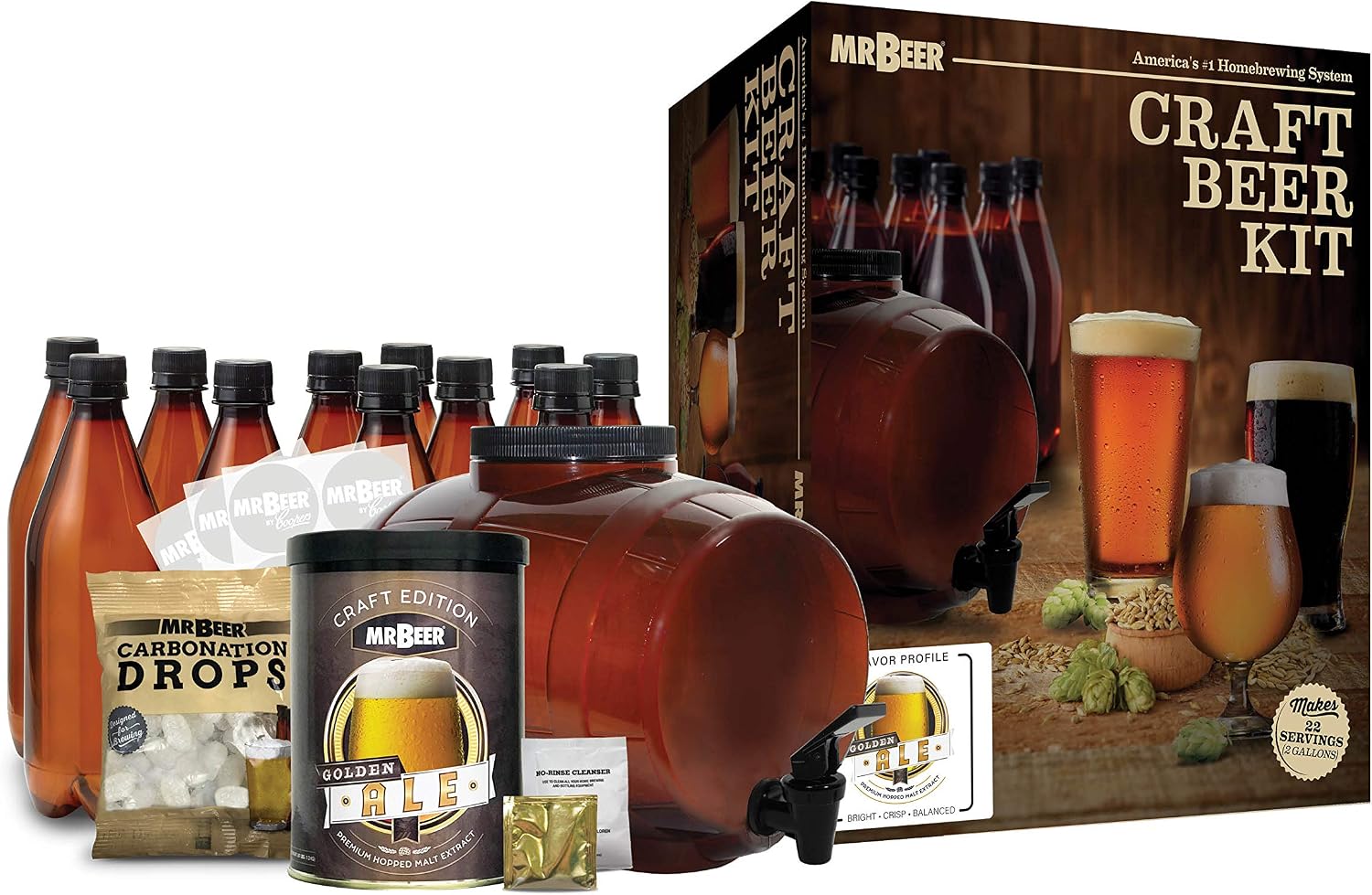
Mr. Beer Craft Beer Making Kit (2 Gallon)
Everything in one box: keg, reusable 25 ounce bottles, and a Golden Ale refill. Zero to bottled beer with the fewest decisions
Small batch, and the ceiling arrives fast. You will want more volume by batch five
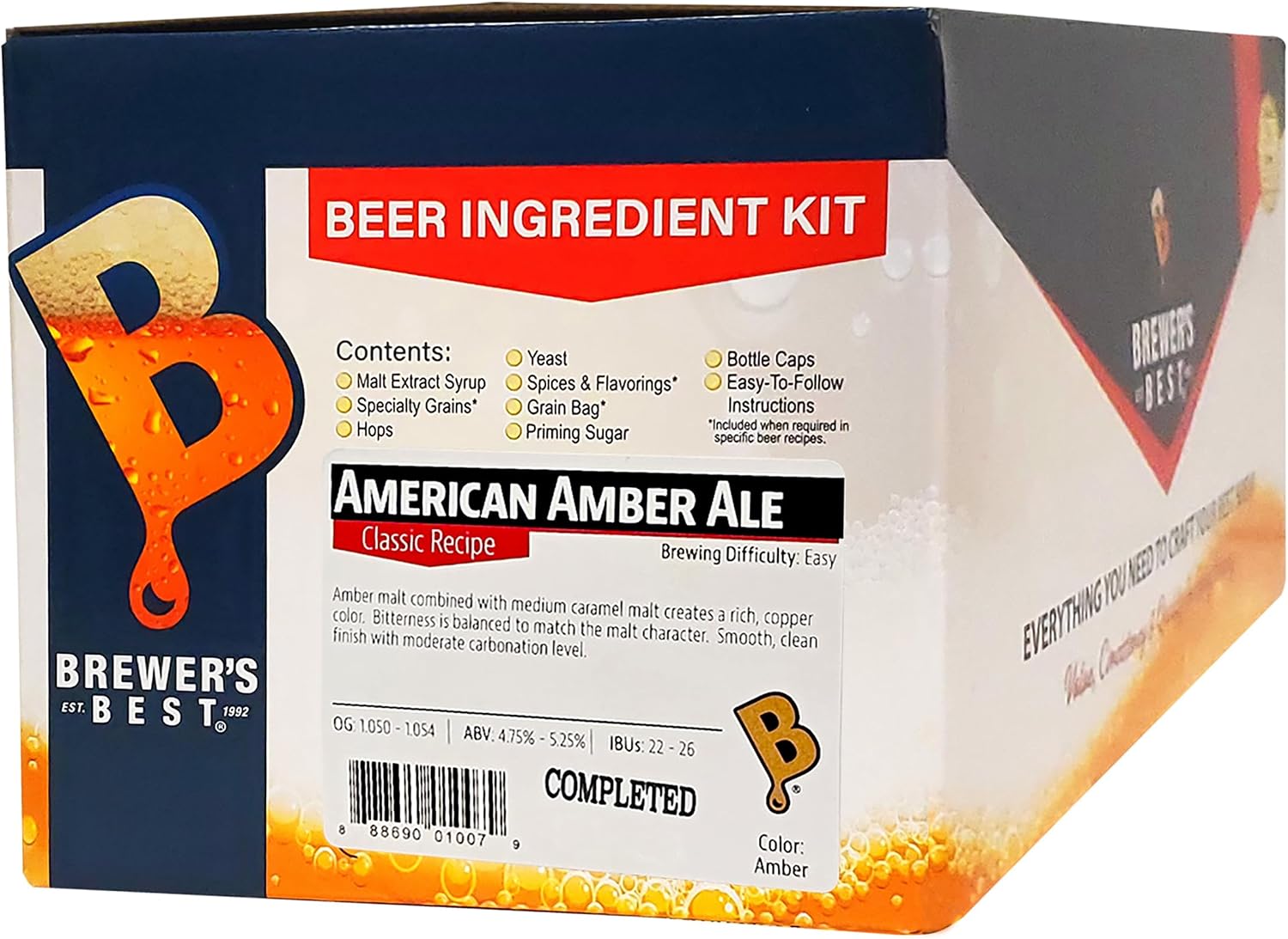
American Amber Homebrew Beer Ingredient Kit
Money goes into malt, hops, and yeast instead of plastic. More control over the finished beer
Assumes a fermenter, kettle, siphon, bottles, and a hydrometer you may not own yet

The Quiet One
The cheapest item here by an order of magnitude, and it targets one narrow annoyance
It does not make beer. Pointless if noise is not your problem
Prices and availability were captured from Amazon Creators API and may change.
What each item actually is
Three products, three categories. Knowing which category you are shopping in prevents the most expensive mistake in this hobby, which is buying the same thing twice.
The Mr. Beer Craft Beer Making Kit (2 Gallon) is a complete setup. The listing name says it plainly: complete DIY home brew set, everything included, reusable 25 ounce bottles, a 2 gallon keg, and a Golden Ale refill to brew first. Nothing else has to arrive before you can make beer. You can see the current listing here: Visit on Amazon →.
The American Amber Homebrew Beer Ingredient Kit is the opposite kind of product. It is ingredients and instructions, which means it assumes a fermenter, a kettle, a siphon, bottles, and a hydrometer are already in your garage. Cheaper to buy, but only if the rest of the gear exists. Current listing: Visit on Amazon →.
The Quiet One is neither. It is the smallest item in this comparison by a wide margin, and it exists to solve one narrow problem rather than to make beer. That is not a knock. Half of the gear on my brew stand is a single-purpose fix for something that annoyed me once and then annoyed me every batch after. Current listing: Visit on Amazon →.
The complete kit: what a two-gallon start buys you
The case for a small complete kit is behavioral, not technical. The number one reason people quit homebrewing is not bad beer, it is a first batch that eats six hours, destroys a kitchen, and produces something disappointing. A two-gallon setup shortens the day and shrinks the cleanup, and the reusable bottles and keg mean you are not buying and rinsing cases of glass on batch one.
What you give up is volume. A two-gallon batch is a small batch, and it disappears quickly if you have friends who like beer. The kit's real ceiling is the pipeline: you brew, you wait, you drink, then you brew again. When you find yourself wanting four cases instead of one, you have outgrown it, and that is a completely normal place to land by batch five or six.
The other thing to know is that a complete kit is a starting point, not a permanent system. A plastic fermenter gets scratched, and a scratched plastic fermenter is a wild yeast hotel. Plan on the kit being your first year, not your last.
The ingredient kit: cheaper beer, higher entry fee
The American Amber Homebrew Beer Ingredient Kit is the purchase I would make second, not first. It is an ingredient kit, so the money goes into malt, hops, yeast, and instructions rather than into plastic. If you already own a fermenter and a kettle, this is the more efficient way to spend, and it usually gives you more control over the finished beer than a fixed all-in-one refill does.
The catch is everything the listing does not include. An ingredient kit with no fermenter, no kettle, no siphon, no bottling bucket, and no hydrometer is not a complete path to beer. Add those up and the sticker price stops looking like the cheap option.
This is where my one non-negotiable lives. If your ingredient kit does not ship with a hydrometer, buy one before brew day. Original gravity and final gravity are the only two numbers that tell you what actually happened in the fermenter. Without them you are not brewing, you are guessing, and a batch that finished sweet because the yeast stalled tastes exactly like a batch that was designed sweet. You cannot tell the difference without a reading.
Amber is also a smart first style. It forgives fermentation temperature swings, it carries enough malt character to hide small process mistakes, and it does not demand the hop precision that a pale ale or an IPA demands on batch one.
The small add-on: what a cheap accessory is for
The Quiet One is the least expensive item in this comparison, and it is the one people ask about last. Its job is narrow by design. The name tells you the pitch: it is the quiet option, which matters a great deal if your fermenter lives in a spare bathroom, a closet, or anywhere within earshot of a bedroom.
Here is the honest framing. An accessory earns its place on your brew stand if it removes a recurring annoyance. If noise from an active fermentation is what has your household asking questions, a low-cost item that addresses it is a better buy than a forty-dollar upgrade that solves a problem you do not have. If noise is not your problem, this is not your purchase, and no low price changes that.
What it cannot do is make beer. It is a supporting item, not a kit, and it should never be the reason you delay brew day.
The trade-offs the listings do not mention
First, everything is a system. A kit, an ingredient pack, and an accessory only work as well as the weakest link in the chain. A complete setup with a spigot that drips will ruin more brew days than a mediocre recipe ever will, which is why I keep a spare spigot in a drawer and check every seal before I fill anything.
Second, sanitation is not a product, it is a habit. The best money you spend in your first year goes to a no-rinse sanitizer and the discipline to use it on everything that touches wort after the boil ends. A sixty-dollar kit with sloppy sanitation makes worse beer than a twenty-dollar kit with clean habits.
Third, temperature control beats equipment upgrades every time. Fermentation temperature is the single biggest lever a new brewer has, and it costs nothing but attention. If you can hold a steady temperature in the mid 60s, you will make better beer than someone with three times your budget and a garage that swings twenty degrees.
Fourth, buy measurement tools before shiny ones. A hydrometer, a thermometer you trust, and a notebook cost less than most accessories and do more for consistency than any upgrade in this article.
What I would buy first
If you own no brewing gear at all, buy the complete two-gallon kit. It takes you from zero to a finished, bottled, carbonated beer with the fewest decisions and the smallest chance of a stalled first attempt. Then buy a hydrometer, a good thermometer, and a notebook before you buy anything else.
If you already own a fermenter and a kettle, skip the complete kit and buy the American Amber Homebrew Beer Ingredient Kit. You are paying for ingredients rather than for plastic you already have, and you get a more interesting beer for your money.
If noise is the one thing standing between you and a brew day, add The Quiet One to the cart. It is the cheapest fix in this article and the easiest one to justify, provided it is solving a problem you actually have.
What I would not do is buy all three at once. Buy the path to beer first, measure your first batch properly, and let the second purchase be informed by whatever actually annoyed you on brew day one.
Questions I get asked most
Does a complete kit make good beer? It makes beer, and the quality is mostly on you. Fermentation temperature, sanitation, and patience decide the outcome more than the box does.
Do I need a hydrometer? Yes. It is the cheapest tool that turns brewing into something repeatable instead of something you hope works.
Can I use an ingredient kit with a small-batch setup? Check the batch size the kit is built for against your fermenter before you buy. Matching those two numbers is the whole game.
Is the cheap accessory necessary? Only if it fixes a real annoyance. Accessories are the easiest place in this hobby to spend money on nothing.
The bottom line
The complete two-gallon kit is the lowest-friction way to make your first beer, the amber ingredient kit is the smarter buy once you own gear, and the inexpensive add-on is a targeted fix rather than a step on the path. Pick the one that matches the equipment you already have, buy a hydrometer on day one, and write down every gravity reading. Twelve years in, that notebook is still the most valuable thing on my brew stand.