I have bottled more batches than I have kegged, and after twelve years and more than 50 logged brews there is still a capper on my shelf with a CO2 wrench hanging next to it. That is the honest frame for any conversation about homebrew bottling and kegging gear: nearly everyone starts in bottles because bottles are cheap and a draft system is not, and the real money question is when draft hardware earns its place on the stand. This comparison puts four products side by side that answer different parts of that question, plus one item that has no business in a brewing cart at all. I would rather say that out loud than pad a table.
The four: a bag of priming drops, a single tap kegerator, a five pack of adhesive fermenter thermometers, and a portable pet oxygen kit. Three are brewing gear. One is not, and the trade-off section below explains who should actually buy it.
If you bottle, start with the thermometers and the drops before you even look at draft hardware. The five pack of adhesive strips is the cheapest way to see what fermentation is actually doing, and the drops remove the most common bottling mistake in the hobby, which is priming sugar that never got mixed evenly.
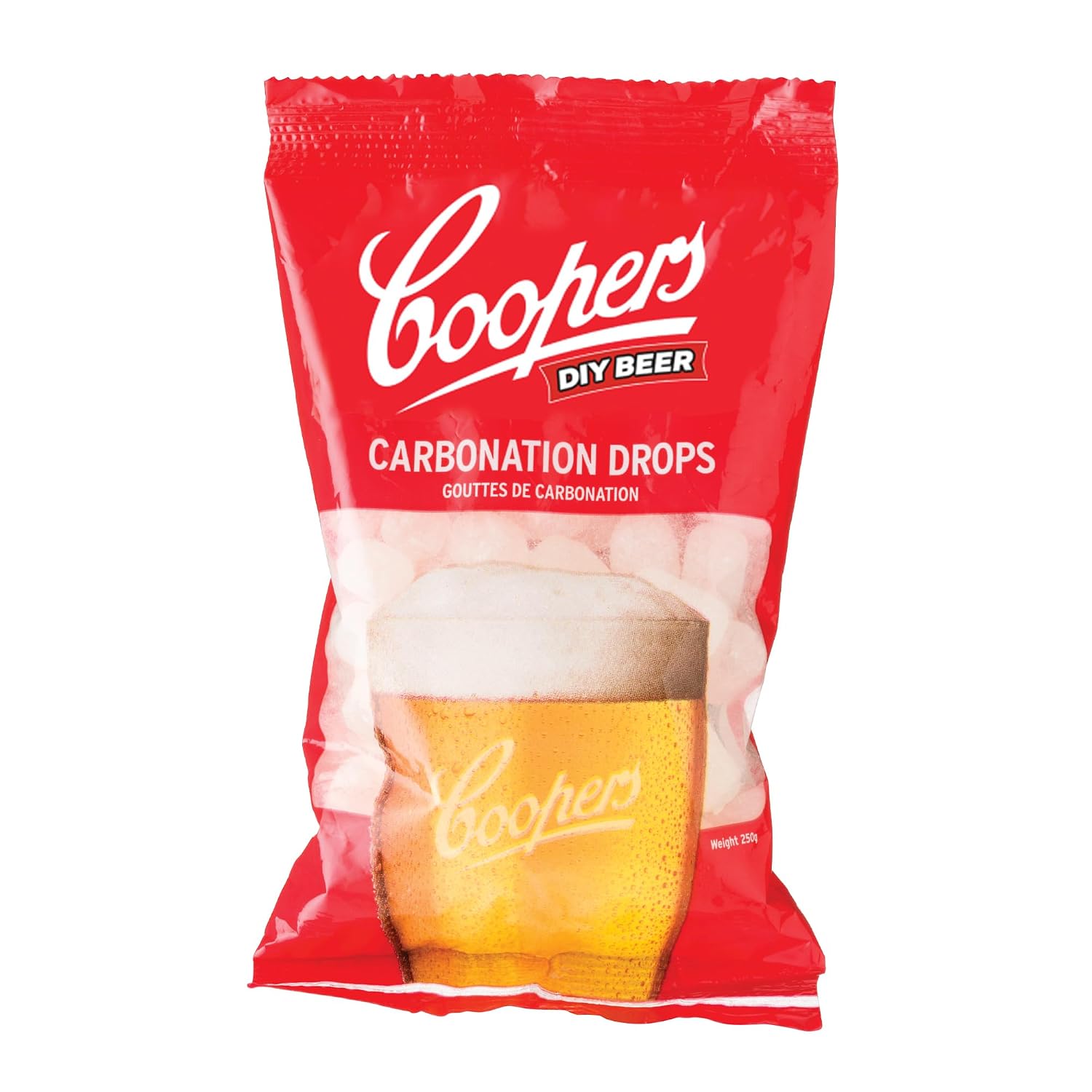
Coopers - 07-IZ3Z-LI40 DIY Home Brewing Carbonation Drops
Removes priming sugar guesswork bottle by bottle
One fixed carbonation level, and a higher cost per bottle than bulk sugar
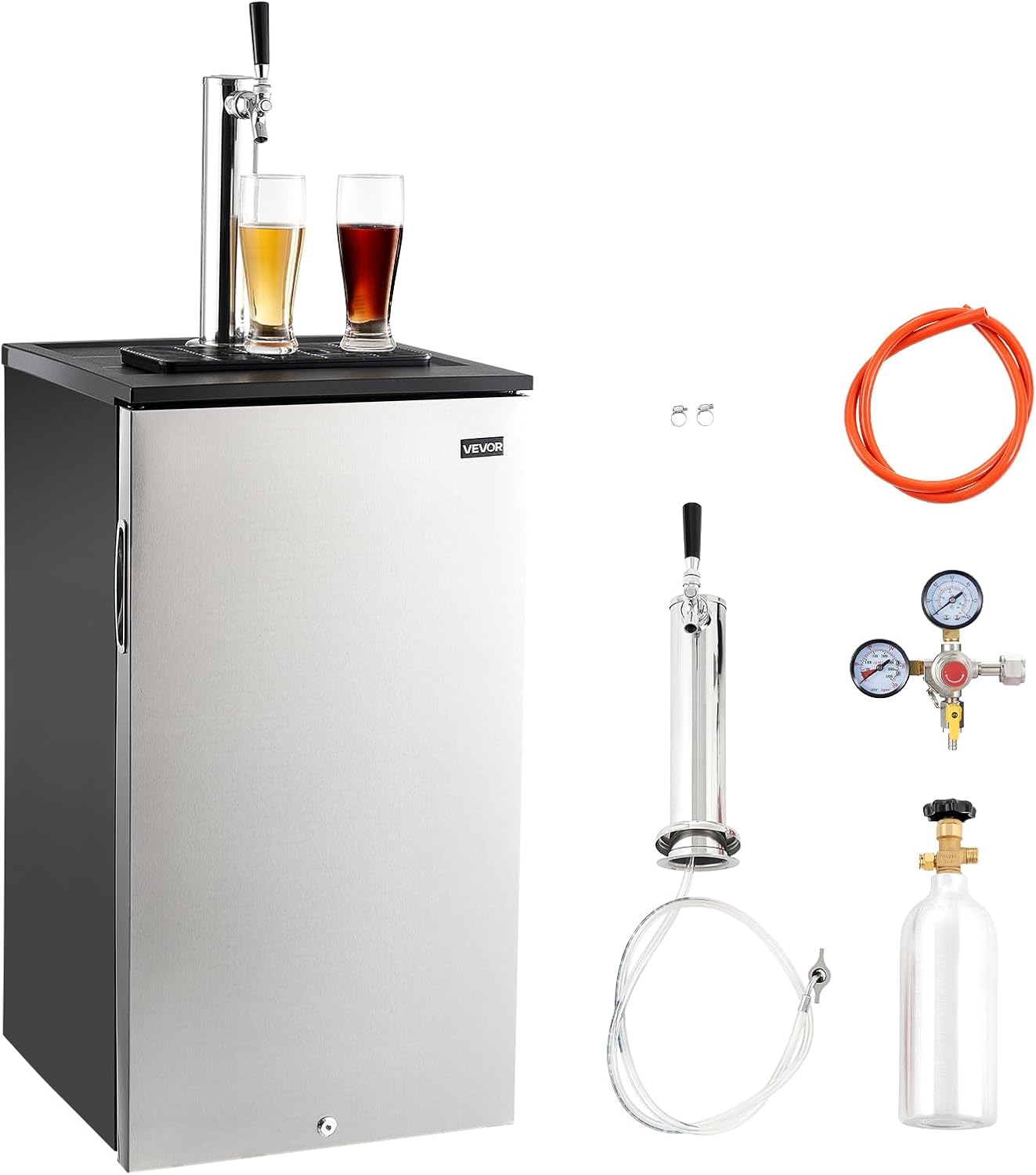
VEVOR Beer Kegerator, Single Tap Commercial Draft Beer Dispenser for D system, Refrigerator With Shelves, Hold 1 Sixth Keg, 2.5lbs CO2 Tank, 92L
A complete single tap draft setup with CO2 tank and D system coupler included
The biggest spend and footprint here, and the coupler does not fit ball lock corny kegs
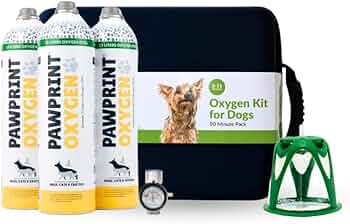
Dog Rescue Oxygen Kit - Portable Oxygen Supply for Pets for Transport and Rescue - Oxygen, Mask, Regulator, Tubing & Travel Case Included (0-11 lbs)
A genuinely complete portable kit: oxygen, mask, regulator, tubing, and case
Nothing to do with brewing, and a brewing cart has no use for a pet mask

Craft A Brew Fermometer Adhesive Brewing Thermometer, 5 Pack
Five strips for the least money on this list, one for every vessel
Reads the outside wall, not the middle of the beer, and has a limited range
Prices and availability were captured from Amazon Creators API and may change.
How I sorted these four
My bench rule is boring and it has not changed in a decade. A product has to do one of three things: remove a variable I would otherwise guess at, give me a number I can write in the notebook, or hold up through a full brew day without needing babysitting. Anything that fails all three is a box filler, no matter how good the marketing copy is.
Notice what that rule does to this list. The two cheapest items on it are the two that change your process immediately, because both of them replace a guess with a reading. The most expensive item on the list does not make better beer than a bottling bucket and a capper. It makes more convenient beer, which is a different purchase with a different justification. And the pet oxygen kit is a specialist piece of rescue equipment that happens to share the word "oxygen" with a step in brewing, which is exactly the kind of overlap that gets people to buy the wrong thing.
I also weigh what I call survivability: how many brew days a piece of gear survives before it leaks, drifts, or foams over. Simple gear tends to win that score by default, because there is less to break. That is not an argument against complexity, it is an argument for knowing which complexity you are actually paying for.
Coopers carbonation drops: the priming shortcut
Bottling day has one genuinely tricky step, and it is not capping. It is priming. The standard method is to dissolve corn sugar or DME in water, rack the finished beer onto it in a bottling bucket, and stir gently without splashing. Do it well and every bottle carbs the same. Do it badly and you get the classic mixed case: three gushers, four flat bottles, and a bottling bucket you now distrust.
Carbonation drops replace that entire step with one dose per bottle. You drop it in, fill, cap, done. There is no solution to mix, no stirring, and no oxygen pickup from agitation, which matters more than most bottlers admit because that gentle stir is the last thing your beer does before it sits for two weeks. The drops also shine on split batches and small volumes, where a full priming solution is awkward to scale and easy to overdo.
The trade-offs are real. You get one carbonation level, so a saison and an English bitter are going to land in the same place unless you start varying the dose by bottle size, and the package is your guide there. Cost per bottle is higher than bulk sugar, and if you brew twenty gallons a month, that adds up. Some brewers also notice a touch more residual sweetness in highly carbonated styles, which is a recipe conversation, not a defect.
For a brewer who bottles a five gallon batch a month, or who splits batches with a friend, the drops are the lowest-drama purchase on this page.
VEVOR single tap kegerator: the biggest commitment here
This is a single tap draft dispenser built around a 92L refrigerator cabinet with shelves, a 2.5lb CO2 tank, and a D system coupler, sized to hold one sixth keg. That combination is more coherent than it looks. A sixth barrel, often called a sixtel, is roughly the volume of a five gallon homebrew batch, so if you keg your own beer in commercial sixth kegs, the math lines up almost exactly.
What it wins: everything arrives together. Cabinet, tap, coupler, gas tank, shelves. If you have priced draft setups piece by piece, you know how fast the small parts add up, and buying one box that already fits together saves a weekend of hunting fittings. Serving your own beer from a tap in your own kitchen is a genuine upgrade in how often you actually drink what you brew, which is a quality-of-life argument, not a beer-quality one.
What it loses, and I want to be direct here: the D system coupler is for sanke style commercial kegs. If your pipeline is ball lock or pin lock corny kegs, you will need different disconnects and probably a different gas setup, and that is an extra purchase the listing does not make obvious. You also inherit draft maintenance: CO2 refills, line cleaning on a schedule you will absolutely forget once, temperature management, and a footprint that has to live somewhere permanent. A single tap means one beer on draft at a time. And nothing about this machine improves a recipe, a fermentation, or a gravity reading. It is a serving decision, and it should be made last, after you have your process dialed.
Buy it if you already keg, you have a permanent spot for it, and you are tired of pulling bottles out of the fridge. Skip it if you are still bottling and hoping a kegerator will fix something.
Craft A Brew Fermometer strips: the cheapest number on the bench
An adhesive strip thermometer sticks to the side of a fermenter and gives you a read on temperature without opening anything, drilling anything, or running a probe through a stopper. The five pack matters more than it sounds. One goes on the primary, one on the secondary or the keg, one on the starter flask, and the other two live in a drawer as spares for the day one peels off or gets soaked.
Here is why I care about this more than most gear on the list. Fermentation temperature is the single biggest lever a homebrewer has over flavor, and it is the one people skip because they cannot see it. A beer that quietly climbs into the seventies during the first 48 hours will throw esters you did not ask for, and no amount of dry hopping fixes that after the fact. A strip on the wall of the fermenter turns an invisible variable into a number you can write down next to your gravity readings. That is the whole game.
The honest limitations: it reads the wall of the vessel, not the middle of the beer, and during active fermentation the core runs warmer than the outside surface, so treat the strip as a floor rather than an exact core reading. It also has a limited range, so it is a fermentation tool, not a mash or strike water tool. And it is not a substitute for a temperature controller probe if you run a fermentation chamber. What it is: the difference between knowing and guessing, for the least money on this page.
If you own more than one fermenter, buy the pack. If you own one, buy the pack anyway, because the spares are the point.
The odd one out: the pet oxygen kit
I am going to be straight with you, because a comparison table that pretends otherwise is worthless. This kit is a portable oxygen supply for pets: oxygen, a mask, a regulator, tubing, and a travel case, sized for animals from 0 to 11 lbs. It is designed for transport and rescue of small animals. It is not brewing equipment.
Why is it in this comparison? Because it keeps surfacing in the same search results and email questions as brewery-adjacent oxygen gear, and because the overlap is real enough to be confusing. Wort oxygenation is a legitimate brewing step: you oxygenate chilled wort before pitching so the yeast has what it needs to start clean. But that process uses a regulator, tubing, and a diffusion stone that goes into the wort. It does not use a pet mask, and a kit sized for a small dog is sized for a small dog.
What it wins: as a pet rescue item, it is complete. Oxygen, mask, regulator, tubing, and a case in one purchase is genuinely useful if you do rescue or transport work with small animals, and having it staged in a vehicle is the kind of thing you never want to assemble in an emergency.
What it loses: for a homebrewer, it is a wrong purchase. It will not carbonate, ferment, measure, or clean anything. If you found this listing while searching for wort aeration equipment, keep looking, and note that yeast nutrient and a good shake of the fermenter are a cheaper place to start than an oxygen kit.
Where I would spend first
Ranked by what changes your beer soonest, not by what costs the most:
- The five pack of adhesive thermometers. It turns fermentation temperature into a number, it goes on every vessel you own, and it never needs a battery or a calibration.
- The carbonation drops, if you bottle. They eliminate priming inconsistency, which is the most common reason a batch of otherwise good beer tastes uneven from bottle to bottle.
- The kegerator, if and only if you already keg and have a permanent home for it. It is a serving convenience, not a brewing improvement.
- The pet oxygen kit, if you need pet rescue equipment. Otherwise, no.
That ordering is not a knock on the kegerator. It is a statement about sequence. The brewers I know who are happiest with their draft setups bought them after their process was consistent, not before. Gear that fixes a process problem is worth more than gear that changes how the beer leaves the kitchen.
What I am watching next
Pressure fermenters are the thing on my bench right now. The pitch is that fermenting under pressure lets you run warmer without the ester penalty and shortens the path from brew day to a cold, carbonated glass. The physics is interesting and the cleaning is not. I will have a real write-up once I have enough brew days behind it to say something honest, and if the strips or the drops show up in that testing, you will hear about it either way.
Until then, buy the boring thing that gives you a number. The numbers are what make the next batch better than the last one, and the ranking here is the ranking, not the highest commission.