Brewing your first batch at home is mostly a decision about how much gear you want to own before you know whether you like the hobby. Buy too little and you spend brew day improvising with a stockpot, a racking cane you do not have, and a fermentation vessel that was never meant to hold wort. Buy too much and you own an all-in-one electric system before you understand what a gravity reading is telling you. This guide compares home brewing starter kits and the small set of tools that make them work, from 1-gallon extract kits to a refill pack, a triple-scale hydrometer, and a countertop bottle washer. Everything here is chosen for the same reader: someone brewing on a kitchen stove or in a garage, working in small volumes, who wants the next batch to be repeatable rather than lucky. I ranked these by what each item actually includes, what batch size it produces, and whether it leaves you holding a tool that still earns its shelf space after the kit is gone.
Related: How to Read a Hydrometer Without Second-Guessing the Number
Quick answer
The Craft A Brew - Light - Craft Lager - Beer Making Kit is the strongest fit for a first small batch because it arrives as a complete equipment and supplies set built around a 1-gallon brew, and the same recipe line includes a matching refill so the hardware keeps working after batch one. Choose the ABC Crafted Series Beer Making Kit instead when you want one purchase that yields 40 pints rather than a single 1-gallon run.
Home brewing starter kits worth comparing
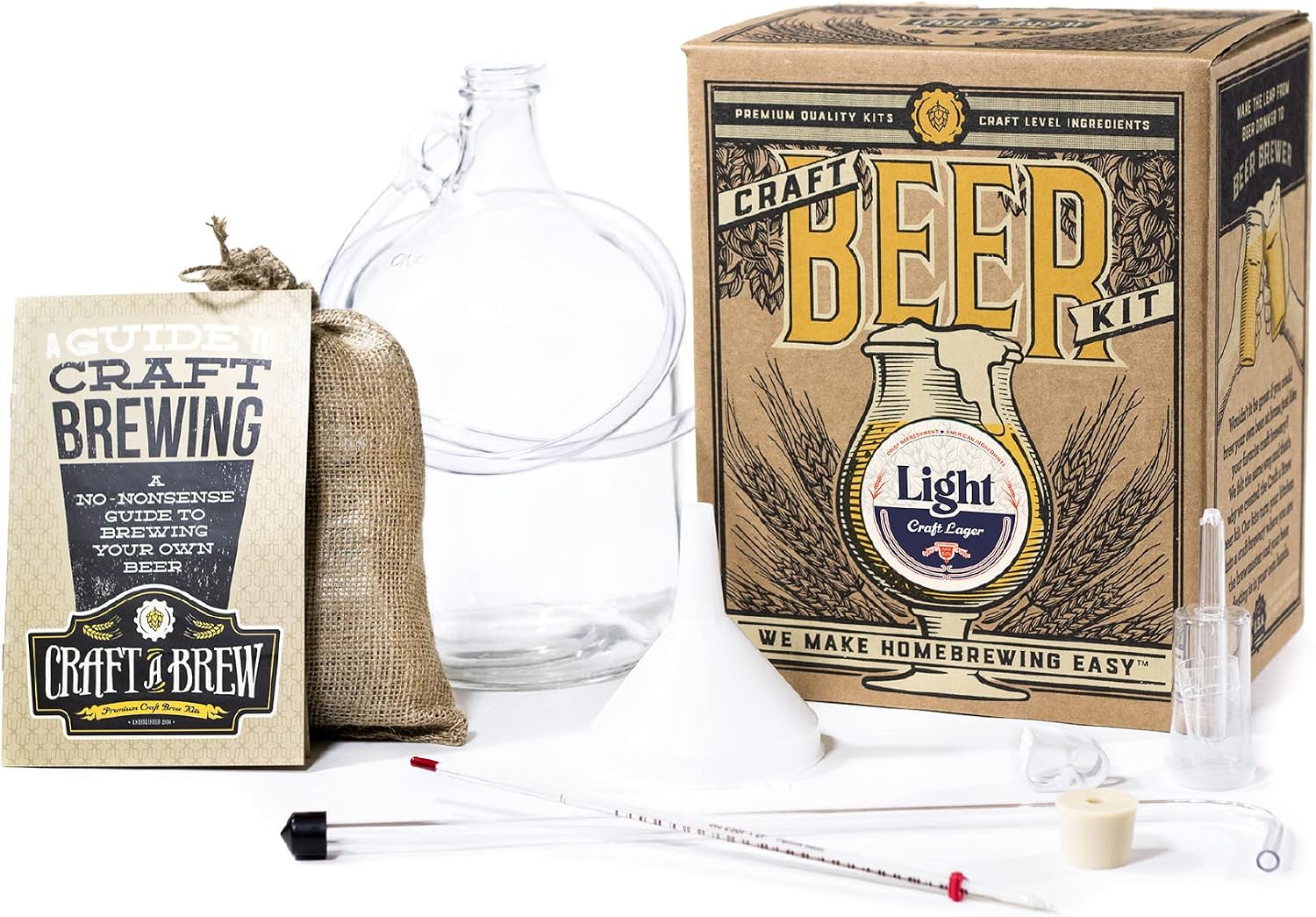
Craft A Brew - Light - Craft Lager - Beer Making Kit - Make Your Own Craft Beer - Complete Equipment and Supplies - Starter Home Brewing Kit - 1 Gallon
A 1-gallon starter kit that bundles the equipment and the ingredient set for a light lager style, sized for a stovetop brew day in a small kitchen.
Visit on Amazon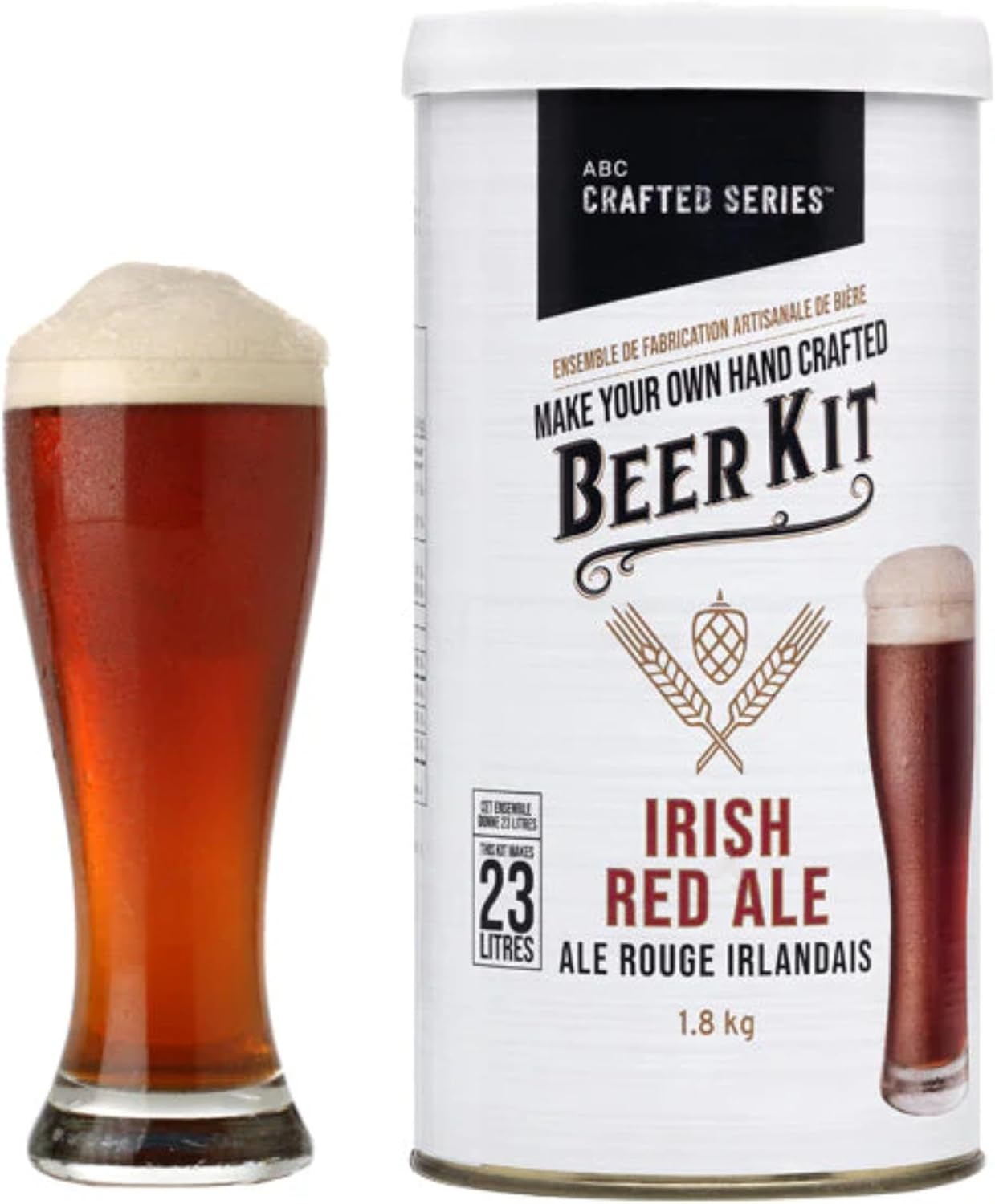
ABC Crafted Series Beer Making Kit | Irish Red Ale | Yields 40 Pints | Can
A canned Irish red ale kit built around a 40-pint yield, aimed at brewers who would rather make one larger batch than several tiny ones.
Visit on Amazon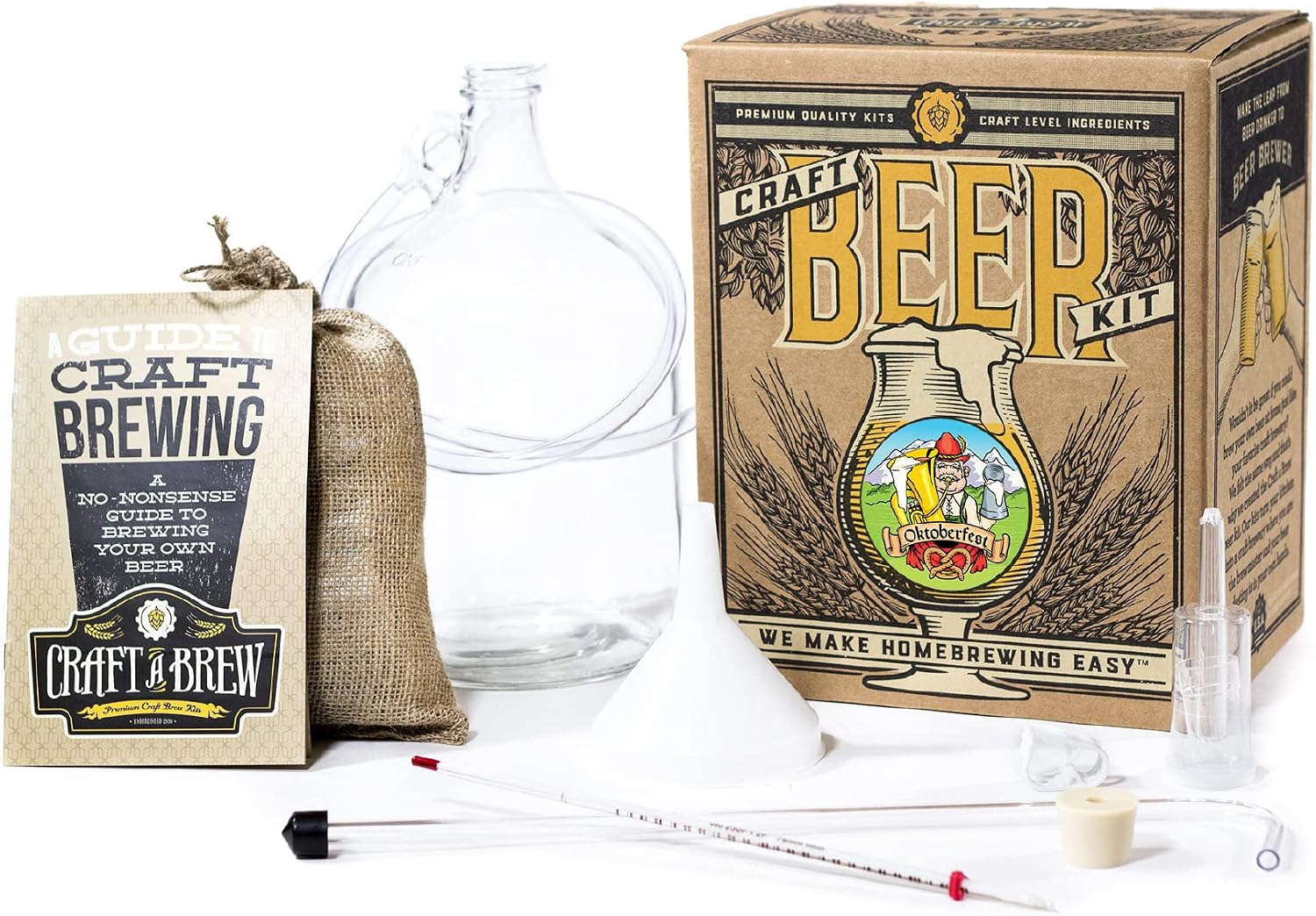
Craft A Brew - Oktoberfest Ale - Beer Making Kit - Make Your Own Craft Beer - Complete Equipment and Supplies - Starter Home Brewing Kit - 1 Gallon
The same 1-gallon complete kit format as the light lager, built around a malt-forward Oktoberfest ale recipe instead of a lager.
Visit on Amazon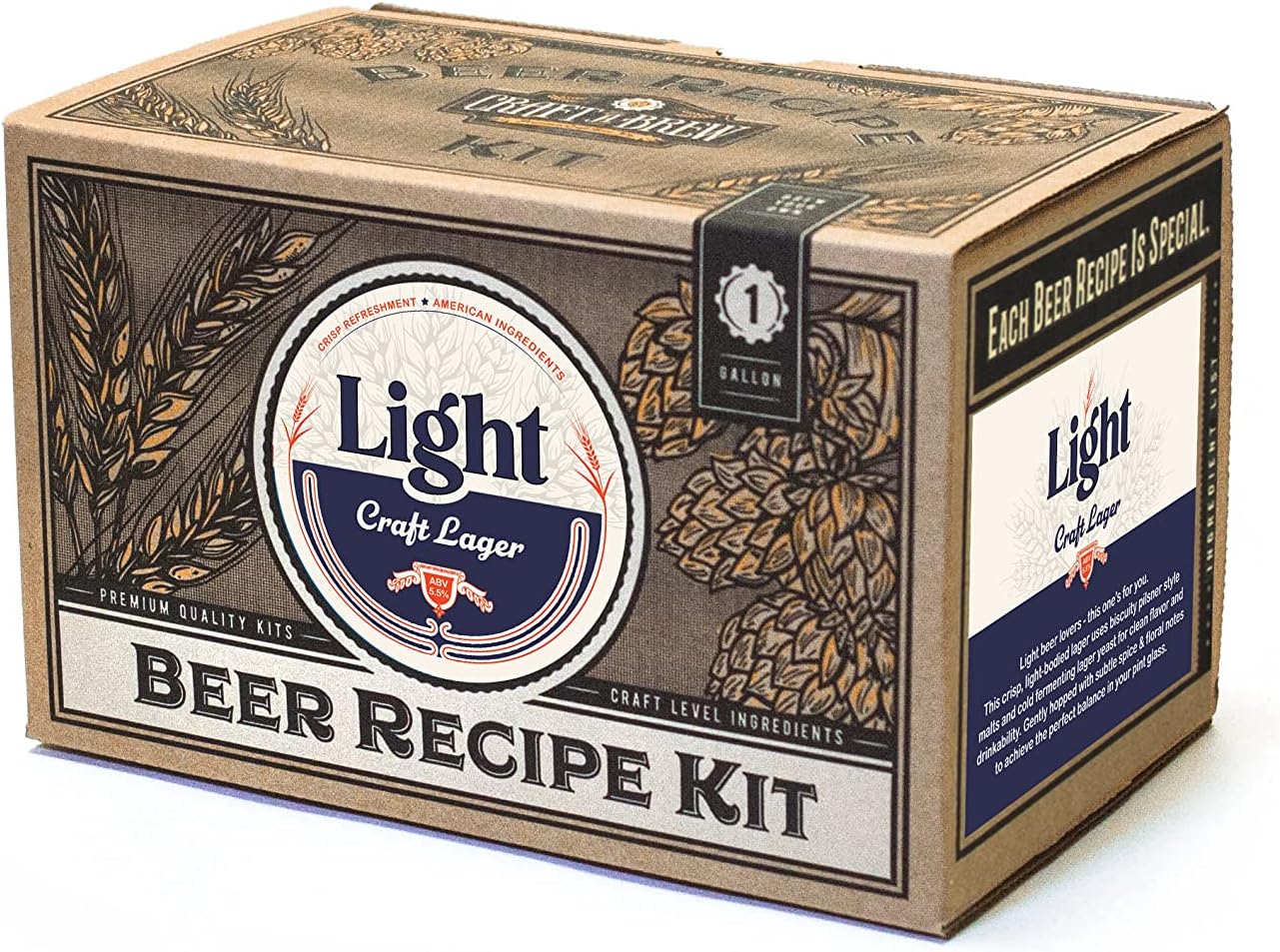
Craft A Brew Recipe Kit - Light Lager Refill - 1 Gallon - Ingredients for Home Brewing Beer
Ingredients only for another 1-gallon light lager batch, for brewers who already own the kit hardware and just want to brew again.
Visit on Amazon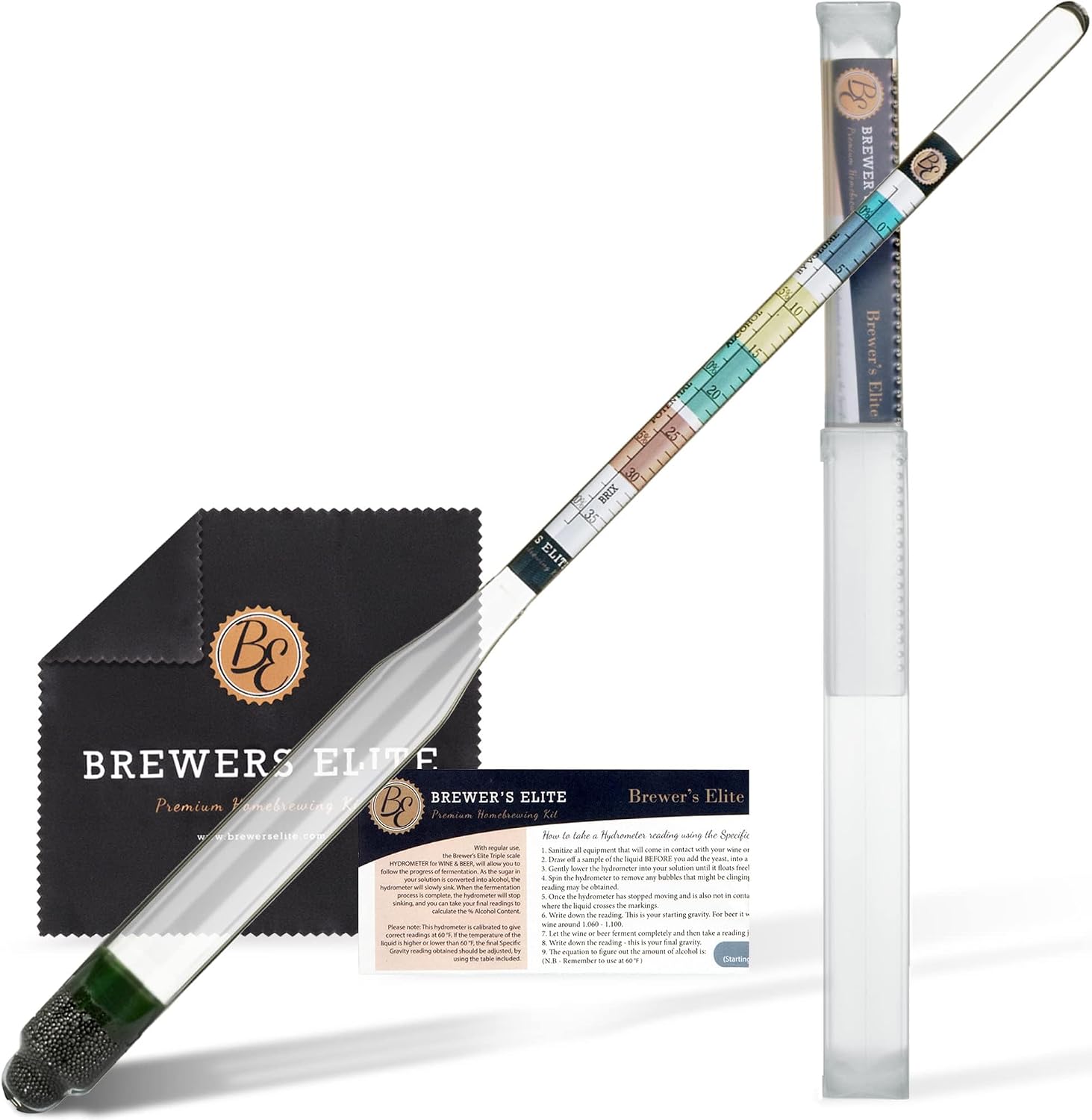
Brewer's Elite Hydrometer for Home Brew Beer, Wine, Mead and Kombucha - Deluxe Triple Scale Set with Hardcase and Cloth - Specific Gravity ABV Tester
A triple-scale hydrometer set for reading specific gravity and estimating alcohol by volume, supplied with a hard case and a cleaning cloth.
Visit on Amazon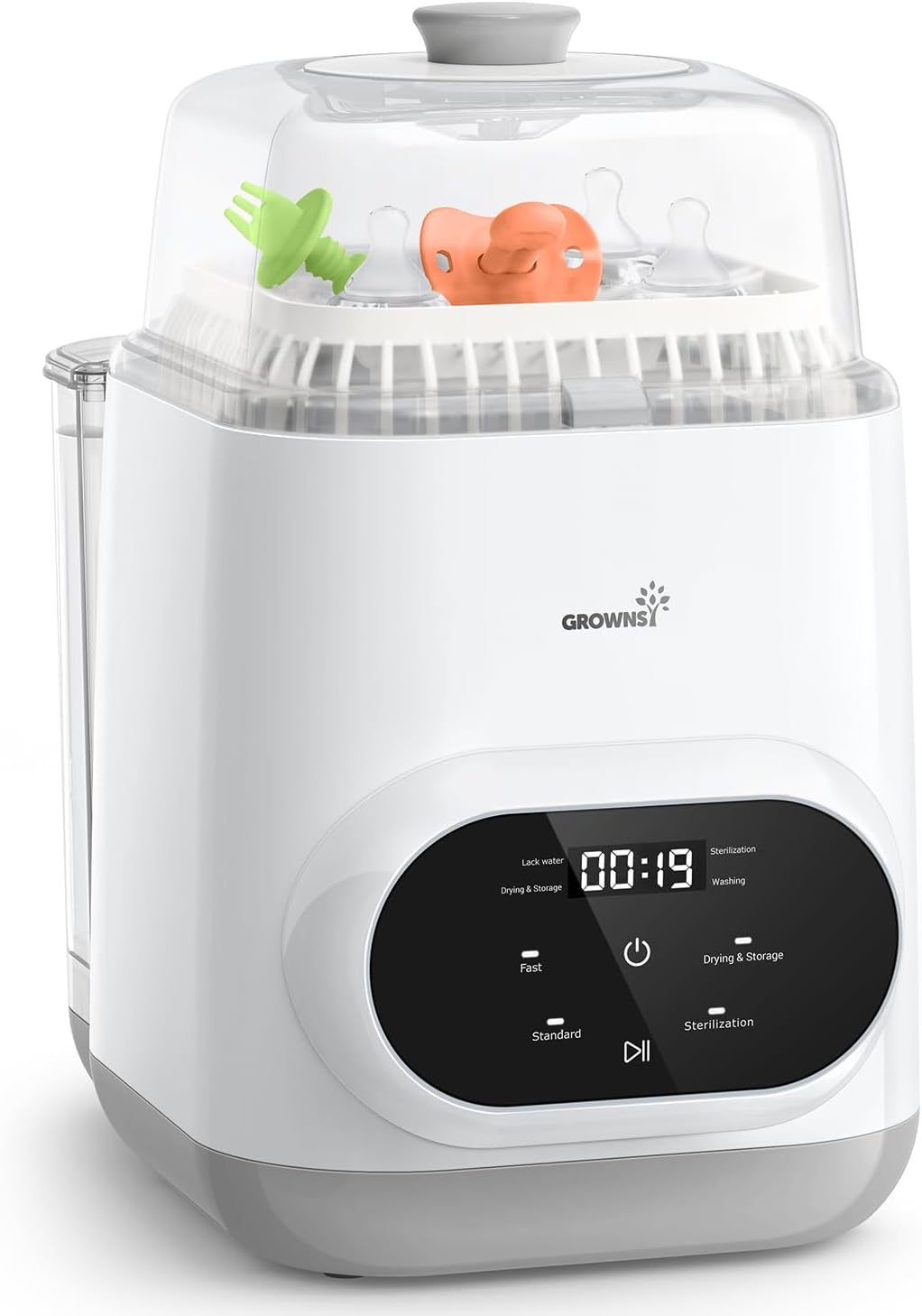
Grownsy EaseClean Bottle Washer All-in-One Washer and Sterilizer and Dryer
An all-in-one countertop washer, sterilizer, and dryer for bottles and small parts, aimed at the cleanup half of the hobby rather than the brewing half.
Visit on AmazonPrices and availability may change. Check the retailer for current details.
How these products were compared
This guide compares batch size and expected yield, whether each box is a complete kit or an ingredients-only refill, which measuring tools are included, the cleaning and sanitation workload each item adds, and how much counter or shelf space it demands in a normal kitchen. Product names, images, and retailer links are matched by ASIN so that every card points to the product shown, and the summaries stick to what the manufacturer lists for each item rather than to adjectives.
I do not print prices in this guide, because they move and a stale number helps nobody. Use the button on any card to confirm the current price and availability before you buy, and read the return terms while you are there, since a starter kit is the kind of purchase you want to be able to undo if the recipe style turns out not to be your thing.
How to choose the right home brewing starter kit
The first fork in the road is batch size, and it decides almost everything else. A 1-gallon kit is the low-risk entry point: it fits on a kitchen stove, it cools quickly in an ice bath, it ferments in a closet, and it fills roughly ten 12-ounce bottles, which is enough to learn from without committing a whole afternoon to bottling. A 40-pint kit is the opposite trade. You brew less often, you handle a much larger volume of wort on brew day, and you need the fermentation space and the bottle count to match. Neither is wrong. The mistake is buying the big one first, discovering that a five-hour brew day is not how you want to spend a Saturday, and leaving the equipment in a closet.
The second fork is whether the box includes a way to measure. A kit that ships without a hydrometer asks you to guess when fermentation is finished, and guessing is how people bottle beer that is still fermenting and end up with foamy, overcooked bottles three weeks later. The gravity reading is the whole game: original gravity tells you how much sugar you started with, final gravity tells you the yeast finished the job, and the gap between them is your actual alcohol content. If a kit skips that tool, budget for one separately, because you cannot reproduce a batch you never measured. Beyond that, decide whether you want a complete kit or an ingredients refill, and read the cleaning instructions before you buy. A kit you dread cleaning is a kit you stop using, which is the subject of our guide to keeping small-batch gear in rotation.
Craft A Brew - Light - Craft Lager - Beer Making Kit
This is the pick because it solves the two problems that sink most first batches at the same time. It is a complete equipment and supplies kit rather than a box of ingredients with a shopping list attached, so there is no mid-brew-day run to the store for a missing stopper. And it is built around a 1-gallon batch, which keeps the volume small enough to chill in a sink of ice water and to ferment in whatever corner of the house holds a steady temperature.
The trade-off is real and worth stating plainly. A light lager style wants a cool, steady fermentation, and a kitchen that swings ten degrees between afternoon and midnight is not a lager cellar. If your only temperature-stable space is a warm closet, the ale version in the same kit line is the more forgiving purchase. The other trade-off is volume: ten bottles disappear fast, and you will be ordering the matching refill sooner than you expect. That is not a flaw in the kit, it is the nature of small batches, and the existence of a refill pack for exactly this recipe is what keeps the equipment from becoming a one-time experiment.
Alternatives to consider
The ABC Crafted Series Beer Making Kit | Irish Red Ale is better suited to a brewer who wants a single larger project instead of a series of small ones. It is built around a 40-pint yield and an Irish red ale style, so the payoff per brew day is much bigger, at the cost of needing more fermentation space, more bottles, and a longer chilling step on brew day.
The Craft A Brew - Oktoberfest Ale is a stronger fit when your fermentation space runs warm or when you simply prefer a malt-forward beer to a crisp one. It uses the same 1-gallon complete kit format, which means the equipment list and the cleaning routine are essentially the same, and only the recipe changes.
The Craft A Brew Recipe Kit - Light Lager Refill, the Brewer's Elite Hydrometer, and the Grownsy EaseClean Bottle Washer cover the three things people buy next. The refill serves anyone who already owns the kit and wants to brew the same beer again. The hydrometer serves anyone whose kit left the measuring tool out, and it is the single cheapest upgrade to the consistency of your results. The washer serves the brewer who has decided that scrubbing and sanitizing bottles is the part of the hobby they hate, and who wants that step handled by a countertop appliance instead.
Day-to-day use and maintenance
Most of home brewing is cleaning, and the gear that survives is the gear that is easy to clean. Whatever you buy, plan on a routine: rinse everything that touched wort immediately after the brew day ends, sanitize on the day you package rather than the day you brew, and never let hop sludge or dried trub sit in a spigot or a racking cane. Plastic spigots are the most common failure point in a starter kit, and a slow drip under a fermenter is the most preventable mess in the hobby, so inspect yours before every batch and keep a spare.
The hydrometer deserves its own habit. Glass floats read accurately when they are clean and read wrong when they are not, and a film of dried residue or a bubble clinging to the stem will move the number. Calibrate in distilled water before you trust a reading, keep the instrument in its hard case between uses rather than loose in a drawer, and spin the float gently to knock bubbles off before you read it. Because a hydrometer is fragile, the hard case and cloth in this set are not accessories, they are the difference between one hydrometer and three.
For bottles, the honest advice is that a washer, sterilizer, and dryer earns its counter space only if you are bottling regularly. If you brew twice a year, a bottle brush and a bucket of sanitizer do the same job. If you are bottling every few weeks, the machine starts to look like a fair trade for an evening of your life. Either way, sanitizing is not optional and not a step to shorten, because an infected batch tastes like a mistake you cannot undo. Read the care instructions for anything electric, keep the power cord and the water reservoir away from the fermenter, and never assume a machine that dries bottles also sanitizes them unless the manual says so.
Buying checklist
- Decide your batch size first, and measure the space where the fermenter will actually sit, not where you wish it could sit.
- Choose a complete kit or an ingredients refill based on whether you already own the hardware.
- Confirm that the exact kit includes a hydrometer, or add one to the order.
- Check which recipe style the kit contains and whether your fermentation space can hold that style's temperature range.
- Count your bottles and caps before brew day, not on bottling day.
- Read the cleaning and maintenance instructions for every piece, including anything electric.
- Verify the current retailer price, availability, and return terms before you commit.
Final recommendation
Choose the Craft A Brew - Light - Craft Lager - Beer Making Kit when you want a complete, small-footprint first batch and you are willing to brew in 1-gallon volumes. Choose the ABC Crafted Series Beer Making Kit | Irish Red Ale when a 40-pint yield and a single larger brew day suit your space and your patience better than a series of small ones. Add the Brewer's Elite Hydrometer if nothing in your order measures gravity, because that reading is what turns brewing into something you can repeat instead of something that happens to you.
If your fermentation space runs warm, swap the lager recipe for the Oktoberfest ale version of the same kit and keep the rest of the plan intact. And if bottling is the step that keeps you from brewing, the countertop washer is a legitimate answer to that problem, provided you are bottling often enough to justify it.